


“It rained continuously for 10 days and 10 nights. I’ve never seen rain like this before,” said Anar Gul, a construction worker who lives in the remote Durbaba district of eastern Afghanistan.
His village houses are built of stone and mud, making them extremely vulnerable to heavy rains. After days of continuous rain, Gul’s kitchen collapsed and his neighbor Syed Afsar Sadat saw a large part of his home completely destroyed. “These rains are getting heavier and earlier each year,” Sadat said. “They are destroying roads and washing away crops. They are directly impacting us.”
Anar Gul, who lives in a remote mountain village in eastern Afghanistan’s Durbaba district, said he had never seen rain like this. Photo: IFRC/Mark South.
Torrential rains and flash floods devastated villages and towns in Afghanistan last week, leaving at least 31 people dead and hundreds missing. A similar situation is seen in neighboring countries, where monsoon rains are causing chaos across the region. India, Bangladesh, and Pakistan have all experienced unusual and sudden releases of large amounts of water.
Jesmin Akhter lives in the city of Chattogram on Bangladesh’s southeastern coast when flash floods hit their Banshkari district in early July after a record rainfall of 412.3 mm in 24 hours. Children “understand that we are in a very bad situation,” she said.
It rained overnight and almost everything they had was gone. Poultry died, rice fields flooded, houses collapsed, and everything in the house – children’s books, school bags, toys, clothes, kitchen utensils – was ruined.
Akhtar carried his six children through chest-deep water to their mother’s home. There they remained in crowded conditions for more than a week until the waters receded.
Residents and rescue workers inspect buildings damaged by heavy flooding in Afghanistan’s eastern Nuristan province. Photo: Wahidullah Kakar/AP
“We lost everything,” Akhter said. Their house by the canal was not in very good condition, but the family restored it a few months ago. “Now it has been destroyed by floods again. We have no money. We are surviving on food aid from various organizations.” They have returned to their abandoned home, where the children are sleeping on plastic sheets on the wet floor, and she worries about their safety, especially that the unsanitary conditions could lead to illness. Her daughter has a fever.
As wildfires rage across Europe and North America, unprecedented rain continues elsewhere. South Korea is reeling between heat waves and heavy rains, while heavy rains have caused landslides in Japan and Vietnam. Meanwhile, in mid-July, China has experienced unusually heavy rainfall since the flood season began in April, marking the beginning of a month-long peak period for flood control measures, according to the Ministry of Water Resources. Since then, more than 600 rivers have exceeded alert levels, which is 35% higher than the average for the same period over the past five years.
Syed Afsar Sadat of Dur Baba said the rains were destroying roads and washing away crops. Photo: IFRC/Meer Abdullah Rasik.
At least 11 people have died and 50 are missing after heavy rains caused a massive landslide in the southwestern part of Chongqing, and rescue efforts are still ongoing. Separately, a flash flood occurred at a scenic campground in north-central Gansu province, killing 10 people and injuring 23 others.
Flood periods across the region have been exacerbated by successive storms. It was the strongest typhoon to hit China so far this year, and more than 890,000 people had been evacuated in the province as of Sunday night, according to Guangdong authorities. In early July, Typhoon Meisak flooded parts of Guangxi, swamping commercial snake farms and forcing hundreds of snakes to flee.
Forecasters have warned of more rainy weather ahead. According to the China Meteorological Administration, many areas in northern China, including Beijing, are expected to experience 20 to 50 percent more rainfall than usual, and four to six typhoons are expected to make landfall or impact this summer, more than the average of 4.2.
Taiwan, which is in the path of typhoons in the northwestern Pacific Ocean, is also experiencing an increase in abnormal rainfall. According to the Ministry of Agriculture, repeated heavy rains caused more than NT$330 million (approximately US$10.2 million) in agricultural losses across Taiwan in June, with the capital Taipei recording its highest monthly rainfall in more than 100 years.
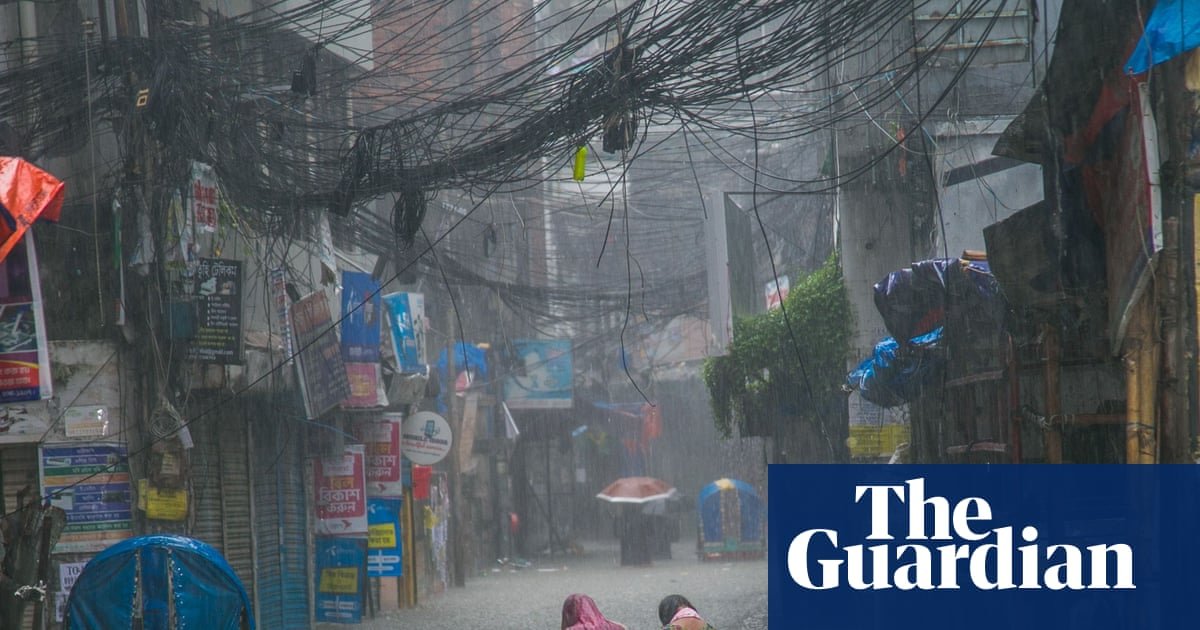
Heavy rains flooded the streets of Dhaka, Bangladesh. Photo: Mohammad Ponir Hossain/Reuters
Extreme weather events across the region can clearly be linked to climate change. Climate scientists have long predicted that large areas of Asia will suffer disproportionately from more intense heat, humidity and drought as a result of climate disruption caused by the burning of gas, oil and coal. The latest report by the UN’s Intergovernmental Panel on Climate Change said rising temperatures are increasing the threat of “flooding in the monsoon regions of South Asia, Southeast Asia and East Asia, and glacier melting in the Hindu Kush-Himalayan region.”
Skip past newsletter promotions
sign up for sensible
The most important story on earth. Get all of this week’s environmental news – the good, the bad and the important.

After newsletter promotion
And scientists at World Weather Attribution have warned that extreme rainfall from cyclones is “intensifying” in Southeast Asia, with a clear pattern of rain becoming more intense in recent decades.
In early July, Typhoon Meisak flooded parts of southern China’s Guangxi Zhuang Autonomous Region. Photo: Cao Yiming/Xinhua/AP
In 2025, devastating storms and heavy rains occurred across the region. Sea temperatures have also risen to record highs. This year has been the hottest on record so far. In most parts of the world, especially Europe, much of Asia, central and eastern North America, South America, Africa, and parts of Australia, anthropogenic climate change is making extreme rainfall more frequent and more intense. This is because warmer air can contain more water vapor, and as a result, flooding is likely to be more frequent and severe in these locations.
“By heating the Earth by burning fossil fuels and storing more carbon dioxide in the atmosphere, we expect to see heavier rainfall. When the atmosphere warms, it can carry more water, so when it rains, it rains more intensely. Hotter conditions also cause air to rise faster, producing more intense thunderstorms,” said Richard Betts, director of climate impact strategy at the Met Office’s Hadley Center.
The International Federation of Red Cross and Red Crescent Societies (IFRC) provided assistance and helped the Guardian obtain interviews with those affected.
More than 890,000 people have been evacuated in Guangdong province due to Typhoon Noul (photographed in Hong Kong). Photo: Venron Yuen/Nexpher/ZUMA Press Wire/Shutterstock
“These are the very real humanitarian consequences of an increasingly destabilizing climate change,” said Dr. Hossam Faisal, IFRC’s Country Representative in Afghanistan.
Mr. Faisal called on governments to ensure further investment in locally-led preparedness and mitigation to reduce loss of life and suffering before climate-related disasters occur.
“The upcoming El Niño is a clear example of this. Waiting to respond to the extreme needs that are expected to arrive will cost lives.”
