


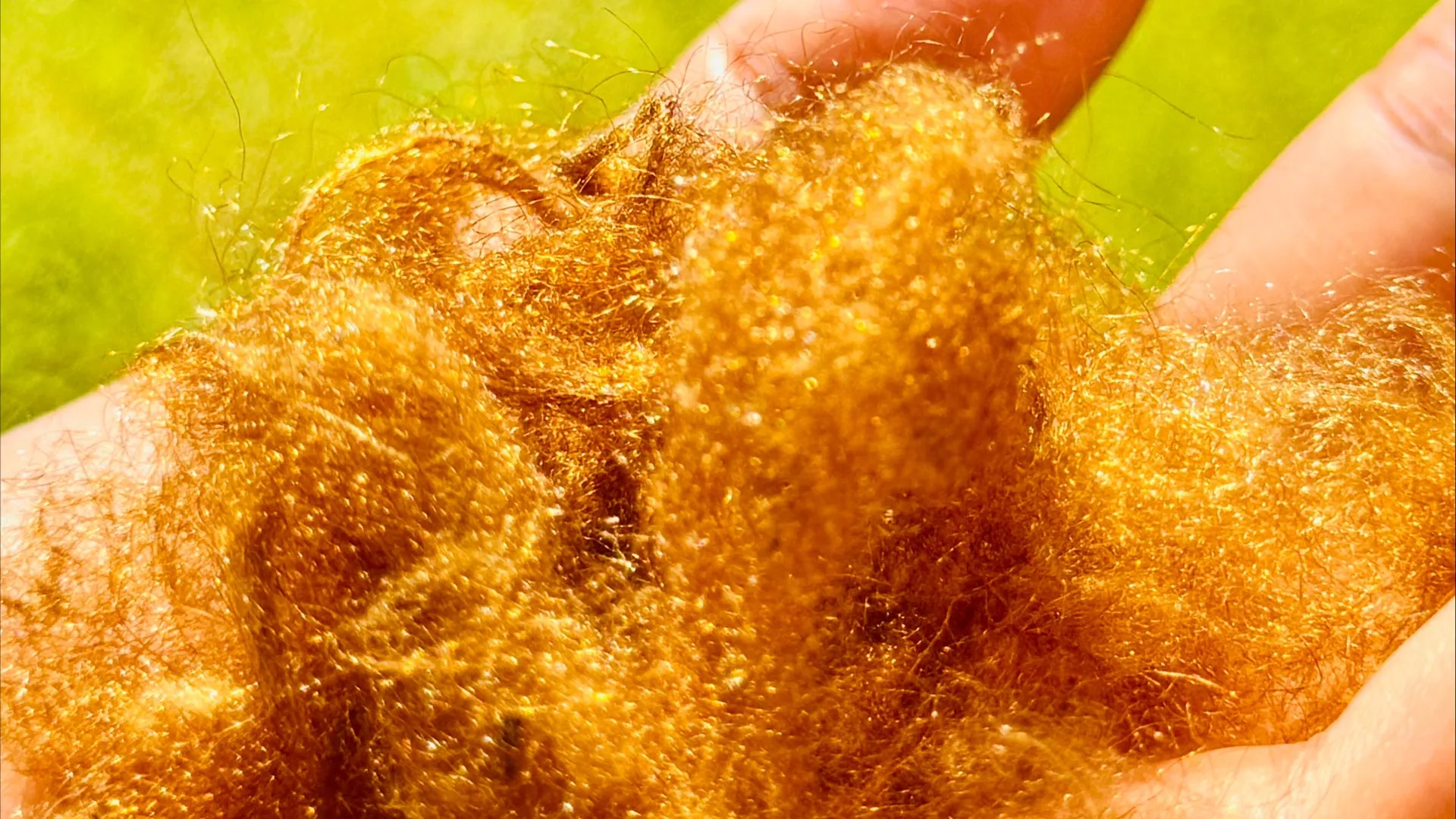
For centuries, the shimmering golden fabric known as sea silk was one of the world’s most exclusive luxury materials, reserved for emperors, popes, and other powerful people. Now, Korean researchers have successfully recreated this legendary fiber and uncovered the secret behind its amazing color.
POSTECH’s research team, led by Professor Hwang Dong-soo (Department of Environmental Science and Engineering/Department of Interdisciplinary Life Science and Biotechnology) and Professor Jimin Choi (Environmental Research Institute), reproduced golden fibers similar to sea silk using Atrina pectinata, a shellfish cultivated in the waters near South Korea. Their findings were; advanced materialsnot only revives an ancient textile, but also explains why its golden appearance remains vibrant over time.
The rise and fall of the legendary sea silk
Sea silk, often referred to as the “golden fiber of the sea,” was prized during Roman times. The material was made from manufactured byssus threads. noble finsa large Mediterranean shellfish that uses these fibers to anchor itself to rock surfaces.
Sea silk has become famous for its brilliant golden color, light weight, and great durability. Its rarity and beauty earned it a near-mythical reputation. One of the most well-known examples is the Holy Face of Manoppello, a religious relic preserved for centuries in Italy and believed to be made of sea silk.
However, in recent decades, due to marine pollution and environmental deterioration, noble fins Toward extinction. The species is now endangered and the European Union has completely banned its harvest. As a result, genuine sea silk has become extremely rare and produced in very small quantities by a small number of artisans.
Recreating ancient textiles
To find an alternative source, POSTECH researchers investigated pen shells. Atrina pectinatais already being farmed for food in Korean waters.
like noble finsthe shell of the pen produces byssus threads that help it attach to surfaces. The research team found that these fibers are physically and chemically very similar to the fibers of Mediterranean clams. Using this similarity as a starting point, they developed a method to process pen shell byssus threads to develop a material that replicates the appearance of ancient sea silk.
But recreating the fiber was only part of the result.
The secret of sea silk’s golden shine
The researchers also uncovered the mechanisms responsible for sea silk’s unique golden color and its remarkable resistance to fading.
Color does not come from dyes, but is produced by structural coloration, a phenomenon in which microscopic structures interact with light to produce color. The researchers discovered that sea silk’s iridescent appearance comes from a layered, globular protein structure known as ‘photonin.’
These structures reflect and manipulate light in the same way that soap bubbles and butterfly wings produce vibrant colors. The effect is created by the structure of the material rather than by added pigments, resulting in long-lasting color stability.
The researchers also found that the more precisely these proteins were organized, the stronger and more vibrant the colors. Unlike traditional textiles, which obtain their color through dyeing, seasilk creates its golden hue through the arrangement of proteins within the fiber itself. This helps explain how this material is able to maintain its shine for centuries.
Sustainable textiles from ocean waste
This effort can have implications far beyond recreating historical luxury fabrics.
Byssus fibers from pen shells have traditionally been discarded as waste. By converting them into valuable fibers, researchers have demonstrated how to reduce ocean waste while creating sustainable materials with cultural and historical significance.
Professor Dong Soo Hwang said, “Structurally colored fibers are inherently less prone to fading. Our technology enables long-lasting color without the use of dyes or metals, opening new possibilities for sustainable fashion and advanced materials.”
