


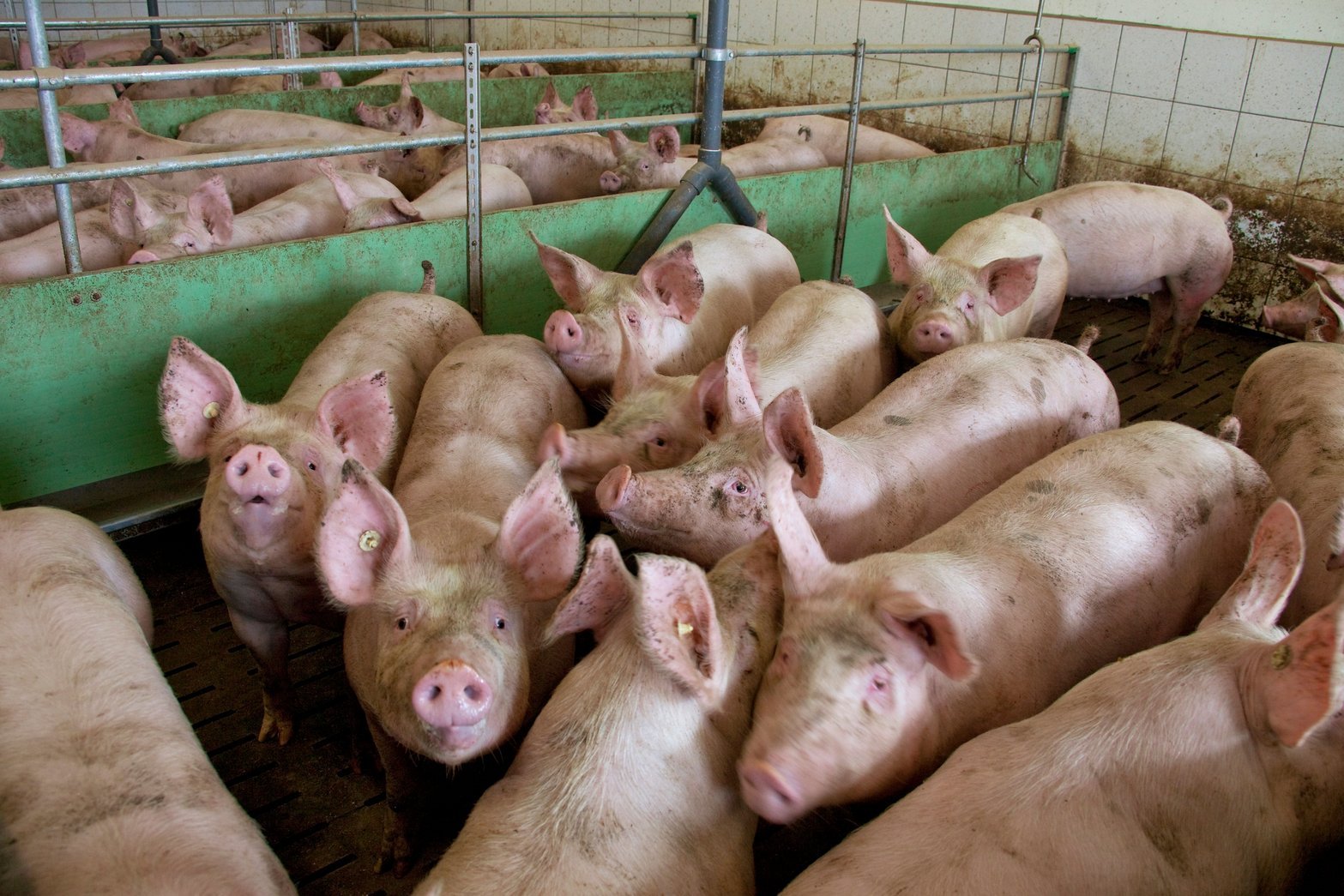
Denmark is to overhaul its drinking water policy as part of a series of fundamental reforms to its livestock industry.
In a country with more pigs per capita than anywhere else in the world, animal welfare and nitrate pollution dominated the public debate as millions of people went to vote in what was widely referred to as the “pig election” in March.
After months of coalition talks, Prime Minister Mette Frederiksen’s new government last week pledged to abolish the agriculture ministry, temporarily ban intensive pig farming and give local communities the power to block new farms.
Water is also an important topic. The new government has pledged to be the first in the EU to cut legal limits on nitrate levels in drinking water by nearly 90%. Scientists say reducing these chemicals caused by pollution from intensive agriculture could significantly reduce the number of people in the country who get colon cancer.
Experts and activists praised the new government’s decision and argued that EU-wide standards should also be lowered to avoid long-term health effects.
But new reforms to lower nitrate levels from the EU-mandated 50mg per liter limit to 6mg per liter have already faced a huge backlash from Denmark’s pork industry lobby, which has threatened to take the government to court over the changes and is holding a “crisis” conference next week.
Nitrates can be dangerous when excessive amounts leak into the environment from synthetic fertilizers and pig, poultry, and cow manure. They cause widespread contamination of rivers and beaches across the EU, contaminating groundwater (water found in soil and rocks below the earth’s surface), which provides much of the drinking water.
The European Commission did not directly respond to questions about Denmark’s adoption of the new lower limit. A spokesperson confirmed that EU standards are reviewed every five years, but declined to say when the next review would take place. The 50 mg/l limit “sets a minimum quality standard for drinking water,” they said, adding that they welcome member states “to adopt stricter quality standards than those set at EU level.”
Although still in its infancy, Denmark’s new government appears to be taking a markedly different approach from the EU, which lifted environmental regulations for agriculture in the wake of mass protests in 2024.
In December, the commission announced it would “review and revise” its flagship water protection law, the Water Framework Directive, which could result in more relaxed standards and easier exemptions for polluting projects. The regulation requires all member states to achieve “good” water quality status by next year, but there is currently no deadline set for any country to achieve this.
Marco Contiero, Greenpeace’s director of EU agricultural policy, told Desmog: “As the European Commission rushes to decide on cuts to environmental laws, it is heartening to see Denmark’s tough approach.” “I welcome not only the political resolve but also the scientific integrity and professionalism shown by the government.”
“Rather than denying the existence of agricultural pollution, as other EU countries often do, they are tackling the problem of agricultural pollution head on,” he added.
“I would love to see the EU have a serious scientific discussion[on nitrate limits]and act on the results.”
“Hopelessly outdated”
The EU introduced limits on nitrates in drinking water in the 1990s to prevent a condition in infants known as “blue baby syndrome,” caused when a chemical reaction of nitrates in the blood interferes with its ability to carry oxygen.
The 50 mg/l limit meets World Health Organization (WHO) guidance and is similar to limits in several other major economies, including the United States, Australia, and Canada. But campaigners and scientists say this threshold is “hopelessly outdated” and ignores recent research into cancer and birth risks.
A 2018 study of 2.7 million Danish adults over several decades found that those with the highest long-term nitrate exposure were 16 percent more likely to develop colorectal cancer than those with the lowest. The report found a statistically significant increase in cancer when nitrate concentrations exceeded approximately 3.9 mg/l. This is well below the EU threshold.
“As a young family, do you want to buy a home where every time you give your child a glass of water, you may be increasing your risk of colon cancer?”
Stig Markager, Professor of Marine Ecology
Scientists have known for decades that there is a link between nitrates and bowel cancer, said Stig Markager, a professor of marine ecology at Denmark’s Aarhus University.
“The numbers may be low, but if you’re doubling the risk, that’s psychologically important,” he says. “As a young family, do you want to buy a home where every time you give your child a glass of water, you may be increasing your risk of colon cancer?”
Jorg Schrenner, associate professor of public health at Aarhus University and lead author of the 2018 study, said that while at an individual level “it is not dangerous to drink water” with high nitrate levels, the potential impact on the wider population makes the case for stricter restrictions.
“For individual consumers, the additional risk from nitrates in drinking water is very small. However, with many European consumers chronically exposed to high levels of nitrates, lowering nitrate levels may help prevent the development of colorectal cancer.”
“This is a broader public health issue. Even a relatively small individual risk can still be significant at a population level,” he said.
In 2019, a study of the entire U.S. population found that between 2,300 and 12,600 cancer cases each year can be attributed to nitrates. The authors also linked nitrate levels to low birth weight and preterm birth.
The economic case for denitrifying drinking water is also compelling. A 2023 study by Danish scientists estimated that around 127 cases of bowel cancer a year in Denmark could be attributable to current nitrate levels in drinking water, and also found that direct and indirect medical costs associated with nitrate-induced bowel cancer amounted to $317m (£237m) a year.
In contrast, the study found that reducing nitrate levels in drinking water to 4mg/l levels would cost just $15m (£11m).
“Morning call”
Other EU member states besides Denmark appear to be struggling to comply with the existing 50 mg/l standard. France, Germany and Spain have faced lawsuits in recent years over nitrate contamination in drinking water and groundwater supplies.
In Spain, more than 257,000 people will no longer have access to tap water in 2024 due to nitrate levels exceeding 50 mg/litre, and bottled water will be trucked into cities to meet local needs.
David Sanchez is the director of consumer rights organization CECU, headquartered in Madrid, Spain, and has been an advocate for communities exposed to high levels of nitrates in drinking water.
So far, the topic has not resonated with politicians. “I am not aware of any intention or even discussion to lower the nitrate standards in Spain,” he told Desmog. “I think the scale of the issue here is so large that it is far removed from the Danish discussion.”
Sanchez said this lack of involvement was related to the dominance of Spain’s pork industry, which is worth nearly 9 billion euros (about 770 billion yen). “The Spanish government cannot continue to prioritize the interests of the meat industry over public health and rural water rights,” he said.
France and Germany face similar obstacles. In 2024, the European Commission took France to the European Court of Justice over illegal levels of pollution in 107 water supply zones, accusing the country of exposing its population to “potential health risks.” France’s National Federation of Farmers’ Associations (FNSEA) has also come under fire from critics for trying to downplay the impact of nitrate pollution on the coasts of northern Brittany.
In October, Germany’s own court ruled that the country had failed to address nitrate levels in its groundwater supply, forcing it to introduce new measures.
Reinhild Benning, from the German environmental group Deutsche Umwelthilfe, said the country’s top priority was to curb pollution from agriculture “so that we can reduce nitrate levels in our bodies of water a little.”
But in the longer term, he said he hopes a lower limit will be introduced. Denmark “has served as a wake-up call for European governments, showing how voters will react when water, climate and animal welfare are ignored for too long.”
German Green Party lawmaker Jutta Paulus, who sits on the European Parliament’s environment committee, worries that the EU’s rapid deregulation program and the efforts of the powerful agricultural lobby could hinder progress on the issue.
“Under the pretext of competitiveness, science and the public interest are being overshadowed by a simplistic omnibus,” she told DeSmog.
He therefore said it was “very unlikely” that limits for nitrates in drinking water would be lowered if the agricultural lobby was “moving in the opposite direction”.
“Denmark has succeeded in significantly reducing Big Agri’s influence in national agricultural policy. If other countries and the EU as a whole did the same, it would help farmers, consumers and nature alike.”
Other countries are also celebrating major EU milestones.
“The Danish farm lobby is in shock,” Danish marine ecology professor Stig Markager told DeSmog.
“I think it’s great that we finally have a government that is not tied to the agricultural industry. We might have the greenest government ever.”
