


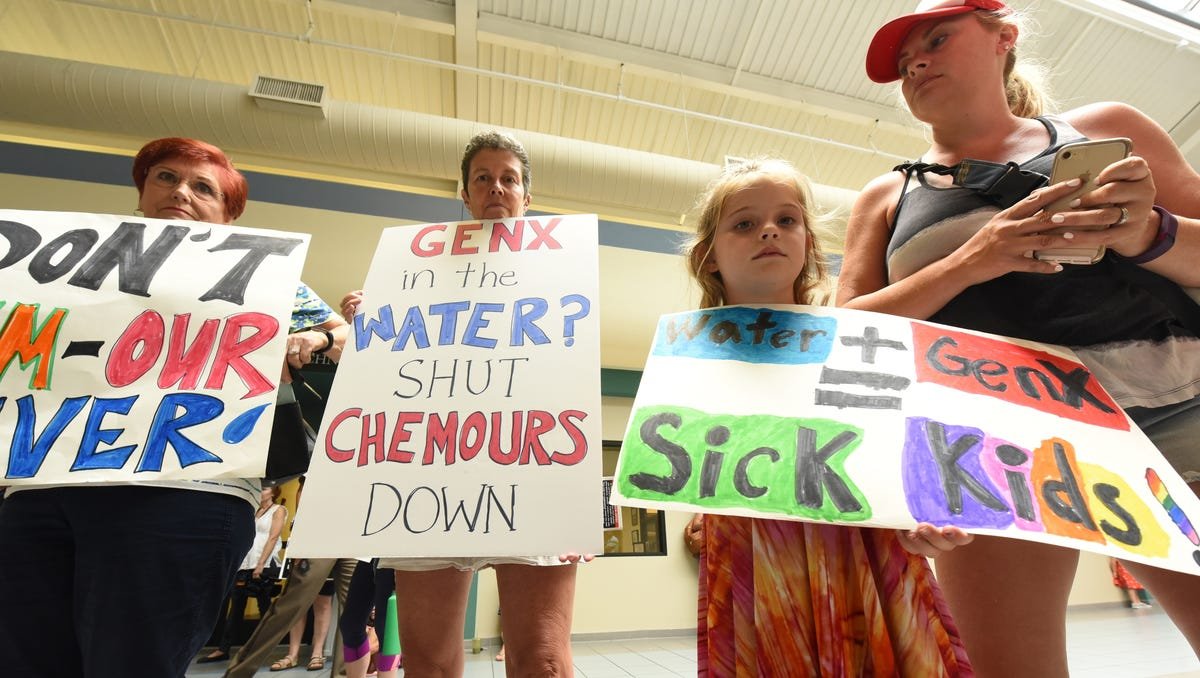
A recent analysis of historical blood samples from Wilmington residents detected high levels of very short-chain PFAS, which were previously thought not to accumulate in the body.
First, the good news.
“The good news for the environment and our drinking water is that PFAS levels are much lower than they have been in the past, and the regulations currently adopted and in development should help bring those numbers down even further,” said Dr. Jane Hoppin, principal investigator of the GenX exposure study and member of the North Carolina Center for Human Health and Environment.
But as we all know, there’s always a “but”.
“But even if people are no longer exposed to them at the levels they once were, we still don’t really know the health effects for people exposed for long periods of time,” Hopin said.
Since the existence of man-made “forever chemicals” (officially known as per- and polyfluoroalkyl substances, or PFAS) was first reported in Star News in 2017, health officials have been scrambling to understand just how widespread the contamination of these previously unknown substances is, and how much of a health threat they pose to those who are unknowingly ingesting them in their water.
For decades, DuPont and more recently Chemours, which was spun off from DuPont in 2015, dumped “permanent chemicals,” so named because they don’t break down quickly, into the Cape Fear River from their Fayetteville plant, about 110 miles upstream from Wilmington. There are thousands of types of man-made chemicals that are used in common everyday products such as food packaging, cooking utensils, medical devices, and adhesives.
As part of an effort to assess the potential long-term health effects of long-term PFAS exposure on the population, Hoppin and other researchers have been examining historical blood samples to determine whether the chemicals were permanently stored in people’s bodies and what health effects they experienced. Studies have already shown that man-made chemicals are known human carcinogens that can affect the immune system, thyroid, and fetal development, and cause kidney, testicular, and other cancers.
Hopin gave a presentation at a Cape Fear River Watch event in early March, highlighting some of his recent research findings that were featured in a research paper published in the journal Environmental Science and Technology.
After examining more than 100 blood samples from Wilmington residents from 2010 to 2016, researchers found high levels of very short-chain PFAS. It was given this name because of its small molecular size. Two very short-chain PFASs in particular were detected at high levels in nearly all samples. In contrast, GenX, the chemical that forever sparked public concern about drinking water contamination, was detected in only 20% of the samples, likely due to its short half-life in the human body of just a few days.
Hoppin said the study adds to growing evidence that short-chain PFAS can accumulate in people’s bodies. He added that ultra-short-chain PFAS have generally not been well studied in people because they were not thought to accumulate in the body due to their chemical structure and, until very recently, the technical challenges of reliably detecting PFAS in the blood.
“These results show that we need to start thinking seriously about how we study the health effects of these PFAS,” Hopin said, noting that because of their small size, ultra-short-chain PFAS can travel faster and farther than other permanent chemicals, making them difficult to remove from water sources.
By using historical blood samples, scientists can get a “time stamp” of what PFAS contamination was and how it was accumulating in people’s bodies before anyone knew it was a serious health threat.
“It gives us a glimpse into the past,” Hoppin said. “Now we’ll look at what the level of people we’re following today and how it changes over time.”
She acknowledged that funding extensive research aimed at tracking different population groups in the Cape Fear River watershed, including those above the Fayetteville plant, could be difficult, especially in this political environment. So far, research funding for this work has come primarily from grants from the National Institute of Environmental Health Sciences and the NC Collaborative Research Institute at the University of North Carolina at Chapel Hill.
“But continuing to follow people to see what these long-term health effects are is a fundamental part of our research and what we need to do,” Hoppin said.
Kemp Burdett, Cape Fear River Manager and executive director of Cape Fear River Watch, said the continued presence of very short-chain PFAS in the environment and waterways used for drinking water remains a health concern. He said it points to the need for more work at the federal and state level, such as requiring industry to clean up wastewater and air emissions before pollutants are released, because it is cheaper and easier to address pollution at the source than the long-term effects of pollutants being released into the environment.
But regulators have delayed or stalled many regulations aimed at eliminating or at least limiting PFAS releases under pressure from industry groups concerned about the economic cost of meeting new requirements.
“Honestly, I don’t care if it’s very expensive,” Burdett said of the cost to polluting industries to meet new regulations. “That’s not my problem.”
State officials also reiterated their goal of holding accountable those who intentionally release chemicals into the environment forever.
Gov. Josh Stein, who visited Wilmington in early March to announce additional funding to combat PFAS contamination, reiterated his administration’s goal to ensure that the companies responsible for dumping PFAS into the Cape Fear River and the environment at large pay for the cleanup costs and the expensive remediation costs that local governments, such as the Cape Fear Public Utilities Authority, must invest in to ensure that treated water is safe for human consumption.
“We will hold polluters accountable,” Stein said, adding that people should have assurance that the water that comes out of their homes when they turn on the tap is safe to drink.
Contact reporter Gareth McGrath at GMcGrath@usatodayco.com or @GarethMcGrathSN on X/Twitter. This article was produced with financial support from Journalism Funding Partners. USA TODAY Network maintains full editorial control of the work.
