


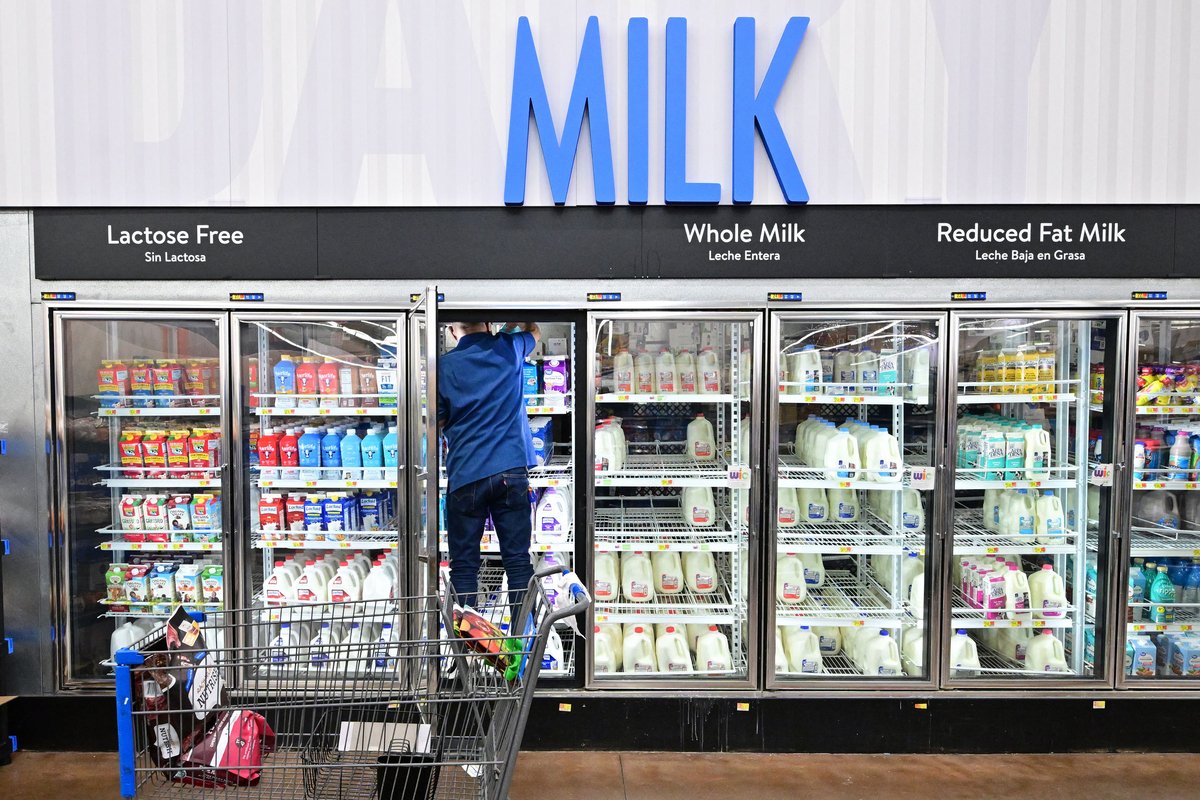
The EPA’s recent rollback of climate regulations will shift economic advantage to Chinese appliance makers, according to U.S. refrigerator makers.
President Donald Trump returned to office last year and vowed to revive American manufacturing. The administration has imposed high trade taxes, taken a pickaxe with regulations, and expanded oil and gas drilling, all in the name of American economic superiority. In his Rose Garden speech last year, President Trump promised that his trade policies would “strengthen our domestic industrial base,” “open up foreign markets, break down foreign trade barriers, and ultimately increase domestic production, which means more competition and lower prices for consumers.”
But last month, the Trump administration rolled back yet another key climate regulation, saying it would put some U.S. companies at a market disadvantage. The EPA has given grocery stores years to switch to purchasing freezers that are free of hydrofluorocarbons (HFCs), a powerful climate superpollutant. HFCs can be tens of thousands of times more potent in promoting global warming than carbon dioxide.
Some U.S. appliance manufacturers are now claiming that Chinese appliance makers will flood the U.S. market with older, less environmentally friendly products, harming their business and U.S. consumers. They said delays in phasing out refrigerators that use HFCs would be a major blow to U.S.-based companies that have developed climate-friendly chemicals to meet federal limits.
“This just gives foreign manufacturers the opportunity to keep selling old, legacy equipment on the market for a few more years, essentially rewarding companies that didn’t invest and punishing those that did,” said John Hurst, executive director of the Alliance for Responsible Air Policy, which represents domestic manufacturers.
“You can’t recover that investment.”
A rule issued by the EPA in May gave supermarkets and cold storage warehouses five to six years more deadlines to stop purchasing new HFC-based systems and equipment when replacing equipment, compared to 2026 and 2027 under the Biden administration. The Biden rule did not prevent companies from repairing existing systems or require them to purchase new systems.
The EPA announced that this change would result in savings of $976 million by 2050. However, these projections were based on a radically truncated cost-benefit analysis that considered entirely the initial cost savings from purchasing older, cheaper HFC-based refrigeration systems.
EPA did not quantify the impact on U.S. manufacturers who had invented HFC replacements and were planning new product lines.
“From a manufacturing perspective, it’s a sunk cost because the company has made the investment,” said Hurst, a former executive at manufacturing company Lennox International, who heads one of several industry groups supporting HFC divestment policies.
“If the product doesn’t sell, there’s no return on investment. U.S. manufacturers, or manufacturers that serve the domestic economy, are putting money into development and they’re not getting that investment back,” he said.
Manufacturers of alternative refrigerants are located across the country. This geographic diversity led to unusual bipartisan support for the American Innovation and Manufacturing Act of 2020 (AIM), which mandated U.S. HFC reductions.
“Delaying the transition date would undermine years of investment, create uncertainty, impose extra costs, and prolong the demand for higher (global warming potential) refrigerants…thus increasing prices for retailers, manufacturers, and consumers,” Scott Martin, senior director at HillPhoenix, which makes food refrigeration equipment that uses CO2 instead of HFCs, said at an EPA hearing on the draft rule last year.
Martin said HillPhoenix has tripled its workforce at its Georgia plant and has also significantly increased staff in Virginia and Iowa to ensure it can manufacture products on the EPA’s original schedule.
U.S. manufacturers have converted entire production lines to comply with the Biden administration-era HFC technology transition rules, but Solstice Advanced Materials, which makes HFC replacements, alerted the EPA in comments on the draft rules.
“It is important to maintain these requirements to the extent possible to protect our U.S. manufacturing footprint,” the company said. Solstice proposed a shorter extension that could give food retailers additional time “without compromising corporate capital investments or supply chain shifts made in reliance on existing technology transition schedules and phase-down schedules.”
Lennox International, which makes refrigerators, air conditioners, and heat pumps, told the EPA in October that it has “invested millions of dollars in raw materials. . . . Delaying the compliance date would result in the cancellation of existing orders and excess inventory of these materials, causing price increases and increased costs for consumers of these products.”
Lenox experienced a drop in orders in the final quarter of 2025 after the EPA telegraphed the planned delay, said Eric Zito, the company’s director of government affairs.
Not all manufacturers of HFC replacements saw this change as a big deal.
The transition to alternative HFCs is “already well underway, particularly in residential and light commercial applications,” Chemours spokeswoman Heather Connors said. Mr Connors said the action would not change the “underlying demand fundamentals” and customers would continue to update equipment with the “long-term regulatory trajectory” in mind.
But other manufacturers said the rule would make it harder for U.S. companies to compete with foreign competitors and allow foreign competitors to sell older, less climate-friendly models to the U.S. grocery industry at lower prices.
In particular, Chinese manufacturers have not had to invest in research and development to bring alternative cooling systems to market, as their American competitors have. The 2017 Global Treaty on the Phase-Out of HFCs gave HFCs time to transition.
“Importers who haven’t made that investment before can import at a lower price point because they don’t have the same cost increases,” said Alex Ayers, director of government relations at Heating, Air Conditioning and Refrigeration Distributors International, which represents wholesalers.
The Climate-Friendly Refrigerant Transition Act, which Trump signed in 2020, was designed to help American companies sell the alternatives they invent to the world, he said. However, “delays in their adoption in the United States also slow the ability of U.S. manufacturers to export these technologies.”
