


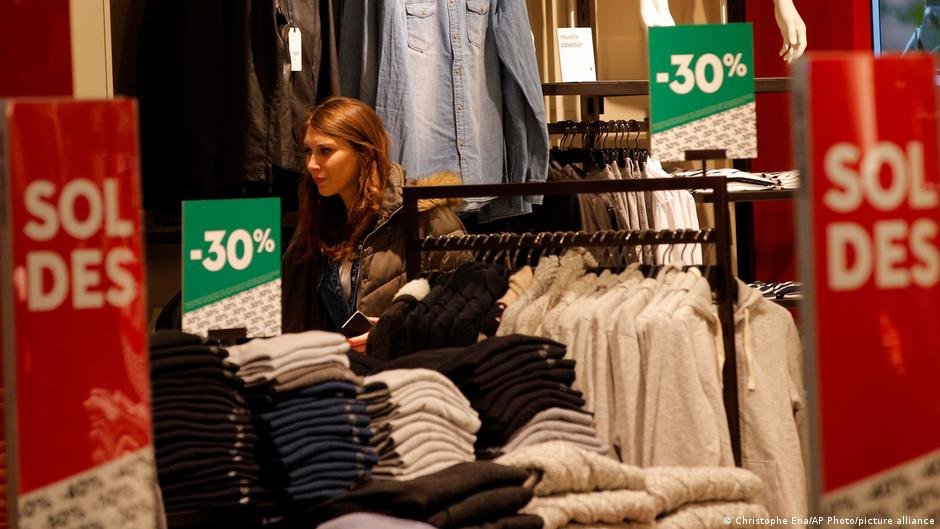
A ban on the disposal of unsold clothing and shoes came into effect across the bloc on Sunday, in the European Union’s latest move to reduce waste.
Every year, hundreds of thousands of tonnes of fashion clothing are thrown away across the 27-member EU due to damage, obsolete stock or returned online orders.
The new rules are expected to affect major fashion retailers, wholesalers and apparel manufacturers, only 20% of which are produced within the EU.
What are the new rules?
Under the EU’s Ecodesign Regulation for Sustainable Products, large companies with more than 250 employees and annual net sales of more than €50 million are prohibited from disposing of their stock of unsold clothing, accessories and footwear.
Companies now need to find ways to sell their products through discounts, alternative markets, charitable donations, and more.
A post on the European Commission’s website says unsold clothing can only be disposed of if the item is unsafe, damaged, counterfeit or rejected by a charity.
Companies are now required to issue annual reports on discarded products and keep records for five years.
The regulation was approved in Brussels more than two years ago and is expected to be extended to medium-sized companies in 2030.
EU hopes waste ban will lead to lower CO2 emissions Image: Photo/Photo Alliance
How big is the problem of fashion waste?
Concerns about so-called fast fashion, or low-priced, low-quality, mass-produced clothing, have increased significantly over the past decade.
According to the European Environment Agency (EEA), around 4% to 9% of unsold textile products are thrown away every year.
The rapid growth of online shopping and returns has made waste even worse.
Across the EU, one in five fashion items ordered online is later returned to the retailer and not resold.
Together, these represent hundreds of thousands of tonnes of clothing, accessories and footwear.
The new ban aims to reduce environmental impact as the incineration of millions of clothes hits efforts to cut greenhouse gas emissions.
EU countries are also under pressure to consider waste from raw materials, water, energy and transport in the apparel sector and promote recycling and reuse of products.
In a recent LinkedIn post, the EEA said it wants the textile industry to become more sustainable.
“A circular economy, where products are designed to last, reused, repaired and recycled, is no longer just a vision, but is being incorporated into law through these new legislative measures,” the EEA writes.
The fashion industry has repeatedly defended its tactics, pointing out that it is often cheaper to discard products than to store, repair or discount them.
Environmental groups hope the ban will reduce waste and overproduction Image: Sergiiev/Zoonar/picture Alliance
What is the reaction to the ban?
The German Retail Federation (HDE) said consumers would benefit from the ban as more discounted clothing would be sold through outlets, clearance markets and second-hand goods channels.
However, HDE managing director Stefan Gens warned that the rule change would be difficult for many stores.
“Not all unsold items can be easily resold or donated,” he said, due to reasons such as damaged packaging, high logistics costs, lack of demand and low product value.
Editor: Saim Dusan Inayatullah
Don’t let algorithms hide the news. If you trust our team to provide reliable reporting, choose us. Click here to choose your preferred news source on GoogleThat’s why verified news always appears first.
