


Hundreds of millions of pounds of pesticides, herbicides, and fungicides are used on U.S. farms each year, and the runoff flows into waterways, especially in the central part of the country where commercial crops dominate.
A new study by the U.S. Geological Survey provides a clearer picture of pesticide pollution in rivers. The scope of the study was notable, with scientists regularly testing 80 chemicals across 81 facilities over a 10-year period.
At most sites, at least one pesticide was detected at alarming levels from 2013 to 2022. The levels were high enough to potentially harm aquatic plants and invertebrates, such as mayflies and stoneflies.
And data only provides a snapshot of the situation.
“This is the largest consistently monitored national network,” said Meg Shoda, a USGS hydrologist based in Cleveland, Ohio, and lead author of the study. Still, she added, “sampling at this rate is likely an underestimate of the real situation.”
Because the USGS does not take daily or weekly samples in the field, it can easily miss spikes in contamination as rain washes chemicals from farmlands, lawns, and golf courses.
They are also sampling a small portion of millions of miles of rivers in the United States for 80 chemicals, just a few of the many pesticides currently used.

Sugar Creek, located just east of Indianapolis, Indiana, is part of the USGS stream monitoring network. More than 20 pesticides were detected in water samples from this stream.
Three chemicals stood out.
Still, researchers have found a pattern. Some chemicals have been detected multiple times, and studies highlight three of the chemicals studied as the greatest threat to water supplies: atrazine, metolachlor, and imidacloprid.
Atrazine (the second most common farm herbicide in the country as of 2017) and metolachlor combat weeds commonly found in corn, soybean, sugarcane, and sorghum fields. Imidacloprid confuses insect brains. Farmers spray it on their crops or buy seeds pretreated with this substance to protect plant growth.
The results do not sit well with public health groups concerned that pesticides are becoming too common in drinking water supplies. Take atrazine.
“Atrazine has been around for a really long time,” says Sidney Evans, a senior scientific analyst at the Environmental Working Group, a nonprofit research organization. “We’re concerned about that because it’s a hormone disruptor.”
This herbicide has become one of the most prevalent chemical contaminants in surface waters in the United States and is also accumulating in groundwater, especially in the Midwest.
According to the Environmental Working Group’s tap water database, atrazine has been detected in samples from more than 2,000 water utilities serving 40 million people.
Some public health studies have linked atrazine to birth defects in humans and other effects on child development, but the results are not conclusive. Other studies have found that it can harm frogs, fish, and aquatic plants.
The European Union banned the chemical 20 years ago.
The five states with the most atrazine in their public water systems are Texas, Wisconsin, Missouri, Kansas, and Illinois, all important agricultural hubs in the central part of the country.
Syngenta, the chemical’s maker, claims the herbicide is essential to U.S. crop yields and benefits the environment by reducing the amount of work farmers have to till the soil to kill weeds. Tillage leads to a long list of environmental impacts, including erosion that depletes topsoil and causes water quality problems in rivers.

A northern leopard frog sits in a wetland in Worth County, Iowa. Although the U.S. Geological Survey study did not discuss amphibians, there is growing independent scientific evidence that at least one pesticide, atrazine, can weaken frogs and make them more susceptible to disease.
Pesticide contamination can harm plants and animals
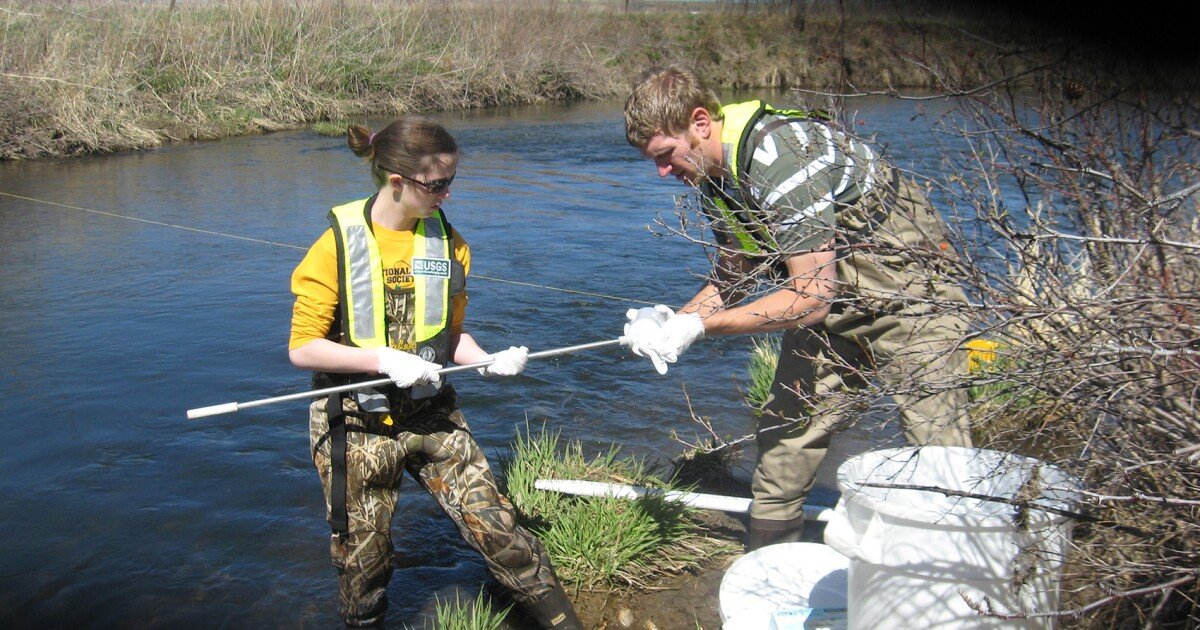
For the new study, the Geological Survey utilized a network of long-term water monitoring sites, collecting water samples at each location 10 to 24 times a year.
Geological Survey scientists found that 19 pesticides exceeded benchmarks set by the U.S. Environmental Protection Agency.
EPA benchmarks indicate safety for plants, invertebrates, and other living things. If the concentration level of the pesticide is below the standard value, it is unlikely that it will affect these organisms.
Two-thirds of the sites had pesticide contamination exceeding at least one acute benchmark and one chronic benchmark. (Acute levels reflect the fact that increased exposure to pesticides can cause immediate harm; chronic levels are lower, but last longer and also pose risks.)
Atrazine was the single insecticide that affected most sites at acute levels. Imidacloprid affected most sites of chronic exposure.
The good news, Shoda said, is that in some cases scientists couldn’t find any pesticides at all. The other side of the coin is that most of the sites that are struggling with pesticides have not improved over time. Pollution was on the rise.
This was also the case at many river sites in the Midwest and the Mississippi River Basin.
Shoda said the findings are consistent with research showing agriculture is the main driver of pesticide pollution.
“There’s a lot of agriculture going on in this watershed,” she said.
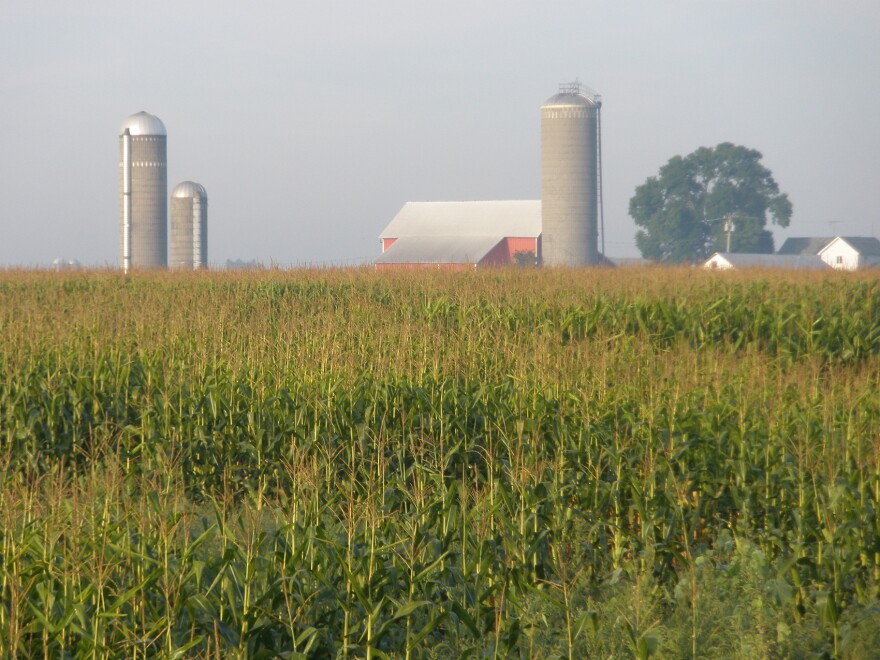
Herbicides and other pesticides are commonly used in corn fields.
For the authors of this study, the lingering question is what happens to plants and animals when they are affected by multiple pesticides at once. While EPA’s benchmarks reflect the effects of individual chemicals, Shoda said scientists often find “soup” in the field.
“How does this kind of soup of different pesticides affect (them)?” she said. “What is its toxicity?”
Aquatic ecologist Debbie Baker said pesticides are formulated to damage plants and insects, which has a clear impact on rivers.
“It has the same effect in water,” said Baker, an associate research scientist at the Kansas Center for Biological and Ecological Research who was not involved in the study. “We know this, but it’s still happening.”
Baker said harming one type of life in the water, such as aquatic plants, can have a knock-on effect on other life forms.
“Like terrestrial plants, plants in aquatic communities provide oxygen and the base of the food chain for other aquatic organisms,” she said.
Aquatic insects are key to the food chain, not only as protein-packed morsels that feed fish and birds, but also as predators. For example, dragonflies help control mosquito populations both while they are larvae living in the water and after they fly as adults. Other invertebrates also play their roles as herbivores, prey, or predators of plants.
“Looking at the community is really important,” Baker said. “It’s not just individual mayfly species or individual plant species.”

USGS scientists collect water samples from the Green River in Wyoming, Colorado, and Utah.
Professor Baker would like to see further research into invertebrate communities in rivers with and without pesticide pollution.
“What is really happening to macroinvertebrate communities in the long term?” She stressed the importance of understanding whether the “mix of predators, herbivores and omnivores” is changing.
Some rivers in the central United States where this pollution occurs
Atrazine has occurred dozens of times in the Kansas River in DeSoto, Kansas, and the White River near the Indiana-Illinois border, where levels exceeded the EPA’s standard for potential acute (immediate) harm.
So are Maple Creek near Omaha, Nebraska, and the Little Arkansas River north of Wichita. There were times when the herbicides acetochlor and metolachlor and the insecticide imidacloprid were present at worrying concentrations in these rivers.
Like atrazine, the European Union has banned acetochlor and a form of metolachlor that has raised concerns about poisoning mammals feeding on earthworms contaminated with acetochlor. The EU has also banned farmers from using imidacloprid on open field crops, saying it harms bees and other pollinators.
Imidicloprid has also occurred in other rivers in the central part of the country exceeding chronic or acute levels, including the Brazos River south of Houston, Texas. Clinton River north of Detroit, Michigan. Shingle Creek, Minneapolis, Minnesota. Des Moines River near the Iowa-Missouri border. North Canadian River east of Oklahoma City.
The Environmental Working Group says many questions remain unanswered about how certain pesticides affect people and how many people are exposed to them.
EPA has not set regulatory limits on the amount of imidacloprid that can be used in public water supplies. And while neonicotinoid pesticides are not considered carcinogens by federal authorities, chronic exposure has been shown to cause liver damage in rats.
Mr Evans, along with the Environmental Working Group, wants to see increased testing for imidacloprid in water supplies.
EPA collects data on a limited number of unregulated chemicals to understand their prevalence in drinking water, but these are not yet on the list.
“That’s alarming to me,” she said. “Because studies have shown that this substance is present in drinking water in places where it shouldn’t be present.”
Celia Llopis-Jepsen is an environmental reporter at Harvest Public Media and host of the environmental podcast Up From Dust. You can follow her on Bluesky or email her at celia (at) kcur (dot) org.
Harvest Public Media is a collaboration of public media newsrooms in the Midwest and Great Plains. Reports on food systems, agriculture and rural issues.
