


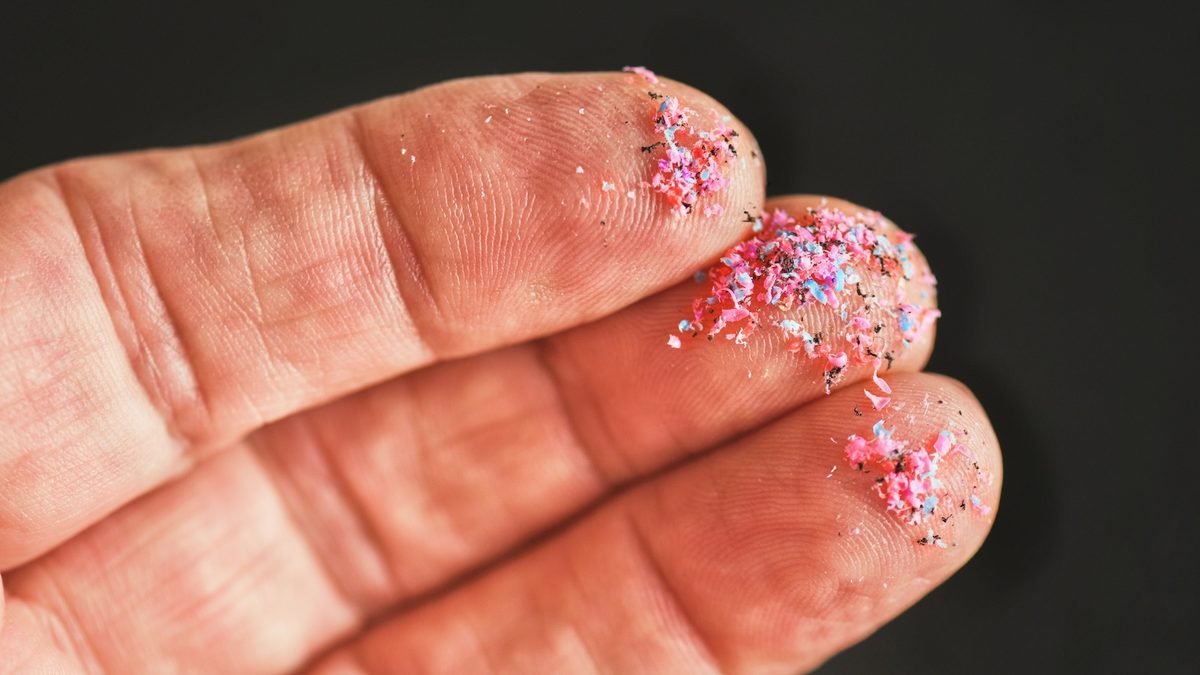
For more than a decade, scientists have been documenting the presence of microplastics in our oceans, soil, air, drinking water, and food. Recently, peer-reviewed research has revealed the presence of microplastics in the human body. But how much plastic do we consume, where does it come from and what is it doing to us?
Cassandra Rauert, an environmental chemist at the University of Queensland in Australia, is conducting research to better understand the effects of such exposure. Her research shows that current techniques used to detect plastic in the human body are vulnerable to contamination from laboratory equipment. And last year, she published a high-profile paper that found that lipids present in blood can cause false positives for polyethylene, the most commonly produced plastic. All this suggests that some of the reported levels of microplastics in humans may be overestimated.
In an interview with YaleEnvironment 360, Lauert explained how, after learning about the potential for microplastics to enter the lab from construction materials, equipment, clothing, and the air, she and her fellow researchers painstakingly rebuilt their workspaces using glass and steel to significantly reduce the potential for contamination. The hope is that if researchers can accurately measure the levels of microplastics in human tissue and blood, they will be able to determine how plastic pollution specifically affects us.
“I don’t think we really have enough evidence about what impact[microplastics]are having,” Rauert said. And the much-touted discovery that we eat a credit card’s worth of plastic every week? “That has been completely debunked.”

Cassandra Rauert.
Courtesy of Cassandra Rauert
Yale University Environment 360: Why are microplastics in the human body so difficult to study?
Cassandra Lauert: It’s a fairly new field. And we are trying to use analytical techniques that have been developed for other purposes.
A few years ago, when we first started thinking about human exposure to plastic, we thought, “We need to do a blood test to see what’s in there.” A small test of my blood revealed surprisingly high levels of polyethylene. I didn’t understand what it meant. When it comes to my diet, I don’t eat a lot of food packaged in plastic. That’s when we first started thinking, “Maybe there’s something else going on in our analysis that we haven’t considered before?”
We assessed how reliable current assays are for detecting microplastics in blood. And what we found is that lipids and fats cause false positives for polyethylene. Lipids are made up of the same components as polyethylene, so when you analyze lipids, they look identical to the analyzer. This means that signals from lipids can be mistaken for polyethylene if you don’t look at the data carefully.
Subscribe to the E360 Newsletter to receive weekly updates delivered to your inbox. sign up.
e360: A paper you published last year found that 18 previous studies of microplastics in human blood had this problem.
Lauert: We published[the study]to say that we need to think about the data that we’re getting from our devices because these lipids can give us false positives. To our knowledge, these previous studies were unaware of and did not consider this issue, and future research should indeed do so.
e360: Another challenge is that plastic is everywhere, including in laboratory equipment.
Lauert: In a typical chemistry lab, you’re surrounded by plastic. You have a plastic pipette. I have a plastic petri dish. You need a lot of plastic. It may also be sterile. It’s disposable. They have a purpose, but that means a lot of plastic can fall off and be in the lab around you.
“If the sample comes into contact with plastic, such as a urine sample stored in plastic, there is a potential for contamination.”
We are talking about very small particles and fibers. They are invisible – they are very small – and they are always in the air around us. If you are not aware of this, these small particles or fibers can accidentally fall into your sample. Alternatively, if the sample comes into contact with plastic (for example, if a urine sample is stored in plastic), some of the plastic may come off and contaminate the sample.
e360: You have completely renovated your laboratory to remove plastic pollution. What was involved?
Lauert: We worked with an architect to build the lab almost from scratch. The first thing we had to think about was what to build the lab with. We tested about 30 different building materials, looking for one that was plastic-free and free of plastics (additives) like phthalates, but we couldn’t find one. Everything contained plastic or phthalates.
There is no wood or cardboard in the laboratory. Mold may grow. Bacteria may enter. So in the end, we decided to use stainless steel. It was the only way to avoid using any plastic. When installing glass panels on windows, the silicone holds the glass in place. We tested all the different brands of silicone to find one with a low phthalate content. It was incredibly detailed, but it was worth it.
Eventually, the three rooms were connected and all had positive pressure. The idea is that when you open the door, you push contaminants out rather than bringing them in. And when we commissioned it into the lab, the first thing we did was set up a background sampler there to see what was in the air. In the lab, the plastic and phthalate content is approximately 100 times lower than in a typical lab.

A plastic-free laboratory designed by Cassandra Rauert and colleagues at the University of Queensland.
University of Queensland
e360: Isn’t it a bit disturbing to think that plastics are so ubiquitous that we would have to build clean rooms from scratch to study them?
Lauert: It definitely made me think a lot about my home and all the plastic consumer products I have and all the plastic items in my kitchen that I’m replacing with metal and wood. You don’t really know how much plastic you use in your daily life until you start looking for it intentionally. That’s natural. You just grow with it.
e360: As far as we know, how does plastic usually get into our bodies?
Lauert: When it comes to what’s in the air around us, we know that there are higher concentrations inside our homes. We know that many of these (plastic additives) are found in the dust in your home, so vacuuming more often is a great way to remove them.
e360: What is the biggest source of plastic in your home?
Lauert: We have been observing the balconies of houses and found high concentrations of (particles from) tires (made from synthetic polymers). There is a possibility that tires (particles) are mixed into the house dust. There isn’t a ton of information about it yet.
“If you’re breathing in[plastic]fibers, are you just going to cough it up again, or can they actually get deep into your lungs?”
When it comes to what you inhale, most of it is probably synthetic. If you use the dryer frequently and put polyester or nylon products in the dryer, a large amount of fiber will fall out. We recommend not using a dryer on these materials. Please check if it can be hung.
Inside the plastics industry’s strategy: delay, deny, and distract. read more.
But perhaps the biggest source of information you have around your home is what you use to prepare meals. If you are using a plastic cutting board, small pieces of plastic will cut from it and stick to your food. Using plastic kitchen utensils is probably not a good idea. I would change it to bamboo, wood, or metal. Heating food in plastic containers releases more plastic.
e360: Are we really eating a credit card’s worth of plastic every week?
Lauert: It has been completely debunked. We’ve been looking at what comes off plastic food containers under a variety of conditions. The plastic is actually peeling off and you can measure it, but it doesn’t mean there’s a lot of plastic.
e360: What are some unanswered questions for researchers?
Lauert: I think the first thing is that we don’t know what we’re actually being exposed to. What kind of plastic food containers actually emit plastic? How big are they? We know that heavy washing releases fibers. Synthetic fibers come out when you use the dryer. But if you’re breathing in those fibers, will it just make you cough up all over again, or can they actually get deep into your lungs?
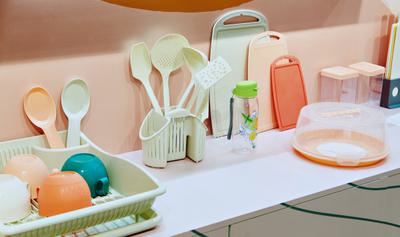
Plastic kitchen tools can cause microplastic pollution.
Sergey Ryzov / Alamy
e360: And while we know a lot about the effects of chemicals added to plastics, such as phthalates, which have been shown to affect fertility, and bisphenols, which have been linked to type 2 diabetes, we know little about the effects of the plastic particles themselves.
Lauert: Yes, we know that we are exposed to a lot of plastic (additives). And we know they are endocrine disruptors. We have been monitoring and analyzing them for decades.
I don’t think we really have enough evidence at all about how[microplastic particles themselves]can affect the human body. If we’re eating plastic, what sizes and types of plastic can actually get into our bloodstream?
Most of the plastics (particles) we know we are exposed to are too large to enter the bloodstream from the intestines, only very small particles can do that, so we flush them out of the body. Although this mechanism has not been studied in detail, analysis of stool samples has shown that they contain various plastic particles.
“In terms of pollution, plastic is horrible, and as we continue to produce new plastic, pollution continues to accumulate.”
However, we still know very little about the smallest plastic sizes, so we don’t know how much plastic is excreted or how much can pass through the body’s barriers. And I think we need to understand that a little bit more so that we can also teach toxicology research.
Also, many toxicology studies, especially in the past, have tended to use (laboratory grade) polystyrene spheres as representative microplastic particles. This is the only standard that can be used in toxicity studies. However, we are not exposed to perfectly spherical polystyrene. If it’s polystyrene, it will break into pieces or splinters. So it’s not really representative.
e360: Companies have long used the tactic of resisting regulation because they say they don’t know enough about the health effects of their products. Can you see that happening here?
EPA researchers detail EPA’s attacks on science. read more.
Lauert: Well, we know that plastic is horrible in terms of pollution, but as we continue to produce new plastic, pollution continues to accumulate. We have to stop using large amounts of plastic and single-use plastic.
It would be easy to say we don’t know enough yet, but we do know about the (health risks) of these chemicals in all the plastic that wraps our food. From that perspective, it’s still a good idea to reduce or eliminate plastic wherever possible.
