


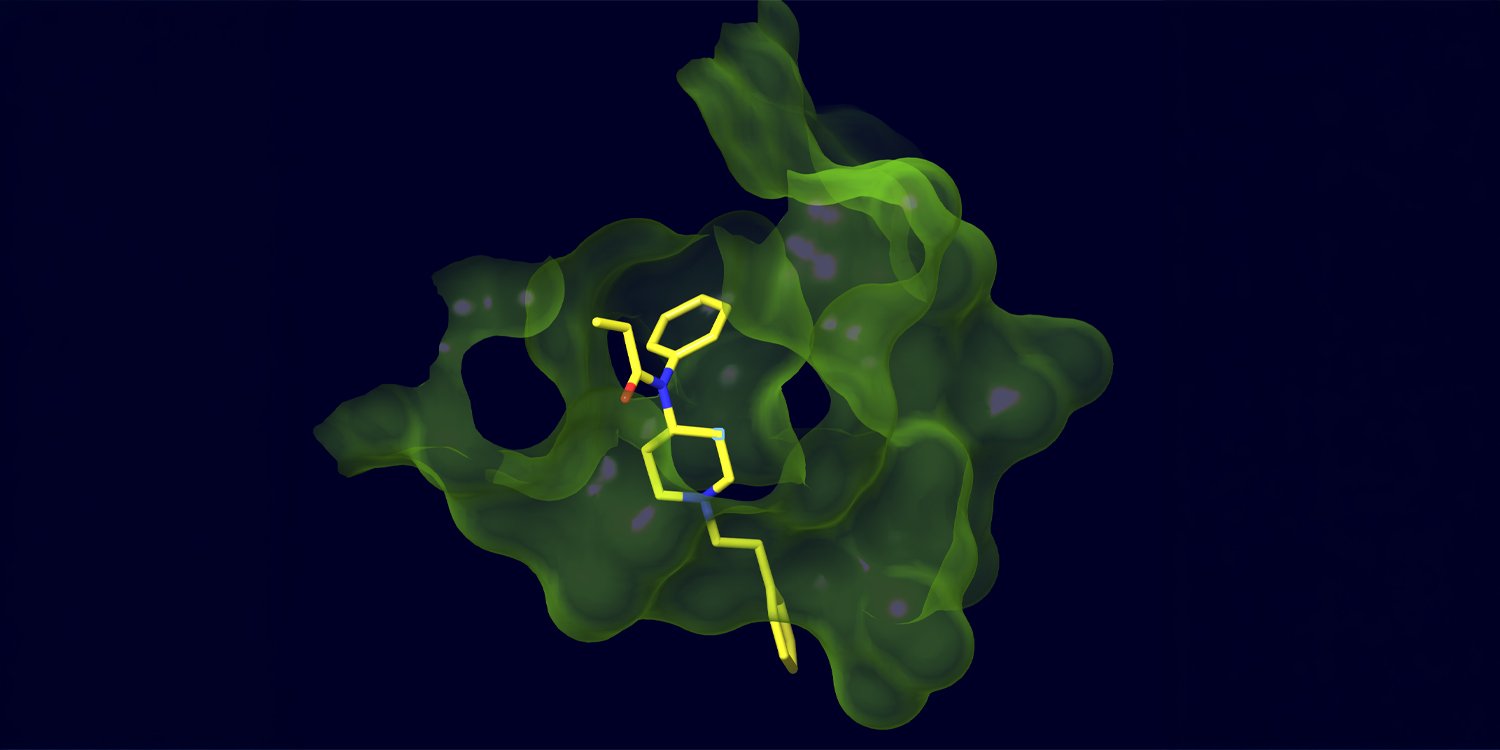
New research published in Medicinal Chemistry Journal suggests that new vaccine candidates could protect against fentanyl and its many illegal variants by training the immune system to recognize a broad molecular signature rather than a single specific structure. These findings provide evidence that next-generation drug vaccines have the potential to outperform the rapid development of synthetic designer opioids.
Fentanyl and related synthetic opioids are responsible for numerous overdose deaths worldwide. In high doses, these synthetic drugs quickly enter the brain and disrupt nerve signals that control breathing. Illegal drug manufacturers are constantly changing the chemical structure of fentanyl to create new designer variants, allowing the drug to evade detection by law enforcement and be used at a pace that outpaces standard medical interventions.
“I think the value of this study is pretty far-reaching in that synthetic opioids are here to stay and heroin is basically dead,” said Kim D. Janda, professor of chemistry and immunology and director of the Scripps Research Institute’s Institute for Worm Research and Medicine. “That being said, the government intends to continue to crack down on synthetic drugs, but because the cost of the product is so low ($800 buys about 650,000 synthetic drugs), those selling the drugs are not going to offer this lineup, but rather just keep tweaking the structure of the drugs to avoid oversight while maintaining potency (giving buyers the best product).”
Traditional medical countermeasures, including experimental vaccines, typically teach the immune system what to target based on the exact chemical structure of the original drug. This standard approach treats molecular recognition as highly dependent on mimicking the precise physical framework, or scaffold, of the target drug. The immune system typically creates antibodies that act like specific keys designed to fit into a single molecular lock.
Because the illicit drug landscape is rapidly evolving, this traditional vaccine design has built-in drawbacks. By the time a vaccine is prescribed and tested for a specific variant, clandestine labs have often moved on to newly tailored versions of the drug.
“The bottom line is that the drug cartels/clandestine laboratories that manufacture these synthetics are constantly trying to evade DEA oversight by creating new analogs of fentanyl,” Janda noted. “Rather than continually creating new vaccines for every mutation, we developed a vaccine that allows the immune system to act in a sense like an AI playing chess. We hope that each move of the AI creates a checkmate with the immune system.”
The scientists behind this new study wanted to test another hypothesis about how antibodies interact with small molecules. They proposed that the immune system may not require exact replicas of target molecules for successful defense. Instead, adaptive immunity may be able to recognize entire drug classes based on shared spatial configuration and chemical logic.
If this proves accurate, structurally modified vaccines could generate flexible immune responses that can block a variety of emerging synthetic opioids. To test this idea, researchers created an entirely new vaccine molecule. They started with the central skeleton of fentanyl, but replaced the central cyclic component, known as the piperidine ring, with a different, more constrained chemical structure.
This chemical substitution fundamentally changed the three-dimensional shape and expression of the molecule. Although the new molecule looked physically different from standard fentanyl, it retained some of the fundamental spatial and electrical features common to the fentanyl drug class.
The scientists then attached this modified molecule, called a hapten, to a larger carrier protein to ensure it could trigger an immune response. Haptens are simply small molecules that can trigger an immune response only when bound to larger protein structures. This novel approach is not guaranteed to be successful.
“I think the students who were working on this were surprised,” Janda told Cypost. “They didn’t think my idea would work.”
The authors evaluated the newly designed vaccine in female Swiss Webster mice. They assigned the animals to groups of six to ensure statistical reliability. One group received the structurally modified vaccine, another group received the standard fentanyl-derived vaccine for direct comparison, and a third control group received only the carrier protein without the active drug molecule.
The vaccine was injected into the peritoneal cavity of the animals four times over an 8-week period, specifically at weeks 0, 2, 4, and 8. Blood samples were taken at weeks 3, 5, and 9 to measure the levels and types of antibodies the mice produced. The scientists then ran multiple tests to see how well the antibodies recognized and neutralized fentanyl and its various variants.
In test tube laboratory assays, serum from mice administered the modified vaccine showed widespread recognition of the fentanyl drug class. This antibody was able to successfully bind to fentanyl and several dangerous variants such as carfentanil, acetyl fentanyl, and furanyl fentanyl. At the same time, the antibodies completely ignored standard medical opioids such as morphine, methadone, and oxycodone.
The researchers also administered increasing doses of fentanyl ranging from 50 to 4,800 micrograms per kilogram of body weight and tested the physical responses of the vaccinated mice. They measured pain responses using standard heated surface tests and tail reflex tests. In the control group, mice showed strong drug effects at low doses (usually about 150 micrograms per kilogram).
Much higher doses were required for vaccinated mice to show similar effects, indicating that circulating antibodies were successfully blocking the drug. For mice vaccinated with the modified vaccine, the required dose varied from 1,400 to 1,800 micrograms per kg. This large-scale change provides evidence that non-traditional vaccines protect animals as well as standard fentanyl-based vaccines.
To measure protection against the most dangerous effects of overdose, the authors placed mice in a special observation chamber and monitored their breathing. Unvaccinated mice experienced a rapid and severe decline in respiratory function within 10 minutes of fentanyl exposure, plummeting to nearly 40% of normal baseline. Vaccinated mice maintained normal breathing patterns throughout the 45-minute observation period and showed a high level of protection against respiratory failure.
Finally, the scientists measured the concentration of fentanyl in the animals’ blood and brain tissue just 15 minutes after the controlled exposure. In the control group, brain fentanyl levels averaged 61.9 nanomoles, a measure of the concentration of the drug present in brain tissue. In mice given the modified vaccine, brain fentanyl levels were significantly reduced to just 17.2 nanomolar.
At the same time, the amount of fentanyl in the bloodstream of vaccinated mice increased dramatically, reaching 1,719 nanomoles compared to just 15 nanomoles in the control group. This major change in drug distribution shows that the vaccine worked as intended. Circulating antibodies captured fentanyl molecules in the blood and prevented them from entering the brain, where they would cause fatal respiratory depression.
A potential misconception of this study is that such a vaccine would act as a treatment for opioid addiction itself. Rather than addressing the neurological needs or psychological components of substance use disorders, the vaccine is designed solely to trap drugs in the bloodstream and prevent fatal overdoses. Janda highlighted this particular caveat about how this treatment fits into a broader medical strategy.
“Vaccines are not, in and of themselves, a panacea for eradicating substance abuse disorders. Rather, vaccines are just another tool in a medical strategy to prevent opioid overdoses and substance use disorders,” Janda explained. It would act as a biological safety net to prevent death, rather than a sole treatment for the underlying addiction.
Another limitation is that animal models cannot always fully predict how the human immune system will respond to newly introduced vaccines. The immunophysiology of mice is different from humans. This means that the required dose and overall efficacy may change during clinical translation. Future studies may need to test the response of live animals to a broader range of synthetic variants to confirm universal protection.
Going forward, the authors suggest that this molecular design platform could potentially be extended to target other highly variable biological threats. The next scientific steps include refining the vaccine formulation and preparing for final clinical trials to assess safety in humans. But rather than commercialize this particular vaccine, the research team chose a different path.
“I’ve made this research available patent-free so that anyone interested in curbing addiction can work on it,” Janda said. “I decided a long time ago that I would not try to profit from the misfortunes and misfortunes of others.”
The study, “Redefining Drug Immune Recognition: A Fundamentally Rearranged Molecular Structure Enables Broad Fentanyl Class Protection,” was authored by Arran W. Stewart, Lisa M. Eubanks, Bin Zhou, Rachel C. Steinhardt, and Kim D. Janda.
