


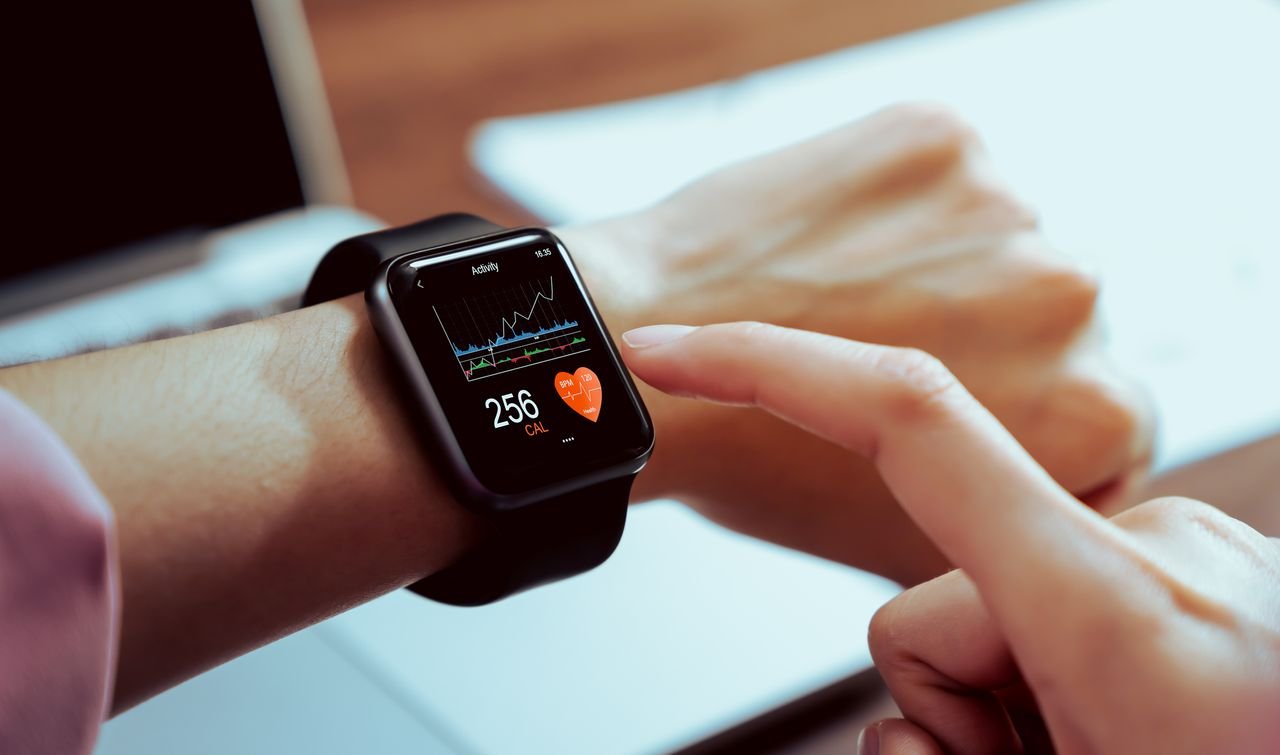
Physicians are adopting wearable devices and see the potential to improve patient care, but they still face significant obstacles to integration into clinical practice.
A survey of more than 2,000 physicians in six countries (United States, Canada, United Kingdom, France, Germany, and Spain) found that most physicians (97%) reported considering some form of wearable data, and the majority reported that wearable data provides at least some clinical benefit to patient care. Only 3% of physicians say they never consider such data.
The most commonly reviewed data categories are similar across countries, including cardiac physiology, activity and function, biometrics/physical events and alerts, and sleep.
According to the survey, 77% of U.S. physicians and 74% of non-U.S. physicians believe that wearable data has clinical benefits.
In fact, 82% of physicians personally use wearables, according to a survey conducted by the American Medical Association’s Center for Digital Health and AI and Medscape.
The findings show that while physicians generally recognize the value of data from smartwatches, fitness trackers, and biosensors, widespread clinical integration is hampered by structural barriers rather than a lack of motivation.
This study investigated physician use of patient-generated wearable data, reliability of data quality, reimbursement, workflow challenges, and factors influencing adoption.
“What struck me is that this technology is more advanced than doctors and more advanced than the health care system,” American Medical Association CEO Dr. John White told Fierce Healthcare. “The system is not set up to maximize that data for clinical impact.”
White pointed out that data needs to be actionable, not just available.
For wearable data to become more widely used in clinical practice, we need stronger clinical validation, clearer payment and accountability frameworks, better tools to interpret data, and workflows that fit seamlessly into clinical practice, said AMA President Willie Underwood III, MD.
The study found that when patients ask their doctors to review wearable data, doctors typically respond, with consistent responses across countries. This shows that patient requests are one of the most reliable means to bridge the gap between exposure to wearable data and wearable data integration, the report authors wrote. This means that activating demand through patient education, wearable literacy tools, and communication resources for clinicians may be one of the most direct strategies to promote clinical use.
Integration of wearable data into routine clinical practice remains limited, but varies by country. Across surveyed countries, fewer than 6% of physicians currently integrate wearable data into their workflows. However, the study found that differences in physician recruitment are more closely related to reimbursement, workflow feasibility, and regulatory requirements than physician interest.
Germany and Spain have the highest reported short-term pipelines of physicians ready to integrate these data, while fewer than one in five physicians in Canada and the United Kingdom say they are likely to integrate within the next 12 months.
The US is similar to Canada in its overall wearable data usage profile, with moderate current consolidation and a modest near-term pipeline of physicians expected to integrate over the next 12 months.
Overview of reimbursement pathways and other findings
Reimbursement pathways and structural conditions greatly influence how often physicians review wearable data.
In the United States, Current Procedural Terminology (CPT) codes for remote patient monitoring require FDA-cleared devices used in accordance with clinician-directed treatment plans and do not apply to consumer-grade wearables, regardless of FDA-cleared features. As a result, there is currently no dedicated reimbursement pathway for reviewing consumer wearable data.
In Canada, France, Germany, and the United States, four countries with clear payment mechanisms, physicians in countries where reimbursement pathways are available review wearable data more frequently than physicians who do not participate in such pathways. Germany showed the strongest effect, consistent with the availability of the country’s DiGA pathway.
However, the study found that payments alone are not enough to encourage broader adoption. Physician enthusiasm, liability concerns, and clinical readiness also influence integration. France had a reimbursement pathway, but integration has not yet progressed, White noted, as doctors are concerned about responsibility and trust in their data. The UK reported high use of wearables by doctors, but low feasibility and payment channels.
Germany is the country with the highest feasibility, meaning doctors are confident they can use wearable data during routine visits, and the lowest clinical concerns of any country surveyed. Germany is also the country where payment channels are available and most actively used.
The UK and Canada have the lowest feasibility scores and highest concern levels, and both have no claims pathway.
Although the United States has the highest percentage of physicians already using wearable data in their clinical workflows, the majority of physicians are interested but do not routinely use these data. Liability concerns, feasibility gaps, and lack of automation appear to be major constraints.
Research shows that cardiologists and endocrinologists are most likely to use wearable data in clinical care, while primary care physicians, neurologists, and pulmonologists report greater challenges related to relevance, reliability, and practicality.
The study also investigated the impact of regulatory trust and clinical evidence. Approximately half of physicians in all six countries reported that regulatory clearance or approval is essential to or has a significant impact on trust. However, research has shown that regulatory approval is not the only determinant of data integration.
The factors that separate physicians who integrate wearable data into their workflows from those who do not center around data reliability, clinical skills in applying these data, and implementation concerns, with skill rising to the top.
Physicians place the highest importance on randomized controlled trials (RCTs) and peer-reviewed studies for reliability, with approximately 60% ranking them first. Investing in RCTs and developing social guidelines will create the widest possible impact, the report says.
White noted that health information technology developers and electronic health record systems also need to more effectively integrate this data into patient medical records.
“[Companies]need to really collaborate with physicians, not just technology, on how best to incorporate this data and what the clinical workflow will look like,” he said.
“The value for physicians to think about here is that instead of knowing heart rate, blood pressure, and other data points in the office every six months, every year, every two years, it’s collected on an ongoing basis. How do we use that data? Physicians, especially in cardiology, “We feel that data can be a valuable source of clinical information and can help with disease management. What really matters is that physicians see the right data at the right time in a way that they can actually use it.”
Recommendations to stakeholders
This report provides recommendations for physicians, policy makers, and healthcare technology companies to close gaps in wearable data integration.
Physicians should prioritize reviewing wearable data from algorithms with published clinical validation. And physicians need to advocate for structured, wearable data workflows within practices and health systems that make data review executable during normal office hours, rather than absorbing it as an unpaid, unstructured effort.
Physicians should also proactively discuss false-positive and false-negative results with patients and set expectations about what types of alerts will prompt clinical action to reduce patient anxiety and liability concerns.
And physicians need to establish a consistent, practical approach to documenting when and how wearable data influences clinical decisions. “Medicolegal liability ranks as the top workflow concern among U.S. physicians in our survey, and rigorous documentation is the most readily available risk management tool,” the report’s authors wrote.
For policymakers, the AMA urges the development of a billing code pathway for on-site review of consumer wearable data, separate from the prescribed remote monitoring of data.
device.
“What we really need to do is create a clear, dedicated reimbursement pathway for review and integrate wearable data into the workflow,” White said.
Policymakers should also consider regulatory frameworks that build trust and confidence in health data, including privacy and security protections and requirements for capturing and representing data in a standardized and consistent manner.
Earlier this year, the Food and Drug Administration (FDA) moved to loosen its oversight of common wellness devices. The FDA has updated its guidance to allow more wearable products to fall into the general wellness category and bypass the agency’s costly review process before reaching the market.
“We need a process that allows us to review the evidence, and we need standards and transparency. We need to know in what settings and for which populations[the device]has been clinically tested, and it should be stratified based on the risk of what it’s assessing,” White pointed out.
In the United States, regulators should issue guidance clarifying how existing CPT telemonitoring codes do or do not apply to visit reviews of patient-owned consumer wearable data, the authors of the AMA report said.
Medical device manufacturers and health tech companies need to build clinical credibility through evidence, the report says. Medical device companies must publish professionally tiered algorithmic accuracy reports that compare each detected data type to specified medical-grade standards.
These companies should also prioritize investments in two different lines of evidence. One is rigorous peer-reviewed clinical outcomes data to address the skeptical majority, and the other is publicly available validation datasets and real-world performance evidence to convert physicians who are already close to recruitment.
Companies must also provide transparent access to validation datasets and methodologies and communicate clear and distinct characteristics of wellness outcomes to address the physician trust gap in the United States.
Health tech companies should implement and support Fast Healthcare Interoperability Resources (FHIR)-based standards for consumer wearable data to enable consistent ingest, the AMA said. Health tech and EHR companies must build the ability to seamlessly integrate wearable data into physician workflows, including replacing “phone-based” reviews with automated uploads of verified data to the EHR in a structured format.
Health tech vendors will also need to build bias checks into their data standards, including clearly indicating where algorithms are validated and where performance is uncertain.
