


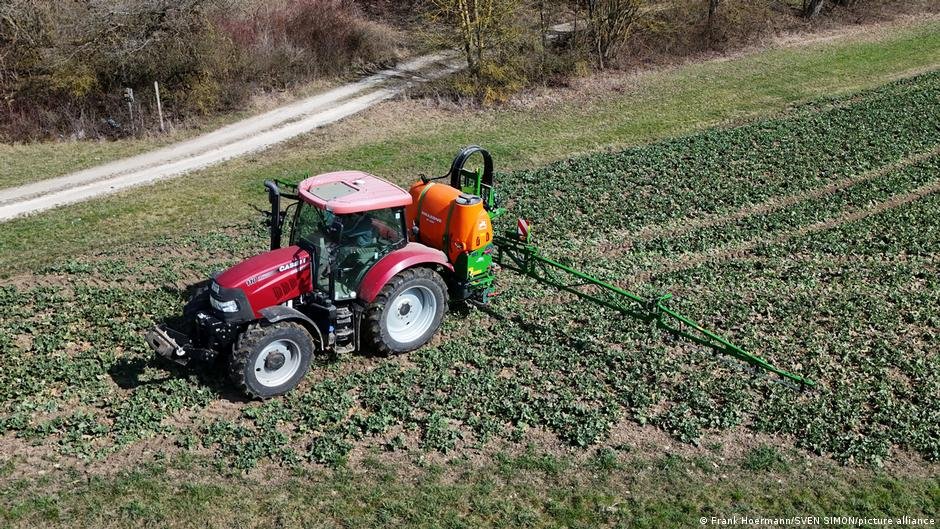
Three years ago, the European Union seemed to be getting serious about pesticides. Around 40% of people in the region have expressed concern about these substances being found in their food, and more than a million people have called for them to be phased out. In a sign of the times, the European Parliament was scheduled to vote on a binding proposal to halve pesticide use by 2030, using the 2015-2017 average as a baseline.
“Without these changes, pollinators and ecosystems risk collapsing, which will have an even greater impact on food security and food prices,” former EU Commissioner for Health and Food Safety Stella Kyriakides said at the time.
Fast forward to 2026, and the bloc has permanently shelved mandatory abatement regulations. Additionally, to ease the regulatory burden on companies, the EU’s executive body, the European Commission, is currently considering permanently approving most pesticides.
The move to ease restrictions has met with resistance from campaign groups. Manon Rouby of the International Pesticide Action Network said this would undermine “the relationship between pesticide use and its impact on human health”.
DW analyzed how the use, sales and impact of pesticides changed before and after the EU lifted its binding 50% cut.
History of pesticide use and marketing in the EU
EU efforts to curb pesticide use date back to at least 2009. At this time, the EU adopted its first directive promoting sustainable practices. It was suggested that this substance be used only as a last resort.
However, the results were limited. In 2020, the European Court of Auditors concluded that policy developments were failing to meet reduction targets. Following this finding, the European Commission first proposed a mandatory 50% cut in a 2023 vote.
Both then and since then, the EU ranks among the world’s top 10 users of pesticides among countries with major agricultural land. This is despite an 18% decrease compared to 2015, based on estimates from the Food and Agriculture Organization of the United Nations.
However, the situation is different at the national level. Sales serve as a proxy, as there is no comparable data on pesticide use by country in the EU. In 2024, the most recent year for which data exists, the top five purchasing countries showed an upward trend, with sales increasing by nearly 10% compared to 2023, when reduction targets were still looming.
These five countries (Spain, France, Italy, Germany and Poland) are also the EU’s top agricultural producers, accounting for 76% of total sales in 2024.
Lindsey Hendricks-Franco, an environmental researcher at the German think tank Ecologic Institute, said the U-turn in policy priorities “reflects the EU as a whole is very reluctant to impose burdensome restrictions on farmers.” She added that non-binding targets are unlikely to reduce use.
Sales of pesticides will increase in 2024 (including risky types)
Pesticide sales surged in several EU countries in 2024 compared to the average baseline of 2015-2017. In Bulgaria and Austria, it increased by about a quarter, but in Estonia, Latvia and Lithuania, growth was slower. Sales decreased in 20 EU member countries. Italy, which had the highest rate of reduction among EU member states, saw sales decline by 33%.
Although down 14% compared to 2015, overall pesticide sales in 2024 were 8% higher than the previous year, when mandatory reduction targets were still under consideration.
Hendricks-Franco said that if duty reductions had been adopted, agrochemical sales probably would not have fallen by 50%, but probably would have fallen “more than current trends”.
The decline over the 10-year period 2014-2024 was lower for a subgroup of highly hazardous pesticides known for their potentially harmful effects on people and the environment. By 2024, the most recent reporting year, sales of these hazardous substances had increased by a total of 27% year over year. This was particularly driven by sales growth in Spain, Poland, Hungary, Lithuania and Slovakia.
Some of these chemicals include glyphosate, a controversial pesticide that has been linked to cancer risk and miscarriage. Sales of glyphosate increased by more than 44% between 2015 and 2024, although the EU says the use of harmful pesticides has declined.
Risks of pesticide use
Pesticide sales volumes do not take toxicity or application rates into account, so little is known about risks to people and the environment. Pesticides are associated with biodiversity loss and are known to be highly harmful to fish and other species.
When these chemicals are present in groundwater and soil, they harm bees, birds, and aquatic life, according to a 2022 United Nations report. However, residues in many European rivers far exceed EU safety standards set for individual pesticides since 2000.
Only Lithuania and Slovenia reported that pesticides in rivers remained within recommended levels in 2023. Sweden had the highest residue reduction. In 2018 (the first year with comparable data for most EU member states) it was twice the recommended limit, but five years later it had risen to 7% above that threshold.
During the same period, rising concentrations were also recorded in Denmark, Latvia and Hungary. In 2023, pesticide residues in rivers in these countries exceeded safety standards by more than 50%.
Why was the 50% reduction proposal not passed?
With 19 of the EU’s 27 member states already exceeding pesticide standards to protect the environment and human health, the European Parliament has voted on a proposal to halve future pesticide use in November 2023.
However, it was rejected with 299 votes against and 207 votes in favor. Among those who did not support the proposal were the Greens and left-wing groups, who argued that the document was weakened in key areas.
“It was not a document that I could vote for in good conscience,” Sarah Wiener, a Green Party lawmaker from Austria, wrote in a press release at the time, adding that it was “very weak, especially when it came to protecting public health and biodiversity, and supporting farmers.”
Since that vote, the Commission’s focus has shifted from reducing pesticide use to lowering bureaucratic hurdles for companies, such as lowering administrative costs. In late 2025, they tabled a new proposal that would involve automatically approving most pesticides without having to re-evaluate their safety after the initial approval period.
Pesticide banned in Europe linked to Kenyan bee deaths
To view this video, please enable JavaScript and consider upgrading to a web browser that supports HTML5 video.
Hendricks Franco of the Institute of Ecology said the idea would mean “risky pesticides will remain on the market for longer,” adding that it sends a message from the EU that “the health risks are no longer urgent.”
The European Commission argues that reducing regulatory burdens will make it easier to bring more low-risk pesticides to market. And that would lead to “moving away from more dangerous chemicals,” said commission spokeswoman Eva Funtilova.
The EU is one of 196 countries to sign the Global Biodiversity Framework, which commits to halving environmental risks from pesticides by 2030.
“There are concerns and questions about how this is compatible with new developments that we are seeing at EU level,” said Mr Rowby of the Pesticide Action Network.
Editor: Janna-Karina Grün, Tamsin Walker
Fact check: Eva Lopez
For more information on the data, code, and methodology behind this analysis, please visit See this GitHub repository. You can find more data-driven stories from DW here.
This project received partial funding. European Data Journalism Network (EDJnet) in the context of chat europe.
