


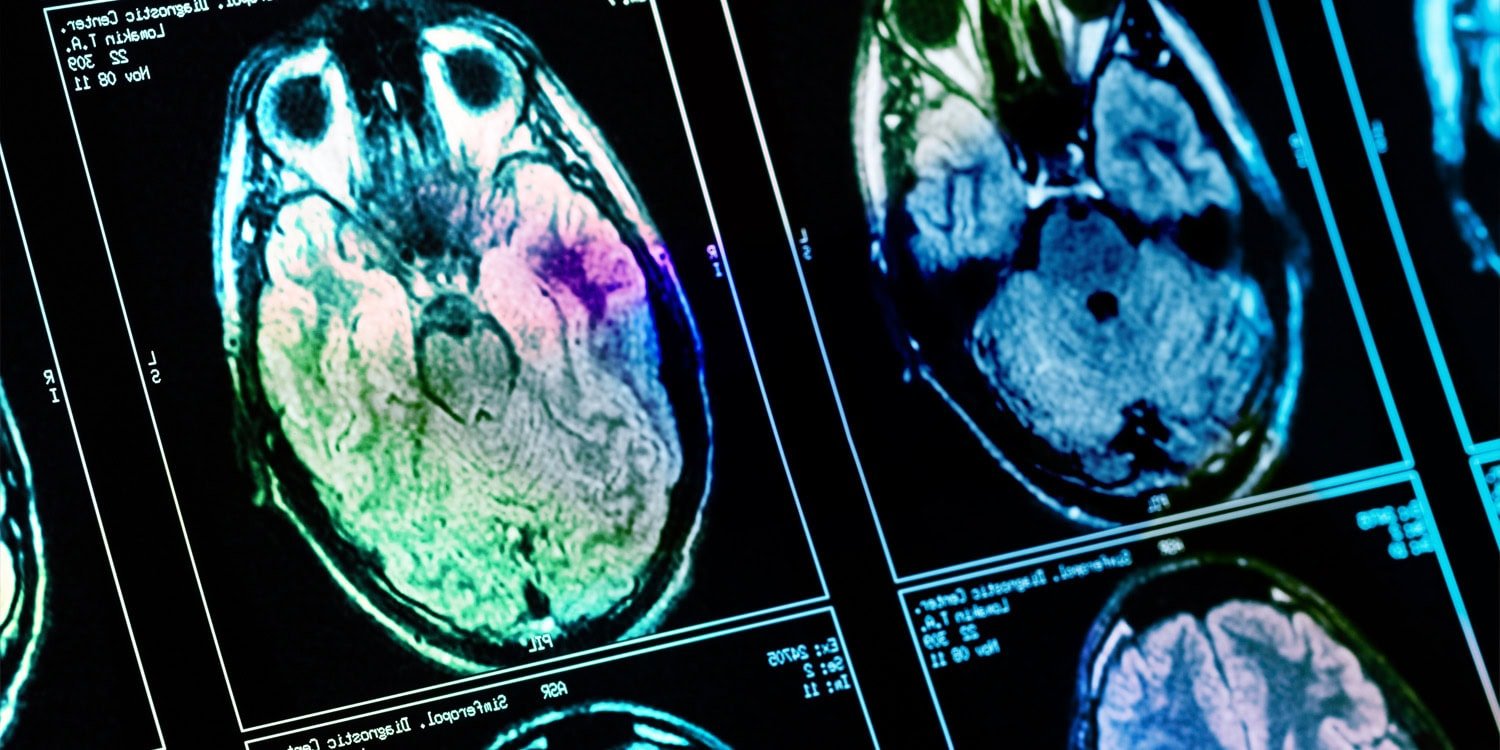
A new study reveals that the microstructural integrity of certain brain pathways is related to how intensely intrusive memories a person experiences after trauma. The study, published in Biological Psychiatry: Cognitive Neuroscience and Neuroimaging, suggests that distinct white matter connections correspond to different physical and emotional qualities of repeated flashbacks.
Intrusive memories associated with trauma are spontaneous, emotionally overwhelming sensory memories. People who experience them often feel as if the traumatic event is happening in the present moment, and the line between past trauma and present reality becomes blurred. These intrusive flashbacks are a defining symptom of post-traumatic stress disorder (PTSD) and often determine the overall severity of a person’s condition.
Despite the profound impact these intrusive memories have on quality of life, the precise neurobiological mechanisms governing their unique properties are still poorly understood. Many people experience intrusive memories differently. Some people may feel that their memory is dominated by intense visual fragments, while others may feel an overwhelming sense of physically and emotionally reliving the event.
To develop better therapeutic interventions, scientists are trying to understand the precise physical wiring in the brain that supports these different experiences. Theoretical models propose that the sensory details of traumatic flashbacks result from disruptions in how different brain regions communicate.
The hippocampus, a seahorse-shaped region deep in the brain, is primarily responsible for the formation and retrieval of episodic memories. When a memory is recalled, the hippocampus normally communicates with the posterior cortical system. These outer layers of the brain are involved in processing sensory information, reconstructing mental scenes, and maintaining a person’s internal sense of self.
Stephen J. Granger, a researcher at McLean Hospital and Harvard Medical School, led a team investigating the structural pathways that bridge these different nervous systems. The researchers hypothesized that the microscopic organization of these specific cellular pathways may explain why some people have traumatic memories characterized primarily by sudden intrusions, while others experience memories defined by a deep sense of reliving the event.
The human brain relies on white matter to facilitate this complex communication. White matter tissue acts as a biological scaffold, built from insulated nerve fibers called axons, which bundle together to connect different brain regions. These pathways determine which parts of the brain can interact and control the speed and efficiency with which electrical signals travel.
Previous functional brain imaging has shown that the subjective nature of intrusive memories tends to match the frequency with which the hippocampus, along with other brain networks, is activated. Yet, the physical structures supporting these functional networks had not yet been evaluated in the context of everyday experiences of traumatic memories.
To capture the essence of the traumatic memory that occurred, Granger and his colleagues recruited 114 adults who had survived a traumatic event. These participants regularly experienced intrusive memories, and the majority met criteria for a formal PTSD diagnosis.
Most clinical research on trauma relies on having patients spontaneously recall their harrowing experiences in clinical settings. To avoid this artificial environment, the research team used a smartphone application to administer periodic surveys to participants over a two-week period.
The technique, known as ecological momentary assessment, allowed the team to track spontaneous memories that came up in the real world. Participants received a message several times a day asking them to report whether they had experienced any intrusive memories since their last check-in. If they answered “yes,” they immediately rated the memory’s vividness, visual detail, emotional intensity, intrusiveness, and the degree to which they felt they were actively reliving the event.
After a two-week reporting period, participants underwent a special type of magnetic resonance imaging test. The researchers used a technique called diffusion-weighted imaging, which tracks the tiny movements of water molecules within brain tissue. Water diffuses differently along cellular barriers, and mapping this movement allows scientists to visualize the direction and density of white matter fibers.
The researchers used this image data to calculate a metric called fractional anisotropy. This metric serves as an indicator of white matter microstructural integrity, essentially measuring how organized and tightly bundled nerve fibers are within a particular pathway.
The researchers focused their analysis on two separate white matter pathways that connect the hippocampus to the back of the brain. The first target is the parahippocampal paraparietal cingulate, a regional branch of nerve fibers that connect memory centers with areas involved in the integration of mental images and internal thoughts.
The second target was the inferior longitudinal fasciculus. This thick band of white matter provides a direct communication pathway between the brain’s temporal memory areas and the visual cortex, which processes vision.
Researchers analyzed brain scans alongside thousands of real-world smartphone survey responses. To ensure the mathematical model was as accurate as possible, they incorporated information from previous functional imaging studies, a statistical approach that anchors new structural data to known biological activity patterns.
They found that the microscopic integrity of two distinct pathways corresponded to very different features of the traumatic memory. Specifically, we found that lower levels of structural integrity in the parahippocampal paraparietal cingulate were associated with higher memory intrusiveness.
To confirm that this association was specific to the memory pathways investigated, the researchers also tested control pathways in the brain’s frontal lobes. They found no association between frontal pathways and memory intrusiveness, supporting the hypothesis that specific connections between the hippocampus and parietal cortex play a distinct role in managing unwanted thoughts.
This particular brain bundle projects to posterior areas and controls memory inhibition and attention allocation. Reducing the structural integrity of this pathway can reduce the brain’s ability to suppress unwanted memories, opening the door to spontaneous and unexpected intrusions that cause traumatic flashbacks.
In contrast, the researchers found that the lower microstructural organization of the inferior longitudinal fasciculus was associated with a stronger sense of reliving the trauma in the present moment. This association pathway connects memory areas to the visual cortex and plays a unique role in integrating incoming visual signals and emotional information.
When this secondary pathway is impaired, a person may be unable to separate internal traumatic memories from current visual reality. This blurring of biological boundaries may contribute to the overwhelming feeling that makes memories of severe trauma so disorienting.
Because the research team conducted brain imaging at a single time point, this study cannot definitively determine the direction of these relationships. It remains entirely unclear whether natural changes in white matter integrity act as a pre-existing vulnerability that allows a person to develop intense traumatic memories after an event has occurred.
Alternatively, the structural differences observed on the scans could be the biological result of repeatedly experiencing severe intrusive thoughts over an extended period of time. Constantly and repeatedly recalling highly charged traumatic memories can physically change the brain’s white matter pathways, similar to how repeated use changes the physical pathways in a forest.
In future studies, scientists will need to repeatedly image trauma survivors immediately after a devastating event to track how both their brain structure and psychological symptoms change over months or years. Additional studies involving controlled laboratory recall and naturalistic tracking in the very same individuals may also reveal biological overlap between voluntary and involuntary memory.
By integrating tracking of real-world memory experiences and sophisticated mapping of anatomical brain connections, researchers are deepening our understanding of PTSD. Ultimately, translating these physical changes into clinical profiles could help doctors pinpoint specific neural circuits, opening the door to treatments that target the specific memory symptoms that patients suffer from most.
The study, “Microstructural integrity of posterior hippocampal cortical white matter is associated with phenomenological properties of trauma-related intrusive memories,” was authored by Steven J. Granger, Boyu Ren, Kevin J. Clancy, Yara Pollmann, Justin T. Baker, and Isabelle M. Rosso.
