

Close Menu

    Subscribe to Updates

    Get the latest creative news from FooBar about art, design and business.

    What's Hot

    Oxford physicist made Schrödinger’s cat even weirder

    June 15, 2026

    The secret to smoother, more delicious protein shakes

    June 15, 2026

    At our feet are 68000000000000000000000000000000000000000000000000000000000000000000000000000000000000000000000000000000000000000000000000000 000000000000000000000000000000000000000000000000000000000000000000000000000 00000000000000000000000000000000000000000000000000000000000000000000000000 Trillion kilometers of highways stretch out beneath our feet.

    June 15, 2026
    Facebook X (Twitter) Instagram
    Facebook X (Twitter) Instagram
    Health Magazine
    • Home
    • Environmental Health
    • Health Technology
    • Medical Research
    • Mental Health
    • Nutrition Science
    • Pharma
    • Public Health
    • Discover
      • Daily Health Tips
      • Financial Health & Stability
      • Holistic Health & Wellness
      • Mental Health
      • Nutrition & Dietary Trends
      • Professional & Personal Growth
    • Our Mission
    Health Magazine
    Home » News » Scientists only looked inside Darwin’s 200-year-old specimen bottle without opening it
    Nutrition Science

    Scientists only looked inside Darwin’s 200-year-old specimen bottle without opening it

    healthadminBy healthadminMarch 5, 2026No Comments3 Mins Read
    Scientists only looked inside Darwin’s 200-year-old specimen bottle without opening it
    Share
    Facebook Twitter Reddit Telegram Pinterest Email


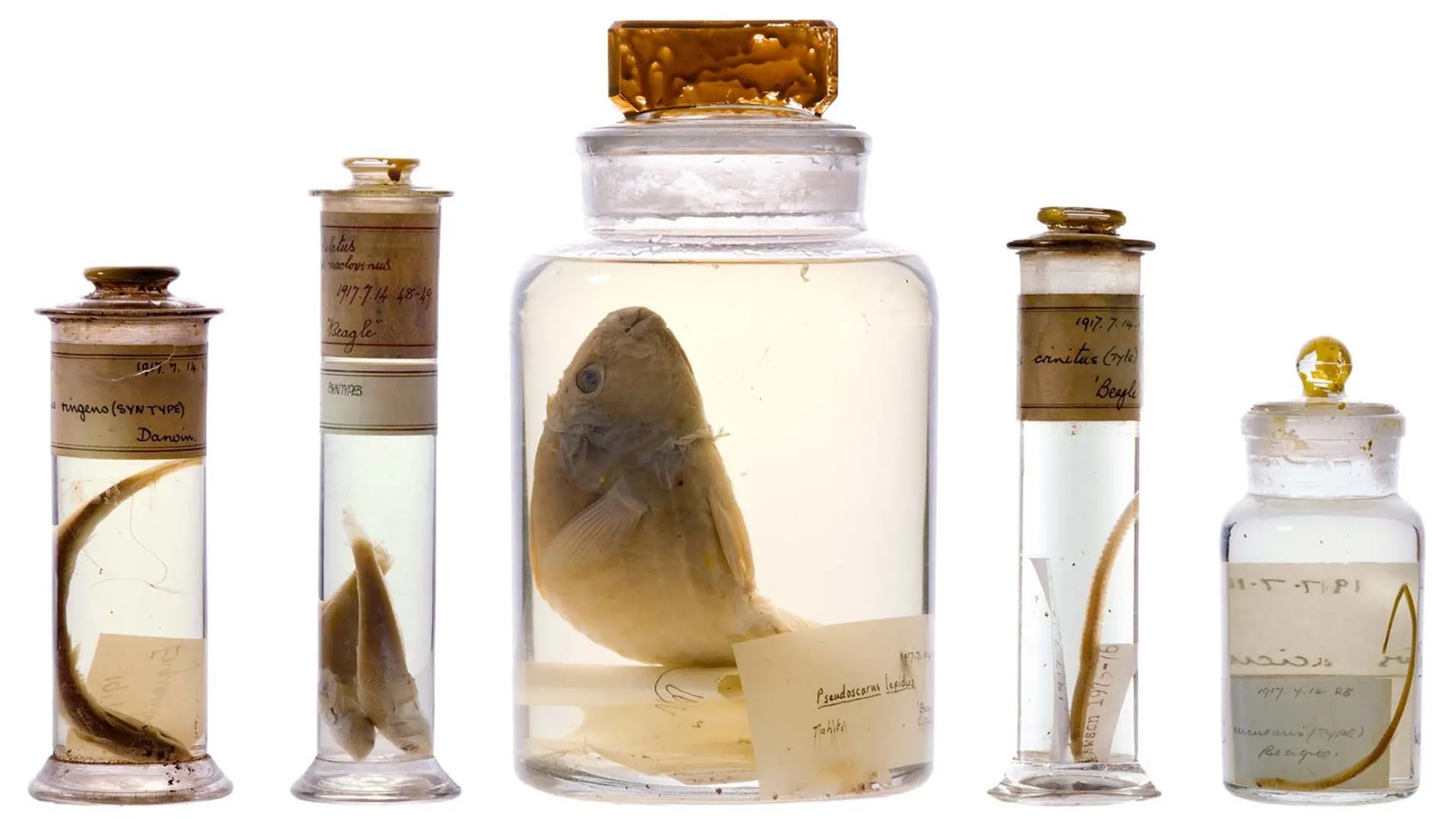
    Scientists have discovered a way to study original specimens from Charles Darwin’s famous Beagle voyage to the Galapagos Islands (1831-1836).

    What’s even more remarkable is that they were able to test the samples without opening the nearly 200-year-old jars in which they were stored.

    Study Darwin’s historical specimens

    The study focused on 46 historical specimens held at London’s Natural History Museum. These included mammals, reptiles, fish, jellyfish, and shrimp that Darwin and other naturalists collected during early scientific expeditions.

    The analysis revealed that preservation methods varied depending on both the type of organism and the length of time the specimen was stored.

    For example, mammals and reptiles are often treated with formalin before being preserved in ethanol. However, invertebrates were preserved using a wider range of liquids, including formalin, buffers, or mixtures with additives such as glycerol.

    Identification of storage solution

    The researchers were able to accurately measure the presence of preservative fluid in about 80% of the specimens tested. In a further 15% of cases, this technology allowed partial identification.

    This method also revealed whether the container was made of glass or plastic. This information helps scientists better understand how storage practices have changed over time.

    This project was a collaboration between:

    • Science and Technology Facilities Council (STFC)
    • natural history museum
    • Agilent Technologies

    Scanning specimen bottles with portable laser technology

    To perform the analysis, the researchers used a portable laser spectroscopy method called spatially offset Raman spectroscopy (SORS). This technique allows scientists to examine the chemical composition of storage solutions through the walls of sealed containers.

    SORS works by shining laser light onto a bottle and measuring how the light changes as it is scattered and reflected. These subtle changes in wavelength reveal the chemical signature of the material within the container.

    Originally developed at STFC’s Central Laser Facility, SORS is also used in airport security scanners around the world through Agilent Technologies.

    Dr. Sarah Mosca of the STFC Central Laser Facility said:

    “Until now, understanding what preservation solution was inside each bottle required opening the bottles, risking evaporation, contamination, and exposing specimens to environmental damage.

    “This technology allows us to monitor and care for these precious specimens without compromising their integrity.”

    New tools for museum collections

    Museums around the world house more than 100 million specimens preserved in liquid.

    For curators, knowing the exact chemical composition of preservation fluids is essential to monitoring the condition of these collections. Over time, the liquid can degrade or evaporate, potentially damaging the specimen.

    The ability to analyze these liquids without opening the containers gives museum professionals a powerful new way to track the health of their collections and intervene before problems occur.

    Transforming natural history research

    Len Montgomery, Research Technician at the Natural History Museum, said:

    “As part of NHM Unlocked, here at the museum we are able to analyze jars containing specimens without opening them or compromising their integrity.

    “This research is the next step in the museum’s commitment to transforming the study of natural history.

    “Analyzing the storage conditions of precious specimens and understanding the fluids in which they are stored can have a huge impact on how we manage our collections and preserve them for future research for years to come.”

    This study ACS Omega Featured as an ACS Editors’ Choice on January 13, 2026.


    Source link

    Visited 10 times, 1 visit(s) today
    Share. Facebook Twitter Pinterest LinkedIn Telegram Reddit Email
    Previous ArticlePollution, PFAS and plug-in solar fees were repealed before they became law in Indiana
    Next Article Pressured by RFK Jr. to add nutrition training to 53 medical schools
    healthadmin

    Related Posts

    Oxford physicist made Schrödinger’s cat even weirder

    June 15, 2026

    The secret to smoother, more delicious protein shakes

    June 15, 2026

    At our feet are 68000000000000000000000000000000000000000000000000000000000000000000000000000000000000000000000000000000000000000000000000000 000000000000000000000000000000000000000000000000000000000000000000000000000 00000000000000000000000000000000000000000000000000000000000000000000000000 Trillion kilometers of highways stretch out beneath our feet.

    June 15, 2026

    Bees have their own unique flight paths and fly with amazing precision.

    June 14, 2026

    Scientists solve decades-old CO2 problem and triple fuel production

    June 14, 2026

    Reversing prediabetes reduces risk of fatal heart disease by 58%

    June 14, 2026
    Add A Comment

    Comments are closed.

    Categories

    • Daily Health Tips
    • Discover
    • Environmental Health
    • Exercise & Fitness
    • Featured
    • Featured Videos
    • Financial Health & Stability
    • Fitness
    • Fitness Updates
    • Health
    • Health Technology
    • Healthy Aging
    • Healthy Living
    • Holistic Healing
    • Holistic Health & Wellness
    • Medical Research
    • Medical Research & Insights
    • Mental Health
    • Mental Wellness
    • Natural Remedies
    • New Workouts
    • Nutrition
    • Nutrition & Dietary Trends
    • Nutrition & Superfoods
    • Nutrition Science
    • Pharma
    • Preventive Healthcare
    • Professional & Personal Growth
    • Public Health
    • Public Health & Awareness
    • Selected
    • Sleep & Recovery
    • Top Programs
    • Weight Management
    • Workouts
    Popular Posts
    • 1773313737_bacteria_-_Sebastian_Kaulitzki_46826fb7971649bfaca04a9b4cef3309-620x480.jpgHow Sino Biological ProPure™ redefines ultra-low… March 12, 2026
    • pexels-david-bartus-442116The food industry needs to act now to cut greenhouse… January 2, 2022
    • 1773729862_TagImage-3347-458389964760995353448-620x480.jpgDespite safety concerns, parents underestimate the… March 17, 2026
    • 1774403998_image_28620e4b6b0047f7ab9154b41d739db1-620x480.jpgGait pattern helps distinguish between Lewy body… March 24, 2026
    • 1773209206_futuristic_techno_design_on_background_of_supercomputer_data_center_-_Image_-_Timofeev_Vladimir_M1_4.jpegMulti-agent AI systems outperform single models… March 11, 2026
    • the-pros-and-cons-of-paleo-dietsThe Pros and Cons of Paleo Diets: What Science Really Says April 16, 2025

    Demo
    Stay In Touch
    • Facebook
    • Twitter
    • Pinterest
    • Instagram
    • YouTube
    • Vimeo
    Don't Miss

    Oxford physicist made Schrödinger’s cat even weirder

    By healthadminJune 15, 2026

    Researchers at the University of Oxford have created a new type of quantum superposition, a…

    The secret to smoother, more delicious protein shakes

    June 15, 2026

    At our feet are 68000000000000000000000000000000000000000000000000000000000000000000000000000000000000000000000000000000000000000000000000000 000000000000000000000000000000000000000000000000000000000000000000000000000 00000000000000000000000000000000000000000000000000000000000000000000000000 Trillion kilometers of highways stretch out beneath our feet.

    June 15, 2026

    The brain may sense taste through the ears, new research suggests

    June 15, 2026

    Subscribe to Updates

    Get the latest creative news from SmartMag about art & design.

    HealthxMagazine
    HealthxMagazine

    At HealthX Magazine, we are dedicated to empowering entrepreneurs, doctors, chiropractors, healthcare professionals, personal trainers, executives, thought leaders, and anyone striving for optimal health.

    Our Picks

    The brain may sense taste through the ears, new research suggests

    June 15, 2026

    Novel analysis identifies unique proliferative genetic alterations in diverse cancer patients

    June 15, 2026

    Global analysis reveals large regional disparities in net performance of pesticide treatments

    June 15, 2026
    New Comments
      Facebook X (Twitter) Instagram Pinterest
      • Home
      • Privacy Policy
      • Our Mission
      © 2026 ThemeSphere. Designed by ThemeSphere.

      Type above and press Enter to search. Press Esc to cancel.