


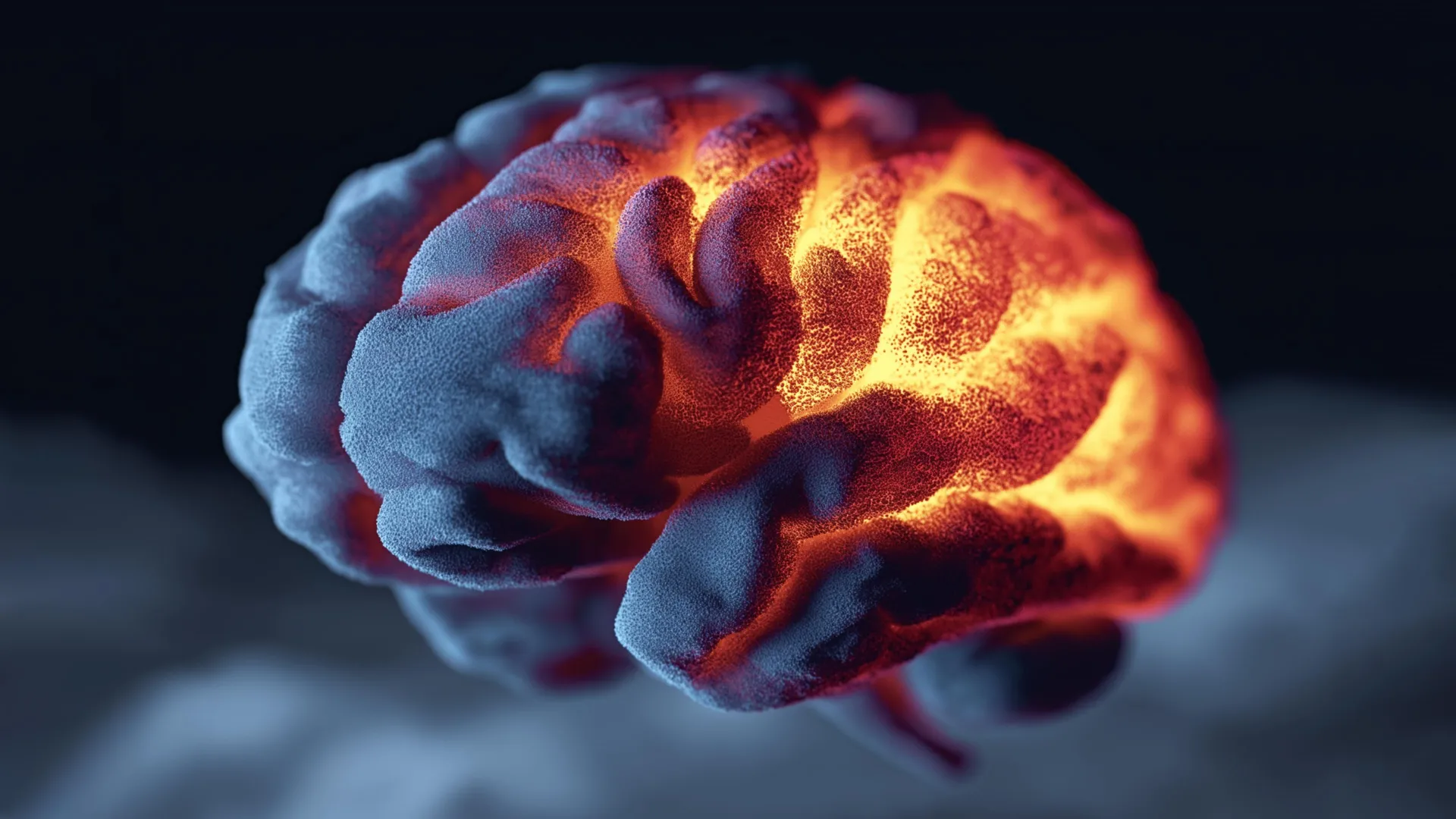
The brain has its own built-in immune defenses that help detect threats and protect nerve cells. However, increasing evidence suggests that these immune cells are in a chronic state of activation in Alzheimer’s disease. Instead of helping, they can cause ongoing inflammation and damage connections between brain cells.
Now, Scripps Research researchers have identified a molecular mechanism that appears to play a key role in that process. Using human Alzheimer’s brain cells and other experimental models, the research team discovered chemical changes that can over-stimulate the brain’s immune response. The survey results are cell chemical biologypoints to a promising new target for future Alzheimer’s disease treatments.
Important proteins associated with brain inflammation
The research focuses on a protein called STING, which normally acts as part of the body’s early warning system against threats. Researchers have discovered that in Alzheimer’s disease, STING undergoes a chemical modification known as S-nitrosylation (or SNO, a reaction involving sulfur, oxygen, and nitrogen). This change is thought to cause the protein to become overactive, causing harmful inflammation.
When scientists blocked this particular chemical modification in a mouse model of Alzheimer’s disease, levels of neuroinflammation decreased.
“This is an important new therapeutic target for Alzheimer’s disease,” says lead author Stuart Lipton, Scripps Research’s Step Family Foundation Endowed Chair and a clinical neurologist. “It’s interesting to see that blocking this switch in mice reduces inflammation and protects the very brain cell connections lost in Alzheimer’s disease, especially since we found that the same pathway was activated in human Alzheimer’s brain samples and human stem cell-derived models.”
Discovery of harmful chemical processes
More than 30 years ago, Lipton discovered a biological process known as S-nitrosylation. During this reaction, molecules related to nitric oxide (NO) bind to cysteine amino acids in proteins, creating what scientists call “SNO” and changing the protein’s behavior.
Previous research from Lipton’s lab has shown that this process can be triggered by factors such as aging, inflammation, and environmental exposures such as air pollution and wildfire smoke. When a large number of proteins are affected, a disruption called “SNO-STORM” occurs, which can interfere with normal cell function.
Researchers have linked this phenomenon to several diseases, including cancer, Parkinson’s disease, and Alzheimer’s disease.
Pinpointing the Alzheimer’s Disease Switch
Lipton’s team focused on STING in the new study because previous research had already linked it to inflammation in Alzheimer’s disease.
The group, led by postdoctoral researcher Loren Carnevale, collaborated with Scripps Research Institute professor John Yates III, a leading expert in mass spectrometry and holder of the John Litton Young Endowed Chair. Together, they identified the exact location on STING where S-nitrosylation occurs.
Their research revealed that this reaction targets a specific component of the protein called cysteine-148. When this site becomes S-nitrosylated, STING begins to cluster into larger complexes that activate the inflammatory response.
Researchers detected high levels of this altered form, known as SNO-STING, in postmortem brain tissue of Alzheimer’s patients. Elevated levels were also found in human brain immune cells grown in the lab and exposed to Alzheimer’s disease-related proteins, as well as in mouse models of Alzheimer’s disease.
Autonomous cycle of inflammation
The researchers also discovered that a cluster of proteins commonly associated with Alzheimer’s disease, such as amyloid-beta and alpha-synuclein, can trigger S-nitrosylation of STING.
This finding suggests that inflammation may be locked into a repeating cycle. Protein aggregation, combined with aging and environmental factors, can lead to inflammation that produces nitric oxide. That nitric oxide promotes S-nitrosylation of STING, further promoting inflammation and further amplifying the process.
To test whether interrupting this cycle would be effective, the researchers designed a version of STING that lacks cysteine 148 and cannot undergo S-nitrosylation.
When the modified protein was introduced into a mouse model of Alzheimer’s disease, the brain’s immune cells showed much lower levels of inflammation. Equally important, the synapses that connect nerve cells were protected from deterioration. Maintaining these connections is strongly associated with protection against the cognitive decline seen in dementia.
Potential new treatment strategies
“What makes this target particularly promising is that it can quiet down pathological overactivation of STING without shutting down normal immune responses,” Lipton says. “You still need STING to protect yourself from infections. When you target cysteine 148, you’re not blocking the entire molecule; you’re just preventing STING from becoming overactive.”
The research team is currently developing small molecules designed to block cysteine-148 and plans to evaluate them in future preclinical studies.
In addition to Lipton, Carnevale, and Yates, the authors of the study, “Redox regulation of neuroinflammatory pathways contributes to brain damage in Alzheimer’s disease,” are Piu Banerjee, Xu Jiang, Jazmin Navarro, Charlene K. Rasper, Parth Patel, Tomohiro Nakamura, Emily Schaller, Henry Scott, Nie Lan, Jolene K. Diedrich, and Amanda J. Roberts. Scripps Research.
This research was supported by the National Institutes of Health (R35 AG071734, U01 AG088679, RF1 AG057409, R01 AG078756, R01 AG056259, R01 DA048882, DP1 DA041722 and R01 AG077046) and parts of the U.S. Department of Defense/U.S. Department of the Army (AR230101).
