


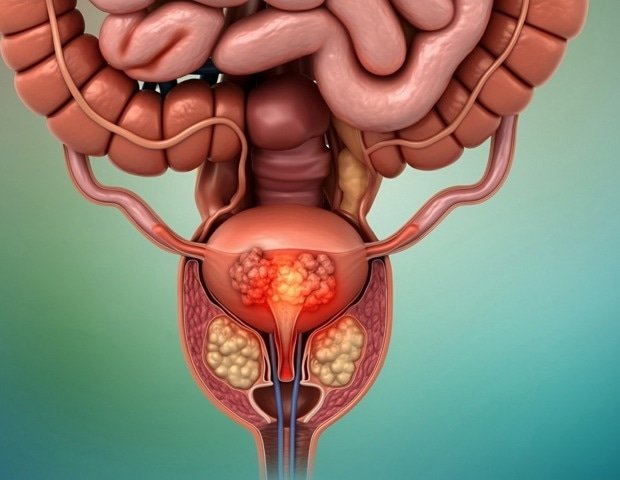
A new machine learning approach for prostate-specific membrane antigen (PSMA) treatment of metastatic castration-resistant prostate cancer (mCRPC) has the potential to estimate radiation dose to tumors and healthy organs before treatment begins. Using data already available from pre-treatment PET/CT scans, this new predictive tool can help personalize treatment plans, improve patient selection, and reduce toxicity risks. This research was presented at the 2026 Annual Meeting of the Society for Nuclear Medicine and Molecular Imaging.
Dosimetry is important to optimize ⁷⁷Lu-PSMA radiopharmaceutical treatment in mCRPC. Currently, post-treatment image processing is typically used to calculate dosimetry. However, it is time and resource intensive. Pre-treatment PET/CT provides an opportunity to assess potential treatment effects and risks before treatment.
Although 18F-PSMA PET/CT is already routinely performed and widely used in prostate cancer patients, its potential to predict therapeutic radiation dose has not been previously investigated. Our study aimed to determine whether the information already available from these scans could guide treatment planning and support more individualized care before treatment begins. ”
Dr Amit Nautyal, Scientist and Research Fellow, National Institute for Health Research (NIHR), University Hospital Southampton and University of Southampton, UK
This proof-of-concept study included 9 mCRPC patients referred for Lu-PSMA radiopharmaceutical therapy, with 57 tumors, 36 salivary glands, and 18 kidneys contributing to the analysis. Researchers developed a machine learning mixed-effects model to predict absorbed dose to tumors and organs. Predictive factors include uptake-based PET metrics, radiological features, and clinical biomarkers. Predicted estimates were compared with dosimetry calculated after one cycle of ⁷⁷Lu-PSMA therapy to assess accuracy.
Pre-treatment 18F-PSMA PET/CT-based machine learning models showed promising ability to predict absorbed doses to tumors and organs. This model demonstrates the potential to use pre-treatment information to predict post-treatment dosimetry by combining uptake characteristics, radiomics, and clinical biomarkers while accounting for patient-level variation.
“If validated in large-scale studies, this approach could improve patient selection, support better decision-making during pre-treatment assessments, and help optimize ⁷⁷Lu-PSMA therapy for individual patients. More broadly, it highlights how imaging can move beyond diagnosis to actively guiding personalized treatment,” Nautiyal said.
This proof-of-concept study is part of a planned five-year program aimed at collecting more data and developing a robust and validated model. This research was supported by the UK NIHR. Future studies will focus on larger multicenter cohorts to improve pre-treatment absorbed dose prediction and perform independent validation to support patient stratification for personalized ⁷⁷Lu-PSMA radiopharmaceutical treatment in the clinical setting.
sauce:
Society of Nuclear Medicine and Molecular Imaging
