


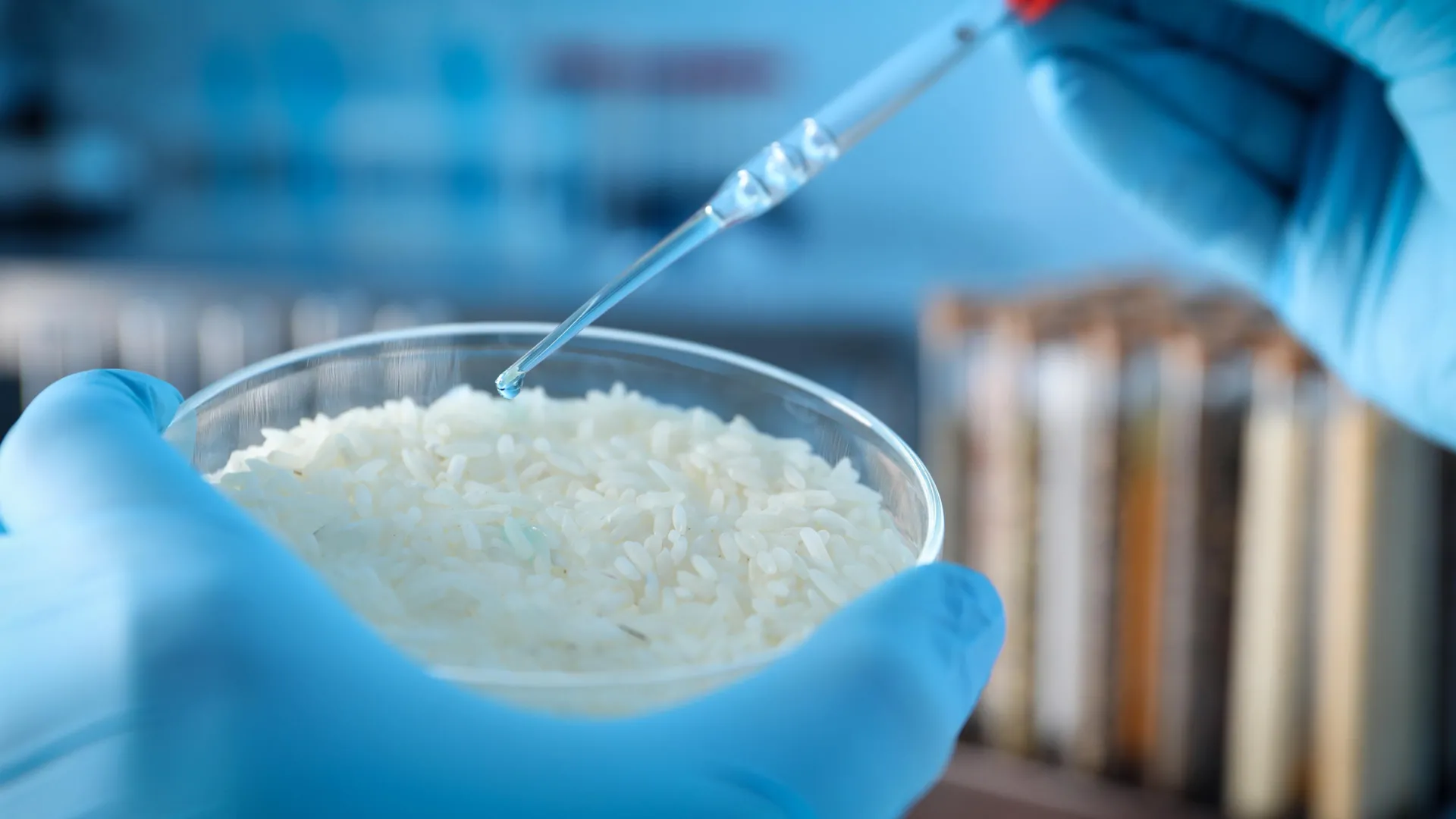
Rice is well known as one of the world’s most important food crops, but scientists have shown that rice could also serve as inspiration for a new generation of smart materials.
Researchers discovered that compressed rice grains behave abnormally under pressure. When compressed slowly, the particles remain relatively strong. But squeezing it down too soon actually weakens it. This surprising behavior has allowed scientists to create new materials that could one day be used in soft robots that automatically adjust their stiffness or in protective gear that reacts differently depending on the force of an impact.
An international research team led by the University of Birmingham reported their findings in the journal. Case.
Rice’s abnormal reaction to pressure
Experiments showed that tightly packed rice grains reacted very differently depending on the speed at which the load was applied. As the loading rate increases, the material becomes significantly weaker.
This phenomenon, known as “velocity softening”, is rare in most materials. The researchers found that this phenomenon occurs because the friction between individual rice grains drops rapidly when force is applied rapidly. As a result, the internal force network that normally helps support loads is weakened.
The team used this unusual property to develop a new metamaterial, an engineered composite structure designed to exhibit behaviors not found in naturally occurring materials.
Creating self-adaptive metamaterials
To construct the new material, the researchers combined rice-based granular units with materials such as sand that increase in strength when subjected to rapid loading. The result is a granular metamaterial that responds differently to slow movements and sudden impacts.
Depending on the situation, the material can bend, sit, or stiffen in different ways without the use of electronics, sensors, or active control systems.
Dr Mingchao Liu from the University of Birmingham said: “Rice may be best known as a staple food worldwide, but it is rarely associated with advanced engineering. Our research shows that rice can form the basis of a new class of functional materials.”
“Rather than treating this phenomenon as a curiosity, we turned it into a design principle. This approach allowed us to create materials that can bend, buckle, or stiffen differently with slow movements and sudden impacts, without the use of electronics, sensors, or active controls. Instead of telling the structure how to react, we let physics decide: fast loads trigger one behavior, and slow loads trigger another.”
The researchers say this study highlights how common particulate materials can be transformed into engineered systems that react intelligently through their mechanical properties.
Potential applications in robotics and safety equipment
Velocity-sensitive metamaterials could open new possibilities for soft robotics. Unlike traditional metal robots, future systems built with these materials could be lighter, safer, and more adaptable.
Such robots could be particularly useful for working with people, in difficult environments, and performing delicate tasks such as assisting in surgery.
This material also has potential applications in protective equipment. They react differently depending on the velocity of the impact, allowing them to absorb energy or deform in a controlled manner during a collision, reducing the risk of injury.
Importantly, these reactions occur without the need for electronics, external power sources, or sensors, and the materials themselves can automatically adapt to changing conditions.
