


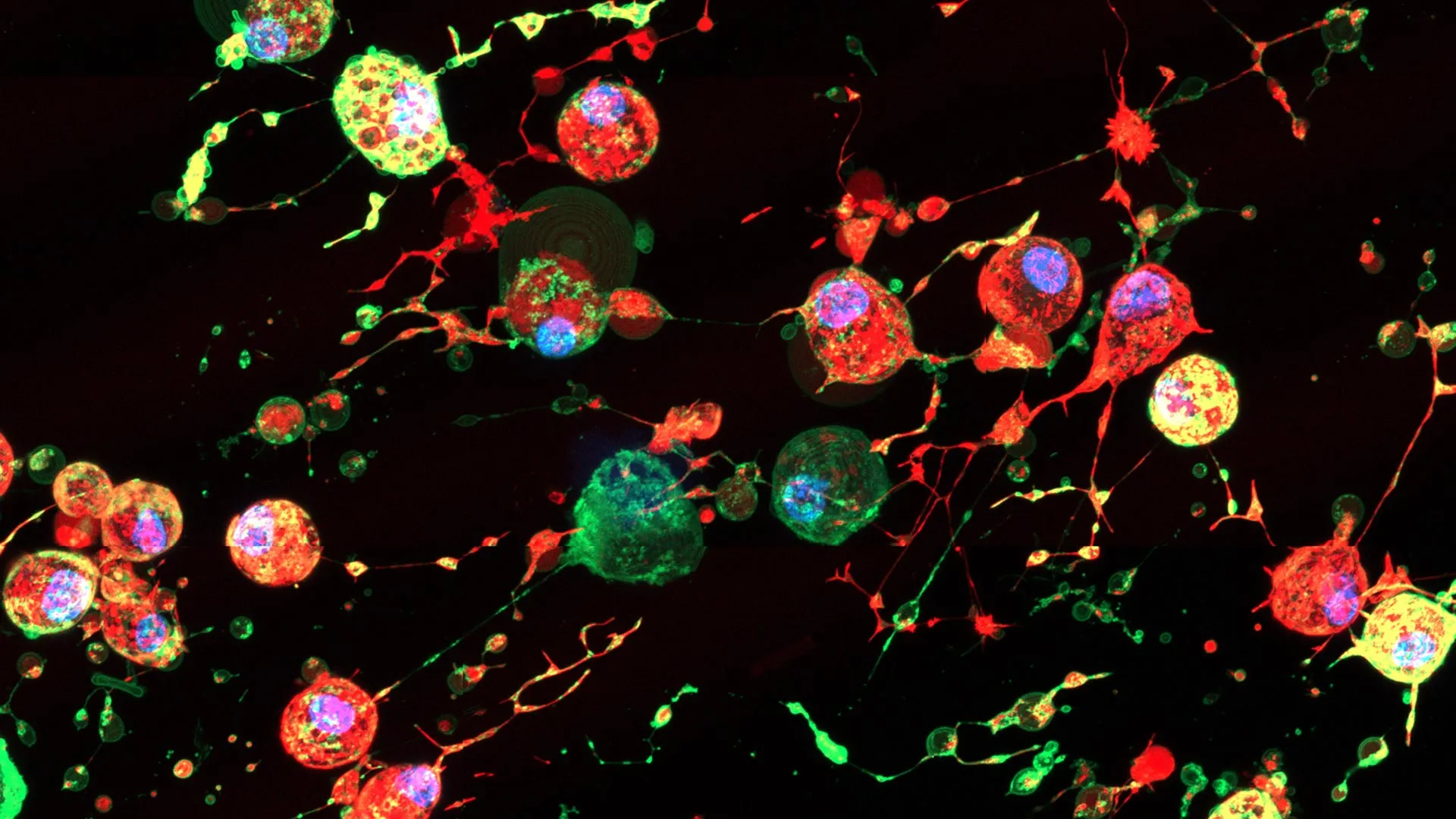
Researchers at La Trobe University have identified a previously unknown biological process that may help explain how the virus moves through the body. The discovery could also open new opportunities to develop treatments that better support the immune system.
Published in nature communicationsthis study sheds new light on what happens when cells die and are removed from the body.
The research was led by Stephanie Rutter, a PhD candidate in the laboratory of Professor Ivan Poon at the La Trobe Institute for Molecular Sciences (LIMS). The research team discovered that the steps involved in cell death are far more organized and important than scientists previously realized.
Newly discovered cell death vesicles
When a cell reaches the end of its life cycle and begins to self-destruct, a series of physical changes occur. The researchers observed that dying cells change shape and detach from nearby structures, leaving behind residues called “death footprints.”
The research team discovered a previously unknown type of extracellular vesicles (EVs) in this residue.
EVs are tiny particles released by cells that transport proteins, lipids, DNA, and RNA to other cells. They play an important role in communication between cells throughout the body.
The newly identified vesicles, called F-ApoEV, remain at sites where cells die. They act like breadcrumbs that help the immune system find and remove cellular debris before it causes unnecessary inflammation.
How viruses exploit the cleanup process
The researchers also discovered an unexpected development.
Experiments using influenza-infected cells showed that the virus can take advantage of this natural cleansing mechanism. Viral particles can hide inside F-ApoEV, potentially allowing them to spread infection to adjacent cells while remaining hidden within the body’s normal processing processes.
Professor Poon, director of the Research Center for Extracellular Vesicles (RCEV), said the findings could have important implications for future treatments.
“Understanding this fundamental biological process could open new research avenues to exploit these steps to develop new treatments that help the immune system better fight disease,” Professor Poon said.
“Billions of cells are programmed to die every day as part of normal turnover and disease progression, and until now, the cell fragmentation process during cell death was thought to be random and very simple.
“Our findings demonstrate the complexity of this process and highlight how important each step of the process actually is for dying cells to be efficiently degraded and removed by the immune system.”
Cell communication after death
Lead researcher and PhD candidate Stephanie Rutter said the findings highlight the importance of communication between cells and show how viruses can manipulate these biological systems.
“We know that we remove dead cell fragments to prevent them from remaining and causing inflammation and autoimmune diseases such as systemic lupus erythematosus (SLE). We also confirmed that F-ApoEV is easily cleared from sites of cell death,” Stefani said.
“What we didn’t expect was how the virus could take advantage of this process and hide behind F-ApoEV to cause infection.”
The research team believes this discovery could ultimately lead to a better understanding of both infectious and autoimmune diseases and lead to new treatment strategies.
“The more we understand about cell death and what happens to cells after they die, the better we can understand disease pathology and find new treatments,” Stefani says.
New insights into immune function
Study co-leader Dr Georgia Atkin-Smith from WEHI said cell death plays a role in a wide range of diseases, so it was important to understand how dying cells communicate with the immune system.
“This study reveals that dying cells can continue to communicate from the grave and influence immune function,” said Dr. Atkin-Smith.
The research was carried out by scientists from La Trobe University’s RCEV, LIMS and the School of Agriculture, Biomedicine and the Environment (SABE). The project was carried out in collaboration with researchers from WEHI and Toronto Metropolitan University in Canada.
