


Written by Will Atwater
Since the 1950s, plastic seems to have become the Swiss Army knife of everyday life. It is used in everything from medical equipment and auto parts to electronic equipment and clothing. The versatility of plastics has helped reduce product costs in many industries, including plumbing, and PVC is a durable, low-cost alternative to galvanized pipe.
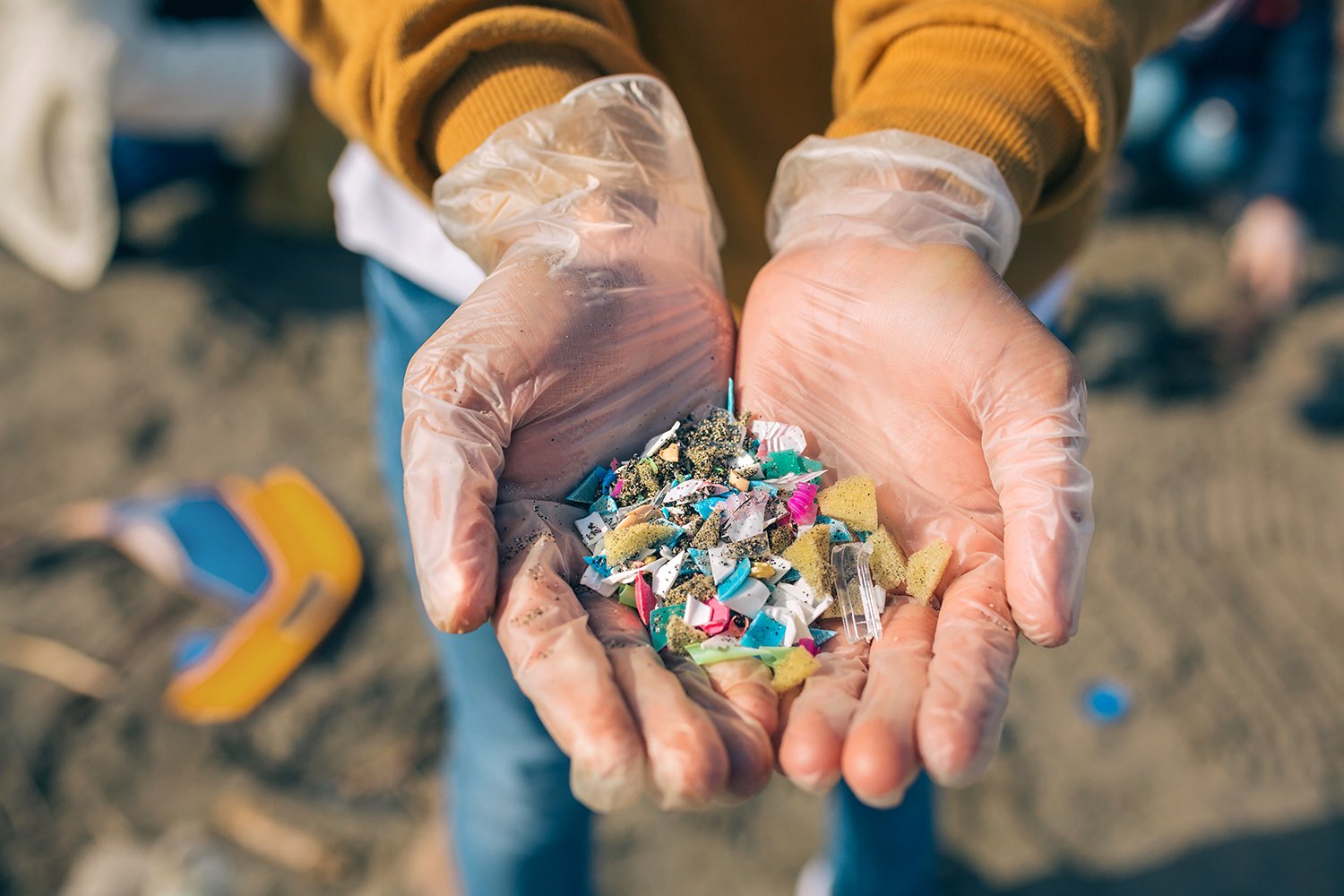
But the same qualities that make plastics so useful, such as their durability, light weight, and low cost, also make them difficult to avoid. Plastics and microplastics are now appearing in our air, drinking water, food, household dust, and more.
As evidence accumulates that people are exposed to plastics, especially microplastics, many are becoming increasingly concerned about how these particles and their associated chemicals affect people’s health, and are looking for ways to reduce the potential harm from substances that are woven into nearly every part of modern life.
A continuing stream of research suggests that human ingestion of microplastics (particles less than 5 millimeters in size) may contribute to inflammatory bowel disease. Other studies have shown that microplastics can alter the function of hormones in the body. A study published in 2019 estimated that humans can inhale between 74,000 and 121,000 microplastic particles per year.
These findings may make people wonder what exposures they can realistically control and what changes in their daily routines may affect their health.
In 2024, researchers at Duke University analyzed more than 2,700 plastic additives and found that more than 150 were classified as carcinogens. Meanwhile, about 90 percent of the additives they investigated had never been properly evaluated for cancer risk.
The authors found that many of these lesser-known additives appear to disrupt the same biological processes as known carcinogenic chemicals.
alternative medicine
In a separate analysis in 2023, Duke University researchers estimated that plastic trash and mismanaged waste costs the United States between $436 billion and $1.1 trillion annually, taking into account public health, environmental damage, and economic losses. In North Carolina alone, this tab exceeds $56 million annually.
One of those costs is to human health.
“We found not only cellular changes in organs such as the liver and kidneys, but also reproductive changes after dietary exposure to microplastics,” said Melissa Chernick, a toxicologist at Duke University. She studies how plastic particles and their chemical additives affect zebrafish. Zebrafish are used in medical research because they have a surprising number of human-like genes. In the lab, Chernick and colleagues exposed these and other fish to different types, shapes and sizes of plastic debris, either through direct exposure in the water or by eating other contaminated fish.
“This suggests that additives are leaching out of the plastic and that is causing these changes,” she said in a presentation at the recent North Carolina Water Resources Institute annual conference. “Follow-up experiments using chemical additives alone confirm that they are sufficient to alter fish metabolism.”
For Chernick and other researchers, that’s a bigger issue as companies remove additives of concern. For example, a decade ago, bisphenol A (BPA) received so much attention for its ability to mimic human hormones that it was removed from several products. However, they warn that many of the alternatives have not been thoroughly tested and may be just as dangerous.
She emphasized that researchers still know little about what happens when these molecules enter the human body, where they end up, how long they linger, and whether current laboratory methods can accurately measure their effects. She said the evidence so far is strong enough to warrant additional research, but not yet conclusive enough to answer fundamental questions about all the plastic people carry around in their bodies and how long it stays in their bodies.
 Duke University researcher Melissa Chernick explains the types, shapes, and sizes of plastics and material additives.
Even as scientists uncover what’s inside plastic, communities are still grappling with how to get rid of their waste and how to prevent too much waste from leaking into the environment in the first place.
eternal plastic
The World Health Organization says a broken recycling system is at the heart of the problem. Although many plastic products have recycling symbols, they cannot actually be recycled through most in-store programs. What is accepted for recycling often varies by city or county, depending on what local contractors can sort, process, or sell for a profit. This patchwork of rules leaves many consumers confused about what can and cannot go in the recycling bin.
When non-recyclable items are added to the cart, they can contaminate the entire load and send more single-use plastic to landfills and ultimately into waterways. A recent investigation found that the plastics industry may have been selling billings to the public that greatly promoted recycling, even though they knew that most plastics were not recyclable.
Environmentalists argue that the combination of single-use plastics flooding the market and broken recycling systems puts the burden of managing all the waste on consumers, with manufacturers and retailers largely avoiding responsibility.
There is currently a movement underway to shift that responsibility further away from households and local governments and back to the companies that manufacture and sell single-use plastics.
What consumers can do
Although policy changes and corporate accountability will move slowly, advocates say solutions need to work at multiple levels. Recommendations include everything from policies that reduce the amount of plastic produced and sold in the first place to everyday choices that limit the amount of plastic that goes into people’s bodies.
Scientists still don’t know exactly how plastic particles and additives pass through, stay in, or exit the human body. Still, Chernick and her colleague Nishad Jayasundara, a Duke University researcher who is leading the project, argue that it makes sense for people to treat the evidence as a red flag and take simple steps to limit exposure as much as possible.
Charnick and Jayasundara say there are some things consumers can do now, and others they recommend considering if it’s feasible.
Avoid hot plastic bottles
Avoid drinking from plastic bottles left in hot cars or in the sun. If possible, switch to reusable metal or glass bottles instead.
Do not heat food in plastic in the microwave
Leftovers are first heated in a glass or ceramic dish. Even if a plastic container says “microwave safe,” it’s safer to keep hot foods away from plastic.
Reduce plastic around food
Look for products with minimal plastic, especially in areas that come into contact with food and drink, and if your budget allows, buy loose produce instead of items wrapped in plastic.
Replace plastic in your kitchen
Replace plastic cutting boards with wood, and use glass or metal containers instead of plastic lunch boxes or tubs to store and transport food.
Be careful of microfibers from laundry
Choose clothing made from natural fibers such as cotton, linen, and hemp, as clothing made from synthetic fibers can shed tiny plastic threads. Use gloves or paper towels to clean the dryer’s lint trap, then wash your hands.
Consider filtering your drinking water
Consider using a drinking water filter such as reverse osmosis or a granular activated carbon system. These filters help reduce microplastics in tap water and refillable water jugs..
Be careful of indoor dust
Microplastics are also found in indoor air and dust. If possible, use a vacuum cleaner with a HEPA filter and dust with cotton or other natural fiber cloths rather than microfiber to reduce particles that stick to floors and surfaces.
thisarticleteeth,North Carolina Health NewsFirst published inCreative Commons Attribution-NoDerivatives 4.0 International License.
