


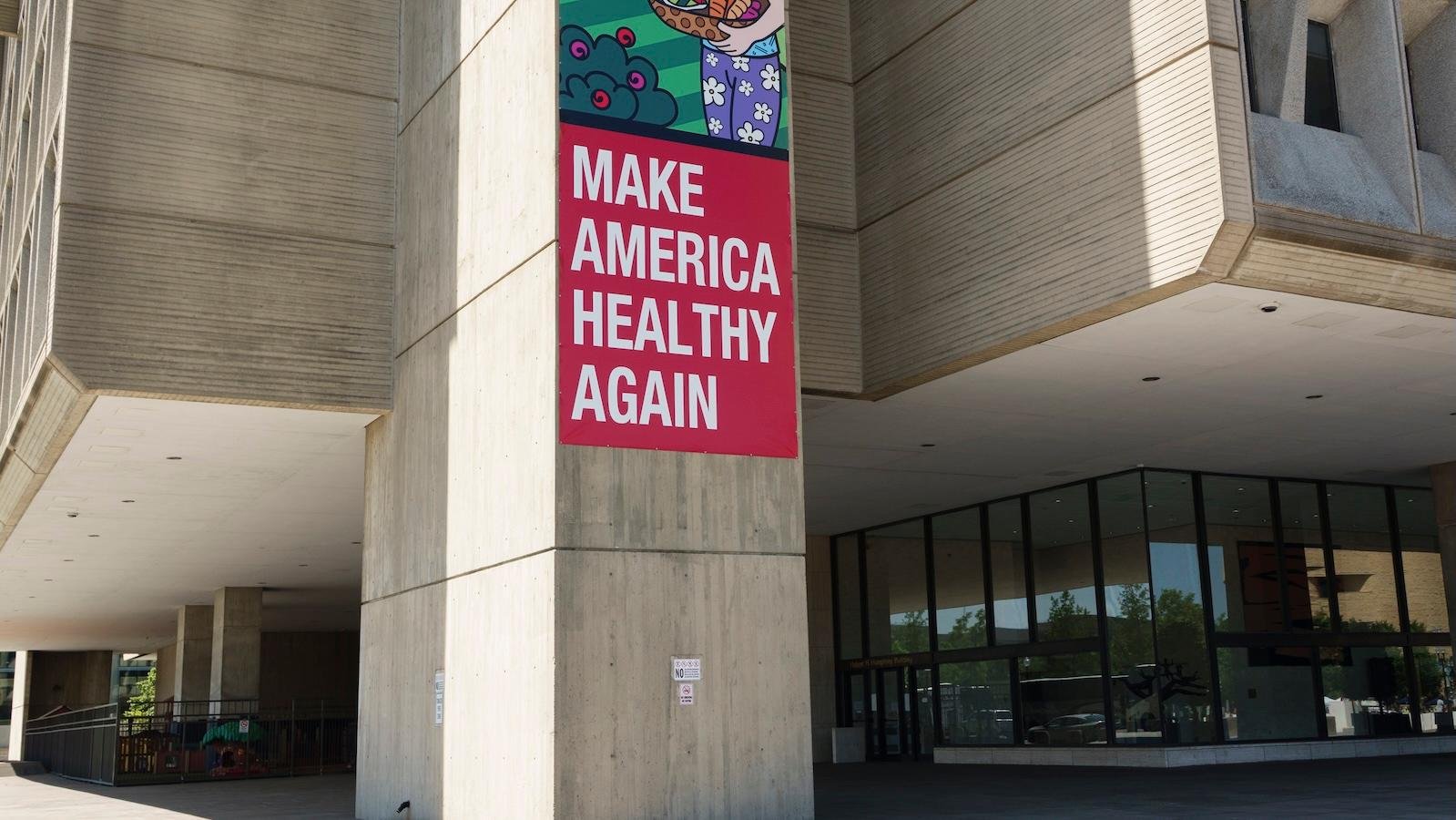
On her 200-acre farm and ranch in Bandera, Texas, Molly Engelhart grows organic produce, sells raw milk, and… I write a daily column about the power of regenerative agriculture. She’s a farmer and a Make America Healthy Again mom, but she doesn’t like being called a MAHA mom. She prefers to think of herself as “MAHA-aligned.”
In May, Ms. Engelhart opened her ranch to hundreds of pro-MAHA politicians, activists and leaders for a two-day MAHA agricultural retreat. Secretary of Health and Human Services Robert F. Kennedy Jr. was also there. Engelhardt’s younger brother, Ryland, is one of the movement’s best-known leaders.
Her biggest issue with the MAHA label is what she sees as the politicization of the label’s “blue team or red team.” Like many MAHA supporters, she voted for President Donald Trump in the last election largely because of RFK Jr.’s support and their joint pledge to clean up America’s chemical-filled food system. At the time, she believed President Trump would deliver on that promise. However, over the past year and a half, that belief has been shaken.
“I think 100 percent of the MAHA movement is very disappointed and disillusioned, and I’m not alone,” Engelhart said. “MAHA voters are homeless.”
MAHA’s disillusionment with the Trump administration has a lot to do with its public support for Bayer, the maker of the popular insecticide Roundup. Bayer just won a lawsuit in the Supreme Court over its failure to properly warn users about the cancer risks of its herbicides. First, the administration urged the Supreme Court to take up the case. And in February, the president signed an executive order calling for glyphosate herbicides like Roundup to be key to national security and increasing domestic production of the chemicals. In March, Environmental Protection Agency officials reportedly met with Bayer’s CEO to discuss “litigation” issues. The following month, the government sent lawyers to argue on behalf of the chemical companies at a Supreme Court hearing.
Tens of thousands of plaintiffs sued Bayer, alleging that Roundup’s active ingredients cause cancer and other health problems and that the company failed to follow state law by not including warnings about cancer risks on its labels. But the court’s ruling means that states cannot require product labels to contain more information than is required by federal law, limiting legal recourse for such claims against Bayer.
Just hours after the decision was announced, President Trump signed an executive order aimed at regenerative agriculture and increasing the resiliency of U.S. agriculture. (Broadly speaking, the term “regenerative agriculture” refers to farming methodologies that improve soil health and carbon capture potential, but there are no federal standards or definitions like “organic,” leaving it open to interpretation and, in some cases, the potential for greenwashing.) The conflict between the two actions prompted a new barrage of criticism from MAHA voters. “It’s a little bit schizophrenic,” Engelhart said. “None of us can be one-issue voters anymore…I don’t think any of us will vote blindly for one party or another,” she added.
That sentiment is already reflected in the data, but the picture is far from clear. Poll results from last October found that about 74% of MAHA supporters are Republicans, and 59% are also supporters of Make America Great Again, the president’s most loyal supporters. Meanwhile, a POLITICO poll conducted this spring found that 47% of self-identified MAHA respondents who voted for President Trump don’t think the administration is doing enough to “make America healthy again.” A Kaiser Family Foundation poll also found that 28% of MAHA voters somewhat or strongly disapprove of the administration’s handling of food and vaccine policies, which could affect turnout in the midterm elections that will determine control of Congress. However, limiting the use of pesticides remains one of the movement’s defining objectives, with 94 percent of MAHA supporters in favor of reducing exposure to harmful chemicals.
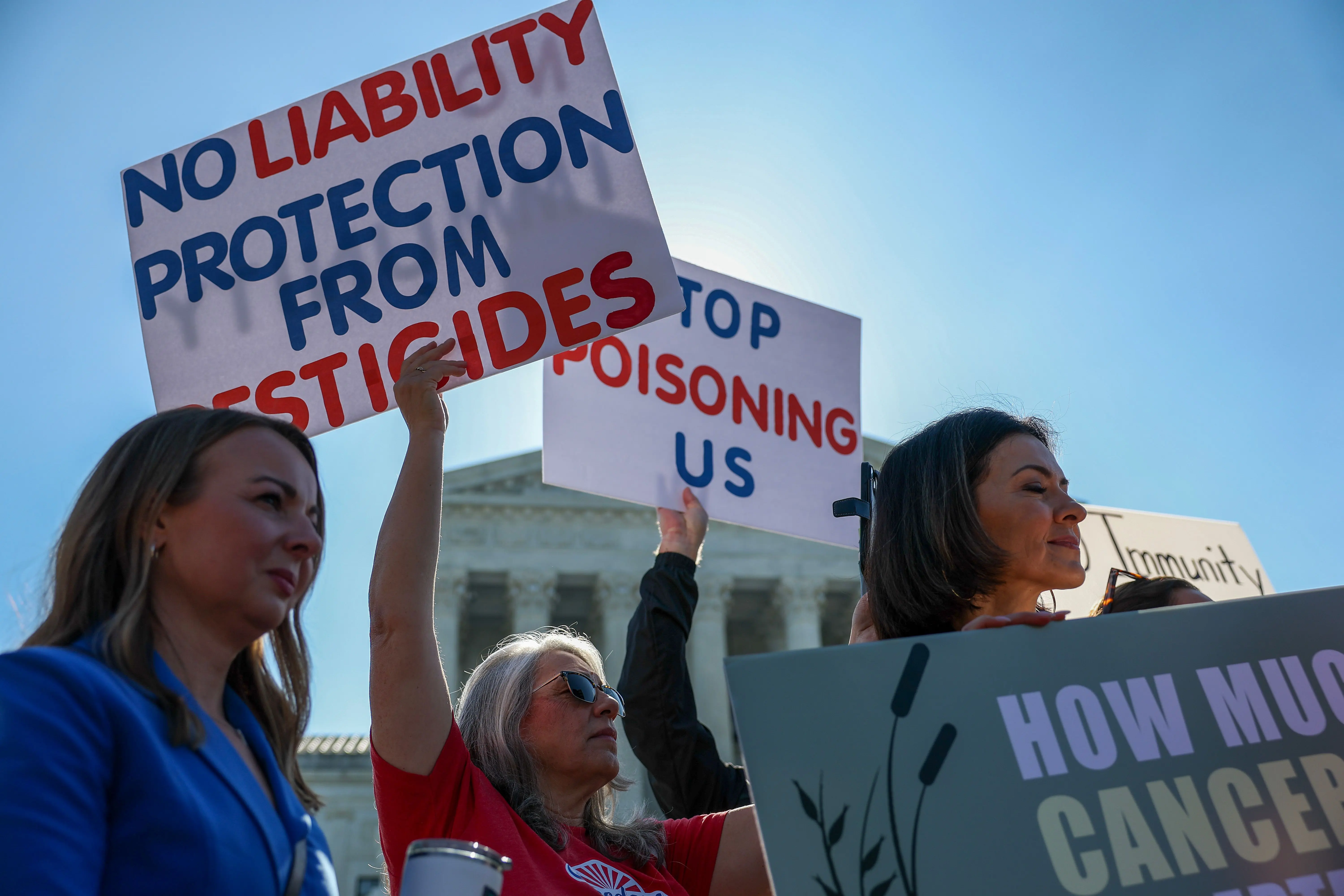 In April, “People vs. Toxic” protesters gathered at the U.S. Supreme Court. Tasos Katopodis/Getty Images
Jonathan Lundgren, a South Dakota farmer, was at the White House the day the Supreme Court’s decision was announced. Days earlier, he had been invited to the Rose Garden for a dinner honoring farmers and asked to join Trump in the Oval Office to sign the regenerative agriculture executive order. Lundgren raises bees, sheep, poultry, and grows flowers and apples on a 50-acre regenerative farm in Estellin, South Dakota. Like Engelhardt, he avoids the political implications of calling himself MAHA, but considers himself aligned with the movement’s pro-regenerative agriculture and anti-pesticide wings.
“We needed a farmer’s face to add a little twist to the whole thing,” he says. Lundgren called the executive order “meaningful,” but it certainly doesn’t introduce new funding or regulations.
Experts say it’s completely ineffective. “That may sound great, but basically, as far as I can see, there is nothing truly new, substantive, or meaningful about EO. actually It changes the equation of how the administration treats regenerative agriculture,” said Mike Lavender, policy director for the National Sustainable Agriculture Coalition.
In an Oval Office meeting, Mr. Lundgren said Mr. Kennedy’s team was quickly mobilized to try to defuse MAHA’s opposition to the Supreme Court’s decision with the president’s executive order, which led to a heated argument between Health and Human Services officials and top agricultural lobbyists who were concerned that the order signaled a safety problem in the U.S. food supply. Lundgren himself stopped using Roundup about eight years ago when he realized the pesticide was “causing more problems than it solved” on his farm. However, they cannot escape the downwind effects of spray from nearby farms. He now sees large numbers of bees slowing down before they die completely and leaves in orchards wafted with herbicide. Next, there is also the human damage.
“We get sick this time of year, and that’s a direct result of all these pesticides being sprayed. My family is sick. That’s not right,” Lundgren told Grist. His daughter is battling a flare-up of her asthma and allergies, while farm staff are dealing with recurring headaches and fatigue. “It’s so intense that it’s called ‘spray flu’ in my community.”
He said these dual measures by the government and further batches of pesticides, including the following pesticides recently approved by the EPA: PFASA substance often referred to as the “forever chemical” has changed people’s voting plans in the midterm elections.
“We’re in a strange situation right now that we’ve never seen before, where food safety and the health of our children weigh so heavily on American politics,” Lundgren said. “This is much broader than rural society. I think this is consumers, parents and society as a whole.”
And despite the administration’s recent pro-regenerative agriculture messaging, some argue that President Trump’s track record of anti-climate and pro-chemical policies is hindering, rather than helping, the movement to clean up the food system.
Kelly Ryerson, MAHA’s leading mom and co-founder of the agricultural organization American Regeneration, agrees that the judgments and orders taken together reveal a disconnect. “It’s contradictory, to say the least,” Ryerson said. “If Trump is going to do something like the Supreme Court, that’s certainly not what anyone voted for…It’s going to be really hard to recover from this now.”
For Ryerson, a registered independent who voted for Trump, these two actions changed the way he approached the midterm elections. “I don’t care if they’re a Republican or a Democrat. I’m going to support candidates who want to reduce exposure to toxic substances,” she said.
