

Close Menu

    Subscribe to Updates

    Get the latest creative news from FooBar about art, design and business.

    What's Hot

    New superconducting X-ray detector increases sensitivity by up to 1,000 times

    June 24, 2026

    Scientists have discovered how queen bees are actually created

    June 24, 2026

    Study Questions Common Beliefs About Vitamin D and Sunlight

    June 24, 2026
    Facebook X (Twitter) Instagram
    Facebook X (Twitter) Instagram
    Health Magazine
    • Home
    • Environmental Health
    • Health Technology
    • Medical Research
    • Mental Health
    • Nutrition Science
    • Pharma
    • Public Health
    • Discover
      • Daily Health Tips
      • Financial Health & Stability
      • Holistic Health & Wellness
      • Mental Health
      • Nutrition & Dietary Trends
      • Professional & Personal Growth
    • Our Mission
    Health Magazine
    Home » News » New superconducting X-ray detector increases sensitivity by up to 1,000 times
    Nutrition Science

    New superconducting X-ray detector increases sensitivity by up to 1,000 times

    healthadminBy healthadminJune 24, 2026No Comments3 Mins Read
    New superconducting X-ray detector increases sensitivity by up to 1,000 times
    Share
    Facebook Twitter Reddit Telegram Pinterest Email


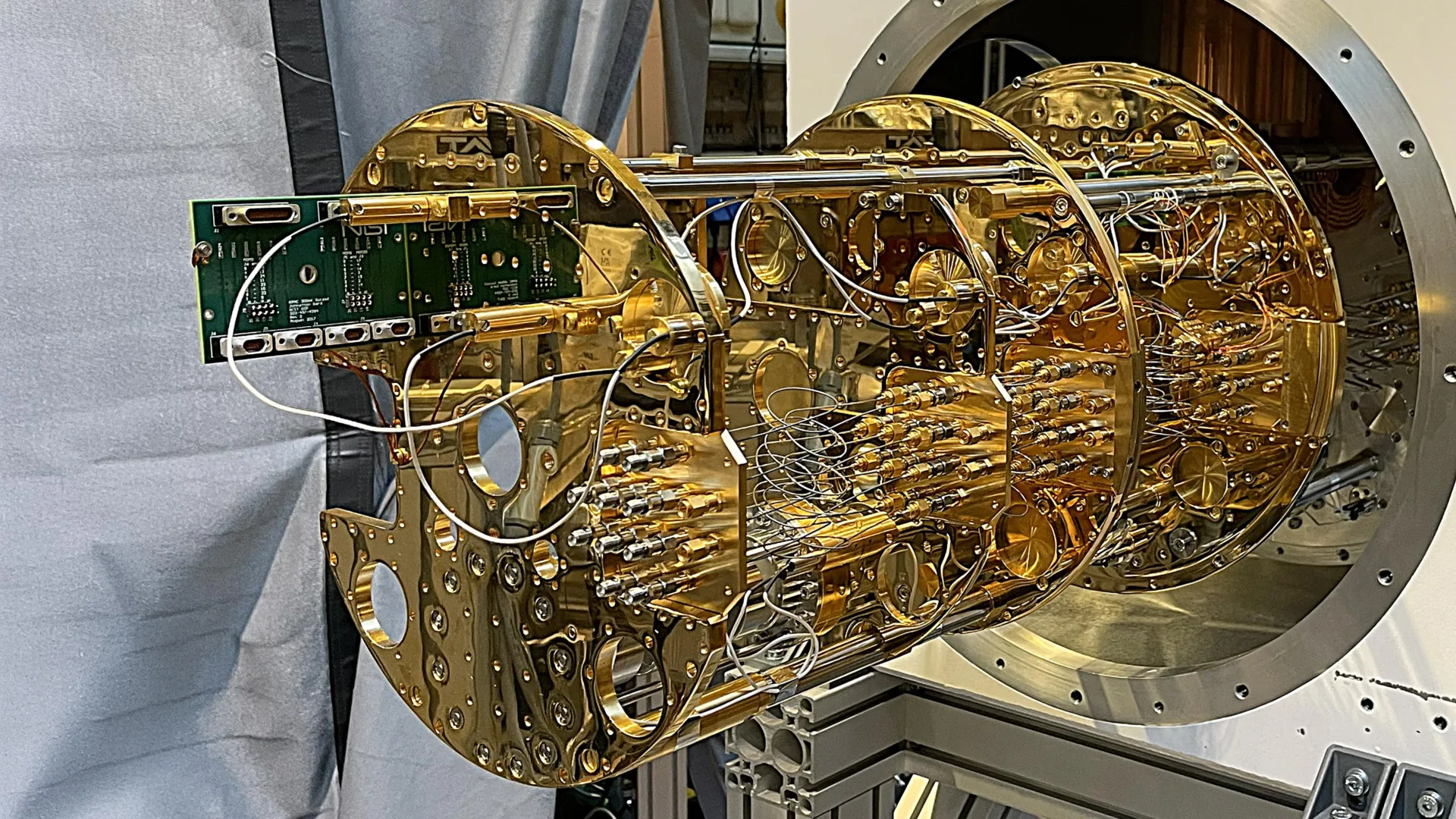
    A major new tool for X-ray research has started operating at BESSY II. Developed jointly by HZB, MPI-CEC (Mülheim an der Ruhr, Germany), and NIST (Boulder, Colorado, USA), this instrument is the first and only TES spectrometer to operate at a synchrotron facility in Europe.

    This new system dramatically increases photon detection efficiency, outperforming traditional wavelength-dispersive X-ray emission spectrometers by a factor of 100 to 1000. The researchers plan to use this system to study the electronic properties of atomically thin materials, nanostructures, and highly dilute atomic and molecular samples. The research team is currently soliciting research proposals from the scientific community.

    Improving the sensitivity of X-ray spectroscopy

    Facilities such as BESSY II produce extremely bright and powerful synchrotron X-rays, allowing scientists to analyze a wide range of materials. However, techniques such as X-ray emission spectroscopy (XES) and resonant inelastic X-ray scattering (RIXS) face significant challenges. These methods rely on detecting photons emitted by the sample, and therefore require large numbers of photons to produce useful measurements.

    As a result, XES and RIXS experiments have traditionally been limited to concentrated samples and bulk materials.

    “The superconducting transition edge sensor (TES) array photon detector currently operating on BESSY II is approximately 100 to 1000 times more efficient at detecting photons than conventional XES and RIXS spectrometers,” said HZB’s Regis Dekker, lead scientist for this new instrument.

    Exploring quantum materials and ultrathin systems

    Increased sensitivity opens the door to experiments that were previously difficult or impossible.

    “This provides new insights not only into molecular chemistry and molecular biology, but also into the quantum properties of systems in reduced dimensions, such as atomic monolayers, nanostructures, and impurities. TES spectroscopy complements methods such as ARPES, which scans the electronic band structure of such systems,” says Regis Dekker.

    This instrument can also significantly reduce data collection time. Some XES and RIXS experiments that normally take hours can now be completed in just minutes.

    248 superconducting sensors operating near absolute zero

    At the center of the TES array spectrometer are 248 sensors that become superconducting when cooled to 25 millikelvin. To achieve this temperature, researchers use He4-He3 dilution refrigerators similar to those used in quantum computing systems.

    When the X-rays interact with the sample, the sample emits photons. These photons strike individual sensors within the TES array, causing a sudden increase in temperature. This short-term temperature increase destroys the superconducting state and increases the electrical resistance of the sensor. The changes are then measured using a circuit based on an array of superconducting quantum interference devices (SQUIDs).

    Advanced sample processing and future upgrades

    The spectrometer is connected to a custom ultra-high vacuum sample chamber that supports sample transfer, preparation, and measurement. This chamber also provides precise temperature control from 10 K to room temperature.

    The complete system is installed on the BESSY II UE52-SGM beamline and provides complete polarization control. Planned upgrades include enhanced sample preparation capabilities and the ability to study materials in magnetic fields in X-ray absorption (XMCD) and emission (RIXS-MCD).

    Europe’s only synchrotron TES spectrometer

    TES spectrometers were originally created for astrophysical applications where the detection of very weak photon signals was essential. Prior to the installation on BESSY II, there were only five TES spectrometers operating in X-ray facilities around the world, including four in the United States and one in Japan.

    BESSY II is currently equipped with Europe’s only synchrotron TES spectrometer.

    “We look forward to receiving exciting research proposals from our user community,” says Decker.


    Source link

    Visited 2 times, 2 visit(s) today
    Share. Facebook Twitter Pinterest LinkedIn Telegram Reddit Email
    Previous ArticleScientists have discovered how queen bees are actually created
    healthadmin

    Related Posts

    Scientists have discovered how queen bees are actually created

    June 24, 2026

    Study Questions Common Beliefs About Vitamin D and Sunlight

    June 24, 2026

    One small mutation may explain how bat viruses pose a threat to humans

    June 24, 2026

    DNA reveals surprising secrets and hidden bird species discovered in Japan

    June 23, 2026

    Rare interstellar visitor sparks SETI search for alien technology

    June 23, 2026

    Scientists finally uncover how H5N1 avian influenza was hiding in dairy cows

    June 23, 2026
    Add A Comment
    Leave A Reply Cancel Reply

    Categories

    • Daily Health Tips
    • Discover
    • Environmental Health
    • Exercise & Fitness
    • Featured
    • Featured Videos
    • Financial Health & Stability
    • Fitness
    • Fitness Updates
    • Health
    • Health Technology
    • Healthy Aging
    • Healthy Living
    • Holistic Healing
    • Holistic Health & Wellness
    • Medical Research
    • Medical Research & Insights
    • Mental Health
    • Mental Wellness
    • Natural Remedies
    • New Workouts
    • Nutrition
    • Nutrition & Dietary Trends
    • Nutrition & Superfoods
    • Nutrition Science
    • Pharma
    • Preventive Healthcare
    • Professional & Personal Growth
    • Public Health
    • Public Health & Awareness
    • Selected
    • Sleep & Recovery
    • Top Programs
    • Weight Management
    • Workouts
    Popular Posts
    • 1773313737_bacteria_-_Sebastian_Kaulitzki_46826fb7971649bfaca04a9b4cef3309-620x480.jpgHow Sino Biological ProPure™ redefines ultra-low… March 12, 2026
    • pexels-david-bartus-442116The food industry needs to act now to cut greenhouse… January 2, 2022
    • 1773729862_TagImage-3347-458389964760995353448-620x480.jpgDespite safety concerns, parents underestimate the… March 17, 2026
    • 1773209206_futuristic_techno_design_on_background_of_supercomputer_data_center_-_Image_-_Timofeev_Vladimir_M1_4.jpegMulti-agent AI systems outperform single models… March 11, 2026
    • 1774403998_image_28620e4b6b0047f7ab9154b41d739db1-620x480.jpgGait pattern helps distinguish between Lewy body… March 24, 2026
    • Leukemia-620x480.jpgBiomimetic platform powers CAR T therapy for… March 9, 2026

    Demo
    Stay In Touch
    • Facebook
    • Twitter
    • Pinterest
    • Instagram
    • YouTube
    • Vimeo
    Don't Miss

    New superconducting X-ray detector increases sensitivity by up to 1,000 times

    By healthadminJune 24, 2026

    A major new tool for X-ray research has started operating at BESSY II. Developed jointly…

    Scientists have discovered how queen bees are actually created

    June 24, 2026

    Study Questions Common Beliefs About Vitamin D and Sunlight

    June 24, 2026

    One small mutation may explain how bat viruses pose a threat to humans

    June 24, 2026

    Subscribe to Updates

    Get the latest creative news from SmartMag about art & design.

    HealthxMagazine
    HealthxMagazine

    At HealthX Magazine, we are dedicated to empowering entrepreneurs, doctors, chiropractors, healthcare professionals, personal trainers, executives, thought leaders, and anyone striving for optimal health.

    Our Picks

    One small mutation may explain how bat viruses pose a threat to humans

    June 24, 2026

    Study found no detectable short-term brain damage after one season of youth soccer

    June 24, 2026

    Excessive daydreaming is strongly linked to a wide range of mental health disorders

    June 23, 2026
    New Comments
      Facebook X (Twitter) Instagram Pinterest
      • Home
      • Privacy Policy
      • Our Mission
      © 2026 ThemeSphere. Designed by ThemeSphere.

      Type above and press Enter to search. Press Esc to cancel.