


overview:
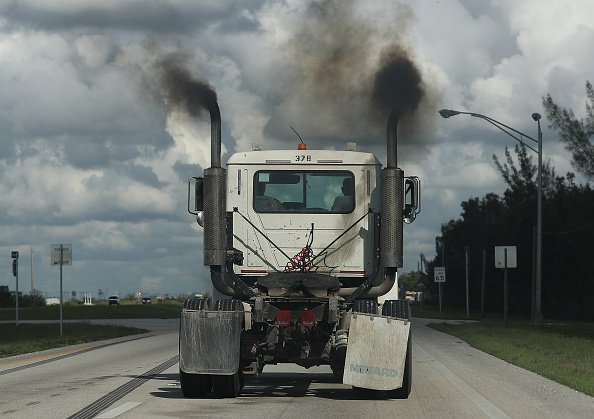
For decades, highways and industrial roads have exposed Black communities to disproportionate levels of diesel pollution. As the Trump administration eases clean-truck standards, environmentalists warn these regions could once again pay the highest price.
The study is conclusive: Black communities are disproportionately exposed to diesel exhaust and other traffic-related pollution. So when the Biden administration-era crackdown on diesel emissions was scheduled to go into effect, Black neighborhoods near highways and industrial areas expected to breathe easier.
But the Environmental Protection Agency’s new move means the air quality in those communities could get worse, and could get worse soon.
Read more: Texas continues its greenlighting pollution. Guess who lives nearby
The Trump administration has announced that it will postpone or adjust diesel emissions regulations tightened under President Joe Biden, calling them “unnecessary and unworkable.” The regulation, originally announced in 2023 and scheduled to go into effect this year, would require trucks and other diesel engines to use more advanced emissions-reducing technologies.
No health data
The EPA said in a statement earlier this month that the change would save truckers about $12 billion, including up to $6,152 per regulated diesel engine. U.S. consumers and households will benefit, the statement said.
“These savings will be passed on to American households across the board through lower costs for the food, household goods and other products our trucks deliver, while maintaining strong environmental protections and clean air,” the statement said.
The agency has not calculated how this change will affect human health.
Under the Biden administration, the Environmental Protection Agency estimated that 72 million people live within one mile of truck freight routes, increasing their exposure to unhealthy air. The study found that black people and low-income people were more likely to live in these areas.
Semi-trucks, buses, and other large vehicles are just a few of the vehicles on America’s roads and highways. Neighborhood communities with large populations of Black and brown people are more likely to have polluted air.
Semi-trucks, buses, and other large vehicles are just a few of the vehicles on America’s roads and highways. Neighborhood communities with large populations of Black and brown people are more likely to have polluted air.
However, heavy vehicles, which are often equipped with diesel engines, account for a disproportionate amount of the transport sector’s pollutants.
Heavy vehicles account for 45% of smog-forming nitrogen oxide emissions, pollution the Biden administration has sought to reduce with so-called clean truck standards.
Environmental groups were quick to point out that the cuts would harm public health.
“Clean Truck Standards save lives,” Katherine Garcia, director of the Sierra Club’s Clean Transportation for All campaign, said in a statement. “Their weakening means more toxic pollution in the air and more families paying the price with their health.”
The black community was hurt the most.
There is a large body of research showing that exhaust fumes from trucking and other heavy vehicles are particularly harmful to Black families.
A 2019 Union of Concerned Scientists report found that people of color living in the Northeast are exposed to 66% more vehicular pollution (including a disproportionate amount of emissions from a small number of large vehicles) than white residents.
Higher levels of exposure are part of the legacy of redlining, which concentrated black households in less desirable areas of the city. This also includes areas developed near factories, highways, and industrial roads.
Environmental groups opposed to the change also pointed out that advances in technology have made it much easier to reduce emissions from heavy vehicles.
Related: Formaldehyde is everywhere. Get ready to breathe more
Peter Zalzal, vice president of the Environmental Defense Fund, said in a statement that diesel engines “pump tons of pollution into the air we breathe, which causes smog and soot.” However, he said automakers are “already introducing new engines that can significantly reduce this pollution and meet protection standards.”
EPA “should abandon this proposal and instead maintain strong pollution protections for new heavy-duty vehicles,” Zarzal said.
