


Sharon Klovsek and her husband moved to the woods of Rowan County to be closer to nature and family. What she didn’t expect was to be told by a gas company representative that a proposed 30-inch diameter pipeline would run through her yard.
The route of the proposed pipeline across their front yard was not disclosed when they bought the land and home last year. After she agreed to have a surveyor come to her property, they said the large oak tree would also need to be removed.
“We were blindsided,” Klovsek, a Chicago native, said in a phone interview. “As we moved to Kentucky for the environment and the beauty, we were getting more and more upset about it.”
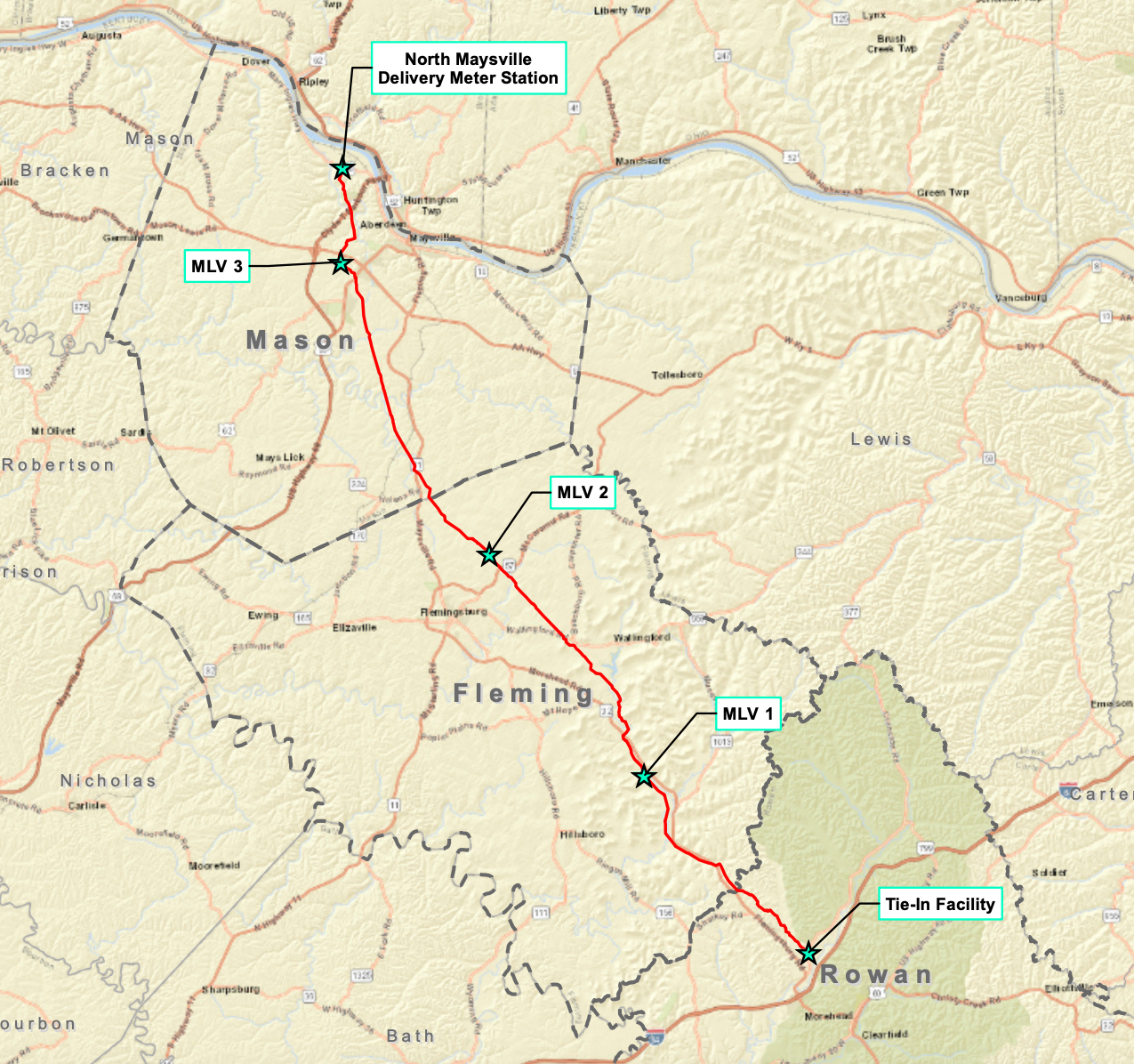
Klovsek is one of many people who live near the proposed 42-mile route of the natural gas pipeline extension through Rowan, Fleming and Mason counties who are organizing because they are concerned about their safety living near the pipeline and the impact it will have on local wildlife.
Canada-based TC Energy, which owns a controlling stake in Columbia Gulf Transmission, which is proposing the pipeline, has told the Federal Energy Regulatory Commission that it plans to spend more than $400 million to supply gas to East Kentucky Electric Cooperative’s coal-fired Hugh L. Spurlock Generating Station on the Ohio River. For years, EKPC has been planning to convert the plant’s generating units to burn up to 50% natural gas, a move that reflects increased investment by Kentucky utilities in natural gas-fired power generation.
Nick Comer, a spokesman for Eastern Kentucky Electric Cooperative, said in an emailed statement that the pipeline project “will provide greater flexibility to comply with environmental regulations and control costs.”
“This flexibility also contributes to EKPC’s fuel diversity, fuel safety, fuel reliability, and ability to implement least-cost fuel options,” said Comer. “Importantly, co-firing with natural gas will provide EKPC with a tool to manage carbon emissions and extend the life of Spurlock Station, which has 250 full-time employees and hundreds of contractors.”
As a rationale for the project, Comer cited a Biden administration-era rule that required coal-fired power plants to capture 90% of their climate-warming carbon emissions if they wanted to operate beyond 2032. The Trump administration moved to repeal those rules last year.
Comer also said TC Energy’s pipeline projects are subject to “rigorous review” by federal regulators, and that TC Energy operates tens of thousands of miles of pipeline across the continent.
In an emailed statement, TC Energy’s public relations staff said the company feels “strong community interest” and has held open houses and spoken with landowners along the proposed route.
“We received positive and productive feedback from landowners and had thoughtful conversations with community members and local businesses,” said TC Energy communications staff.
The pipeline also has strong support from Republican state lawmakers, statewide constitutional officials and manufacturers, who say the project will strengthen the state’s energy grid amid uncertainty about future regulations for fossil fuel-fired power generation.
But Klovsek and others living along the pipeline’s route believe not enough is being done to address safety concerns and potential ecological impacts. Klovsek said in his assessment that the pipeline is ultimately about “greed.”
“We would love to have pipelines across the entire state if we could. We know that’s part of progress,” Klovsek said. “It just makes no sense that our homes are at risk and our property is at risk because of a public pipeline.”
The Federal Energy Regulatory Commission (FERC) is considering public comments in preparation for an environmental assessment before making a final decision on whether to approve construction of the pipeline in November.
FERC is the federal regulatory agency that reviews and approves requests for interstate gas pipelines, including expansions of existing pipeline systems across state lines. The 42-mile pipeline will be an extension of the existing Columbia Bay Transmission Pipeline, which runs across state lines and connects Rowan County. The Kentucky Public Service Commission, the state’s public service regulator, regulates pipeline safety laws and rates and services for pipelines that provide gas to Kentuckians.
Local governments are divided over gas expansion
Rowan County Judge and Executive Harry Clark, a Democrat, told the Lantern earlier this summer that part of the reason the county’s government opposes the pipeline is because of who will benefit from it.
Eastern Kentucky Electric Cooperative supplies natural gas to its power plants. Clark said Rowan County got “another pipeline that goes across our property.” He said he was concerned that the pipeline route would run near populated areas and impact the environment. In addition to the interstate gas lines operated by Columbia Gulf Transmission, it also operates the Tennessee Gas Pipeline Company. Lines over 10 miles long within the county.
“Progress is progress, and I believe we need this in Mason County,” Clark said. “It’s not a huge benefit to us.”
He also said there is another gas pipeline on the property, about 400 meters from his home, and that he is not personally worried about it “exploding.” But he believes such a pipeline could reduce real estate values. Fleming County government also passed a resolution last year saying it does not support the pipeline. A pipeline in the county owned by another Canadian company exploded 6 years ago Due to poor welding. No one was injured in the explosion, but several acres of land were burned.
Democratic Mason County Judge Executive Owen McNeil and the mayor of Maysville, the Mason County seat, joined other Republican elected officials in expressing support for the pipeline, arguing that it would create local construction jobs during construction. McNeil also supports privately held technology companies building hyperscale data centers in the county.
Republican Senate President Robert Stivers December 2025 Letter Strengthening the electric grid “will have a positive impact on the local economy by creating high-wage employment opportunities for local working families and increasing state and local tax revenues,” they wrote.
“TC Energy has an excellent track record of infrastructure development in Kentucky and has been committed to prioritizing local resources in the construction of the Maysville project,” Stivers wrote. “Having access to reliable, cost-competitive electricity is critical to Kentuckians.”
But people living along the pipeline’s route don’t believe the pipeline’s risks are worth its far-reaching benefits.
Justin Klovsek, Sharon’s son and a Rowan County property owner, previously raised questions with FERC about whether the pipeline company conducted a proper analysis of its impact on endangered and endangered species in the area.
Kentucky Department of Fish and Wildlife Resources January letter FERC has identified 15 species, ranging from mussels to bats to eastern hellbenders, as federally endangered, threatened or proposed to be threatened and could be affected by the project.
Sharon Klovsek said her daughter is building a small house on the property and her sister is building another house despite the proposed pipeline route. She hopes they can at least reroute the potential pipeline to avoid fighting over local residents’ property.
“If the pipeline went through my front yard, I don’t know if it would stay here,” Klovsek said.
Correction: Kulovsek was previously misspelled. Additionally, Sharon Klovsek’s daughter, not Sharon’s sister, has already finished building a small home on the Rowan County property.
