


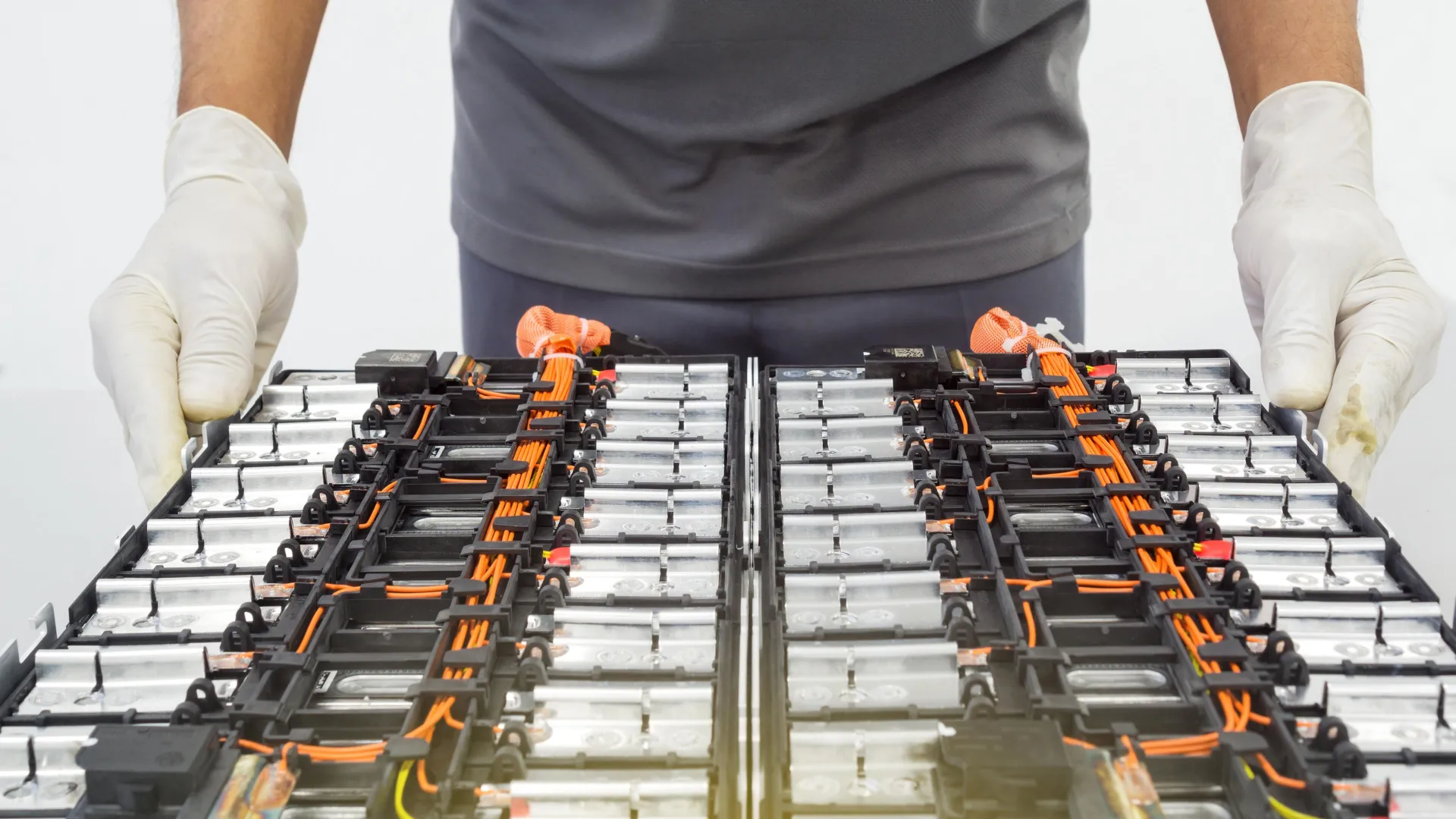
A widely used sodium-ion battery developed by Chinese manufacturer Hina has achieved performance and manufacturing quality levels comparable to Tesla’s lithium-ion batteries, according to a study published in the journal Cell Press. cell report physical science.
The findings suggest that sodium ion technology could provide a low-cost alternative for future electric vehicles and large-scale energy storage systems. However, achieving that goal will require further improvements in battery cold charging and energy density. Unlike lithium, sodium is abundant and readily available, making it an attractive material for reducing battery costs and supply chain concerns.
“The combination of good uniformity, high power capability and strong low-temperature performance makes these cells attractive for stationary storage, grid services, and short-range vehicles and commercial vehicles where potential low costs and resource availability are more important than maximum range,” said Moritz Schütte, a battery researcher at RWTH Aachen University in Germany.
Comparison of sodium ion batteries and Tesla technology
To evaluate the Hina battery, Schutte and colleagues tested 120 sodium-ion batteries using impedance spectroscopy, a non-destructive method of measuring cell uniformity.
The researchers then tested the cells under a variety of real-world operating conditions. Performance was measured over various current levels and temperatures ranging from -20 °C to 45 °C. The team also used X-rays to inspect the interior of the battery before disassembling it to analyze the dimensions, material composition, and microstructural features of the electrodes.
One notable discovery was the tableless, dual aluminum current collector design of the battery. This configuration reduces electrical resistance and promotes more uniform temperature distribution across the cell. The researchers noted that this design is very similar to the architecture currently used in Tesla batteries.
“We were positively surprised that the cells were so homogeneous,” says Schutte.
Strengths and remaining challenges
Despite the promising results, researchers have identified several areas where sodium-ion batteries still lag behind cutting-edge lithium-ion technology.
“High-power performance was better than expected from early commercial sodium-ion products,” Schutte says. “However, for applications that require frequent charging at low ambient temperatures, low-temperature charging remains a clear weakness, so a proper thermal management or operational strategy becomes critical.”
The research team also detected unexpectedly high concentrations of copper in certain areas of the battery’s positive electrode. Additionally, copper was unevenly distributed across those areas.
According to Schutte, the finding “raises interesting questions about performance and its role in aging.”
“It will be exciting to see future sodium ion technologies that do not contain nickel or copper while achieving competitive energy densities,” he said.
Why sodium is important for future batteries
Sodium is much more abundant and widely available than lithium, potentially allowing manufacturers to reduce raw material costs while mitigating long-term supply chain risks.
Sodium-ion batteries maintain strong performance under load in cold environments, making them attractive for stationary energy storage systems and mobile applications operating in cold regions.
“However, today’s commercially available sodium-ion batteries generally have lower energy density than the best lithium-ion batteries, and the technology is less mature overall,” Schutte said.
Next steps in sodium ion research
The researchers will focus on improving charging performance at low temperatures, with the goal of enabling safer and more efficient charging below 0°C.
Additional research will also explore ways to optimize the materials used in sodium-ion batteries.
“Advances in hard carbon anodes and electrolyte formulations may be particularly promising,” he said.
The research was supported by the Federal Ministry of Research, Technology and Space and the Federal Ministry of Economic Affairs and Energy.
