


My mother loves butter. It’s the main fat I ate growing up. She spread it on all kinds of breads, potatoes, nut rolls, or coffee cakes. She exclusively baked with it.
When I was studying nutrition in college, I had a teaching assistant who recommended margarine over butter. I was shocked and wondered about the difference between the two. That was one of the reasons I became interested in food science. Currently, as a food scientist, I study the subtle chemical differences in foods such as butter and margarine that can have a big impact on how they behave in the food.
chemical structure
Butter and margarine are emulsions, a mixture of tiny water droplets spread throughout a continuous fat matrix. This matrix is primarily composed of triglycerides, which are the main form of fat found in our diet.
Fatty acids are long carbon chains surrounded by hydrogen atoms. Triglycerides have three fatty acids, each attached to the same three-carbon glycerol molecule, which acts as the backbone of the molecule. The backbone is always the same, but the number of carbons in the fatty acids can vary. In creams, triglycerides are packed into globules or crystals.
Both butter and margarine contain a combination of saturated and unsaturated fatty acids. But because butter is primarily saturated, there are no double bonds between carbons, so the butter fits together and stacks compactly to form neat straight chains.
The fatty acids in margarine are mainly unsaturated fatty acids and are made by blending vegetable oils. Unsaturated fats give them an irregular shape at the molecular level. The double bonds between carbons cause the molecules to twist, so they are no longer arranged in an orderly manner. This difference affects how it melts.
Butter has different forms of fat crystals and different melting points. These crystals make butter very hard at low temperatures and gradually soften at room temperature or body temperature. Creaming with crystalline sugar also helps trap air, adding lightness and porosity to baked goods.
Both butter and margarine contain at least 80% fat, but some butters can be closer to 85% fat. The water content of butter is approximately 16%, and butter consists of 1-4% vitamins, minerals, lactose, and protein.
Butter has official identification standards set by the U.S. government, and manufacturers must meet certain guidelines for their products to be considered butter. This food standard is one of the oldest in the United States
making butter
Shaking or stirring the cream will burst the fat globules. The fat will leak out and form semi-solid butter granules. Further shaking and stirring will cause these grains to grow and separate from the moist, naturally low-fat buttermilk.
The mass is then collected, kneaded and pressed, and voila, you have butter. Some butters are cultured with lactic acid bacteria. These bacteria ferment lactose, or milk sugar, to produce flavor compounds and organic acids, which give butter its mild acidity and complex flavor.
You can easily make sweet butter at home by adding cold heavy cream with a fat content of at least 36% to a stand mixer fitted with a whisk attachment. You’ll know the butter is ready when you turn it on, walk around a little, and hear the crackling of watery buttermilk.
making margarine
Margarine sticks start out as a liquid vegetable-based oil and turn into a solid. Producers chemically rearrange fatty acids on glycerol molecules in a modification process called transesterification, making the oil solid and the fat more evenly distributed.
This process rearranges the triglycerides in margarine without adding saturated fat or creating trans fats. Trans fats are banned in many countries due to their association with cardiovascular disease and elevated cholesterol levels.
Transesterification allows margarine to remain solid for longer with a more precise melting point during baking.
Spread or squeeze style margarines do not go through this process and instead have a higher ratio of water to air to solid oils, which keeps the margarine soft and spreadable. These spread types are low in fat and are not suitable for baking. Higher moisture content changes texture, and most baking recipes are formulated with higher fat percentages in mind.
Processors are not required to state on the label whether the margarine has been transesterified.
flavor and color
Butter’s golden color comes from beta-carotene, an orange pigment found in grass. Although cows eat grass, they do not metabolize beta-carotene efficiently, so beta-carotene is found in milk. Margarine is naturally colorless, but manufacturers add synthetic beta-carotene to margarine to mimic the color of butter.
To recreate the flavor of butter, margarine manufacturers add flavors such as diacetyl, a unique butter flavor molecule, and a blend of whey ingredients and preservatives. Emulsifiers such as lecithin or monoglycerides may be added to prevent water and fat from separating. The exact proportions of ingredients vary by producer.
Chemical differences can lead to subtle health differences. Both are primarily made of triglycerides, but the fat in butter is naturally derived, while the fat in margarine is industrially processed. This difference makes margarine an ultra-processed food, but it also means it’s low in saturated fat. While you may choose one over the other for health reasons, keep in mind that the chemistry behind how these fats are made can also affect how they behave in the kitchen.
Differences in baking methods
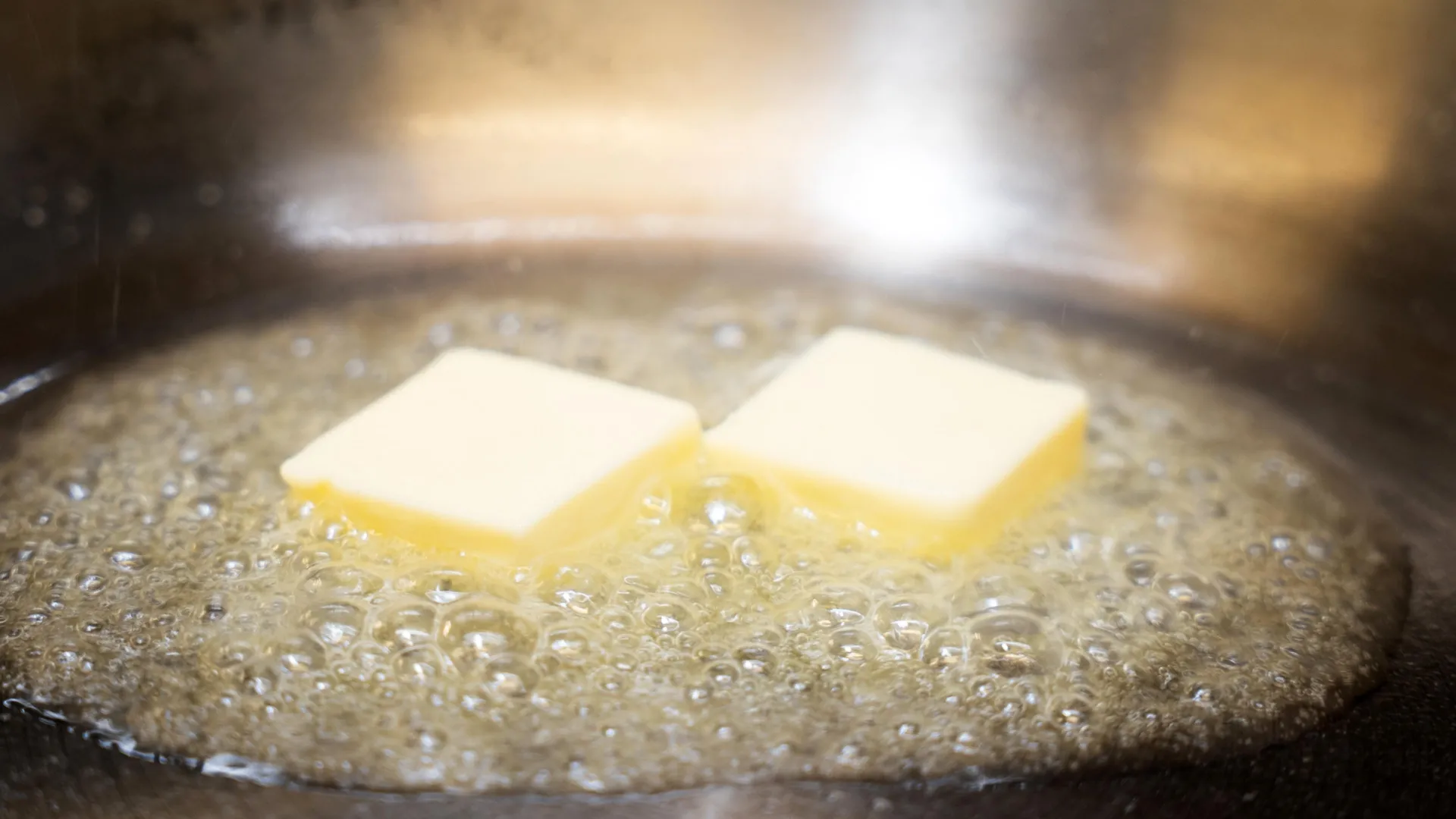
When butter is heated, the proteins in the butter combine with the lactose, giving it its distinctive brown color and nutty, caramelized flavor. Margarine does not contain lactose, so it does not brown as well as butter and does not impart the same level of aroma.
When baked in a very hot oven, butter contains enough moisture to form steam, which separates the dough into flaky pastry layers. Margarine varies in moisture content, and while it does produce some steam, it doesn’t perform as well as butter.
However, margarine has some advantages over butter. It is very stable and melts in a controlled manner. It also has a longer shelf life. Yes, they can both be used interchangeably, but knowing the differences between the two features will help you decide which one to use.
