


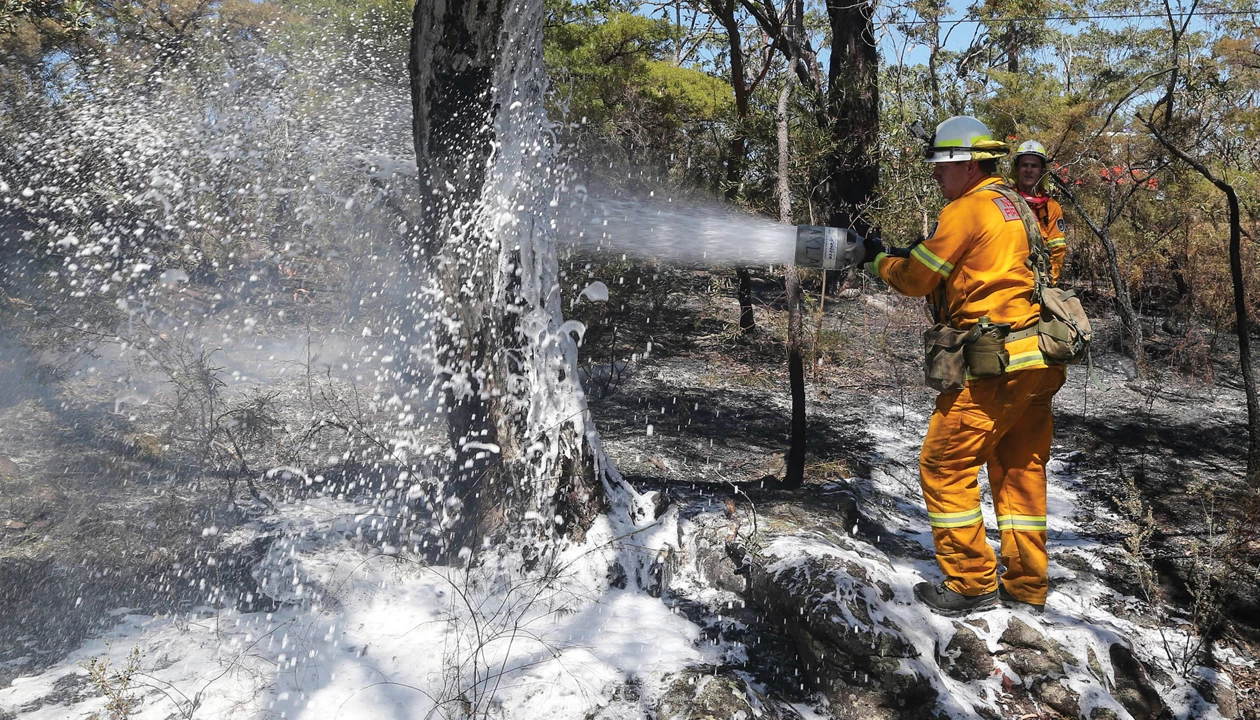
The Australian government’s announcement on May 28 of a A$2 billion ($1.4 billion) lawsuit against chemical manufacturer 3M over alleged environmental damage caused by firefighting foam containing per- and polyfluoroalkyl substances (PFAS) could be a stepping stone for other countries struggling with multibillion-dollar remediation projects, analysts say.
“It’s bold for a federal state to hold a multinational corporation responsible for national environmental pollution,” said Hélène Dugui, an environmental lawyer at Client Earth who specializes in chemical pollution.
Although the case focuses solely on PFAS contamination at Australian defense facilities, Dugie said it could serve as a model for consolidating local claims over PFAS contamination while recovering costs associated with remediation. The outcome of this lawsuit could prompt other governments to “let off the shoulders of local governments and residents who do this on their own.”
Minnesota-based 3M has settled several lawsuits in the United States and other countries in recent years, particularly over PFAS contamination in drinking water.
In 2023, 3M settled a $10.3 billion lawsuit brought by U.S. public water utilities for allegedly contaminating tap water primarily with aqueous film-forming foam (AFFF). Fire extinguishing agents typically contain perfluorooctanoic acid (PFOA) or perfluorooctane sulfonic acid (PFOS), two chemicals known to be toxic to humans. The Australian Department of Defense uses AFFF at 28 defense installations, causing widespread contamination, the lawsuit alleges.
In a statement to C&EN, 3M said it had never manufactured PFAS in Australia and stopped selling AFFF in the country 20 years ago. The company plans to challenge these claims in court.
The complaint alleges that 3M knew about AFFF’s environmental risks but withheld that information and misrepresented it to the Australian government.
“I think this is consistent with what we’ve seen in the United States over the years,” says Robert A. Bilot, an environmental lawyer who successfully sued DuPont on behalf of communities exposed to PFOA in Ohio and West Virginia. Bilott said lawsuits by affected residents and state governments have made similar claims that PFAS manufacturers knew the risks associated with their products and failed to disclose them.
Environmental contamination from PFAS is expensive to clean up, and that’s not reflected in PFAS’ low price, Dugie said. Cases like the one in Australia place the onus of remediation and pollution prevention on chemical producers. “This is a liability issue,” she says. “Who bears the burden of (companies’) actions?” So far, she says, remediation has fallen on local and state authorities and taxpayers.
Australia’s Department of Defense has so far spent A$817 million ($574 million) remediating PFAS contamination at defense bases, including removing contaminated soil, treating water and providing bottled water to nearby communities, according to the Australian Parliament’s PFAS inquiry released in November. Peter Kalil, Australia’s deputy defense secretary, said in a May 28 statement that past and future costs incurred by the government as a result of the 3M lawsuit will be recovered.
Mr Bilott says he would not be surprised if other countries took note of Australia’s case. Laws governing how governments can hold companies accountable vary from country to country, but “people around the world are facing a situation where they’re realizing that the same chemicals are in their water, their soil, their fish,” he says. “It’s the same science, it’s the same company.”
Dugie agreed, adding that he hopes other governments will be encouraged to pursue this type of direct cost recovery. Information from the lawsuit could also strengthen evidence that 3M was withholding data on PFAS, she said, which would support potential claims by other governments.
C&EN reached out to multiple chemical industry attorneys for comment, but did not receive a response by the time of publication.
