


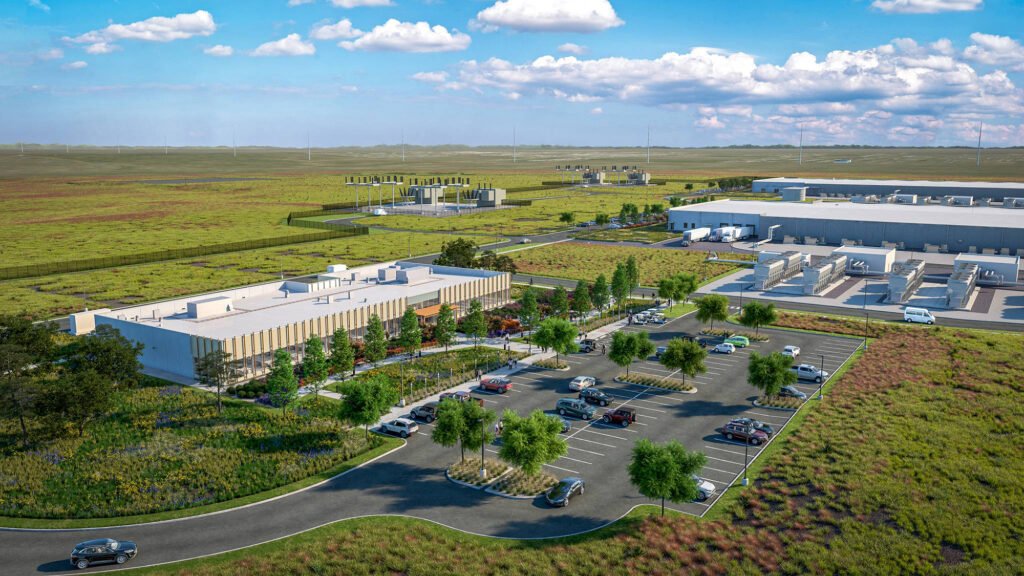
Of the many data center developers eyeing Wyoming, estimates suggest that just two, Microsoft and Prometheus Hyperscale, could require more than double the state’s existing power consumption.
Where that power comes from is still under consideration. And local officials say there’s growing concern that surprisingly less water is needed to cool all those hot computing servers than expected. Some industry representatives say new computing centers are little different from retail stores, thanks to direct chips and geothermal cooling, as well as an industry-wide shift to a closed-loop mix of propylene glycol and water that requires refilling only once every six years.
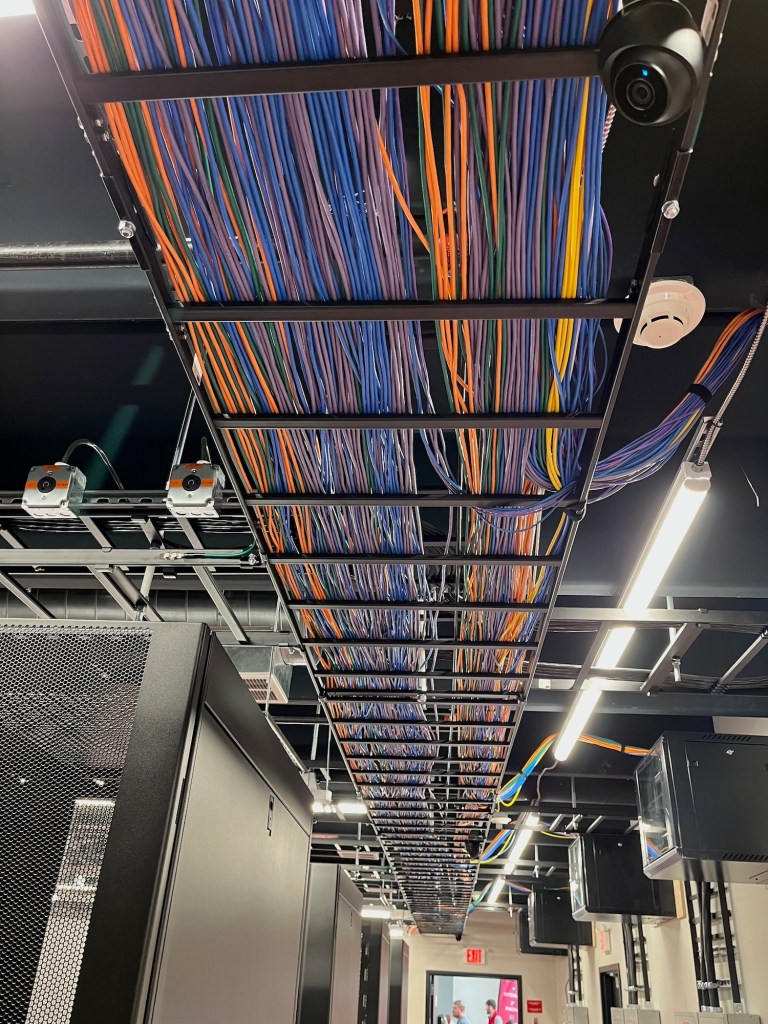 Casper Data Center, June 2025. (Dustin Bleizeffer/WyoFile)
Prometheus Hyperscale says the scale of its planned computing centers is so large that the industry will have to rely on advanced cooling systems that don’t rely on evaporating large amounts of water. “It just so happens that[Prometheus Hyperscale’s technology]doesn’t consume water on an ongoing basis,” founder and CEO Trenton Thornock told a legislative committee earlier this month.
The Legislature’s Water Task Force, along with representatives from Microsoft and Cheyenne Mayor Patrick Collins, questioned Prometheus officials, citing growing concerns about the industry’s reputation as a huge waste of water resources. Some local governments across the country are considering banning or pausing the construction of new data centers until there is more transparency and certainty around water consumption. The concern stems from the fact that water is needed not only to cool the servers, but also to generate large amounts of new electricity generation needed to power the servers.
Collins said such a drastic policy move would be an economic mistake.
Data center boom, benefits and concerns
The push to build more data centers to power artificial intelligence and myriad other computations is so great that some are comparing it to past construction of the nation’s railroads and interstate highway systems. In modern dollars, companies have invested about $756 billion this year in “building AI” and are projected to spend $1.6 trillion by 2031, according to Goldman Sachs. That’s about 22% of what the federal government spends in a year.
Cheyenne is already home to 13 large data centers, including a supercomputer at the National Center for Atmospheric Research. Microsoft will open the first of 11 data centers in Cheyenne in 2012 and plans to add three new computing “campuses” with other partners. OpenAI, Meta, and Crusoe also have plans in the area, with speculation rife that they will build new computing campuses across the state from Evanston to Casper.
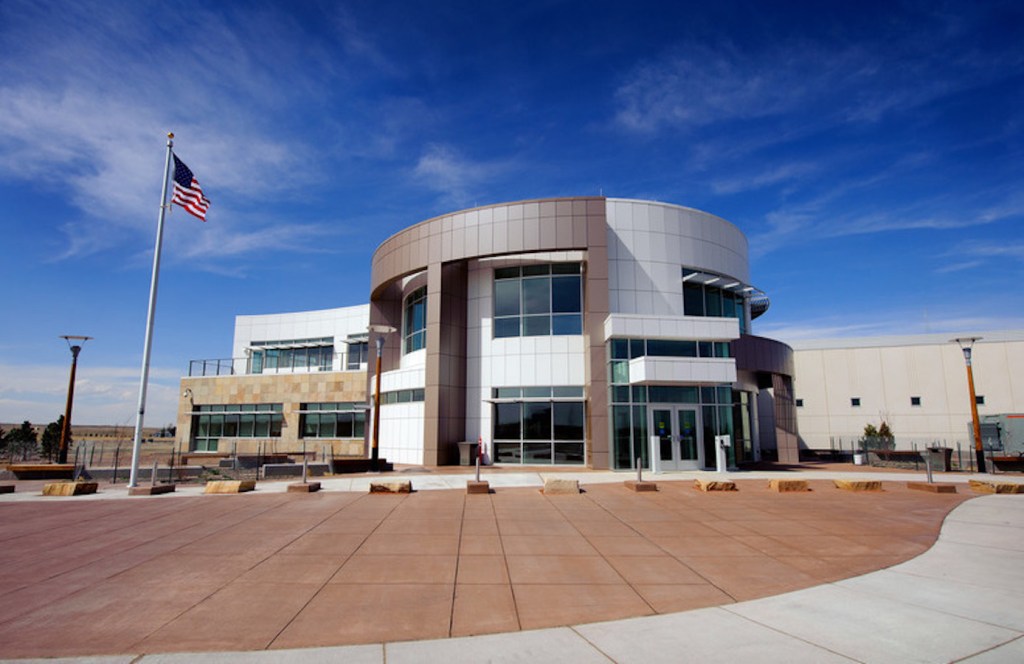 National Center for Atmospheric Research in Cheyenne – Wyoming Supercomputing Center. (University of Wyoming)
Mayor Collins said he has heard increasing concerns about local data centers. Some residents are frustrated by the recent wave of annexations aimed at building out new buildings. But any new annexes city officials are considering are surrounded by city property and would come from willing landowners, he said.
Light pollution, unchecked growth and rising electricity costs are also concerns. “Our biggest conversation is about water,” Collins said. There are no insurmountable concerns, including about water, he added.
“I want you to know that our expectation for businesses is that they do no harm when they enter our communities,” Collins testified.
The city worked with the state and Cheyenne Light, Fuel and Power to create separate electricity rates for the data center. Essentially, by contracting directly with the data center rather than incorporating the average customer into a larger service area, you keep them harmless. Aggressive zoning and planning regulations set standards and limits for things like light pollution and noise pollution.
Collins said the industry is not a hindrance, providing hundreds of good-paying jobs and boosting the economy without straining local services or the city’s water supply.
Currently, the computer banks in Cheyenne use about 200 acre-feet of water a year, Collins said. This represents 1.48% of all water consumed in Cheyenne. Collins said he recently spoke with a data center developer who claimed his closed-loop cooling system would require the same amount of water as eight single-family homes.
“It is estimated that all (planned) data centers combined will use approximately 400 acre-feet of water per year. In total, this represents approximately 3% of current water usage and approximately 1.8% of the 22,000 acre-feet available annually to the City of Cheyenne.”
Residents urge caution
Still, the committee heard pleas from the public to proceed with caution, especially when it comes to water resources. Auna Kaufman, government relations manager for the Wyoming Outdoor Council, said the data center construction boom is happening faster than many small towns can handle. And little is known about the potential strain on water resources, especially with the industry’s thirst for large amounts of new power generation.
“We appreciate the integrity of the (project developers) currently on board,” Kaufman said. “But not all municipalities have the resources to assess those impacts. As a state, we need to ensure we have a regulatory framework in place that protects them as well.”
Some called on the panel to demand more transparency from the industry, long before a deal allowing new projects was signed.
“They will argue that (closed-loop cooling systems) are filled once and essentially cycle forever,” said the Cheyenne Republican, who is not a member of the water select committee. “Well, that may be true in a lab, but we don’t live in a lab. We live in Wyoming. We live in a state where water is a big issue.”
The commission has not taken any legislative action on the matter and plans to take up the matter when it meets again in August.
