


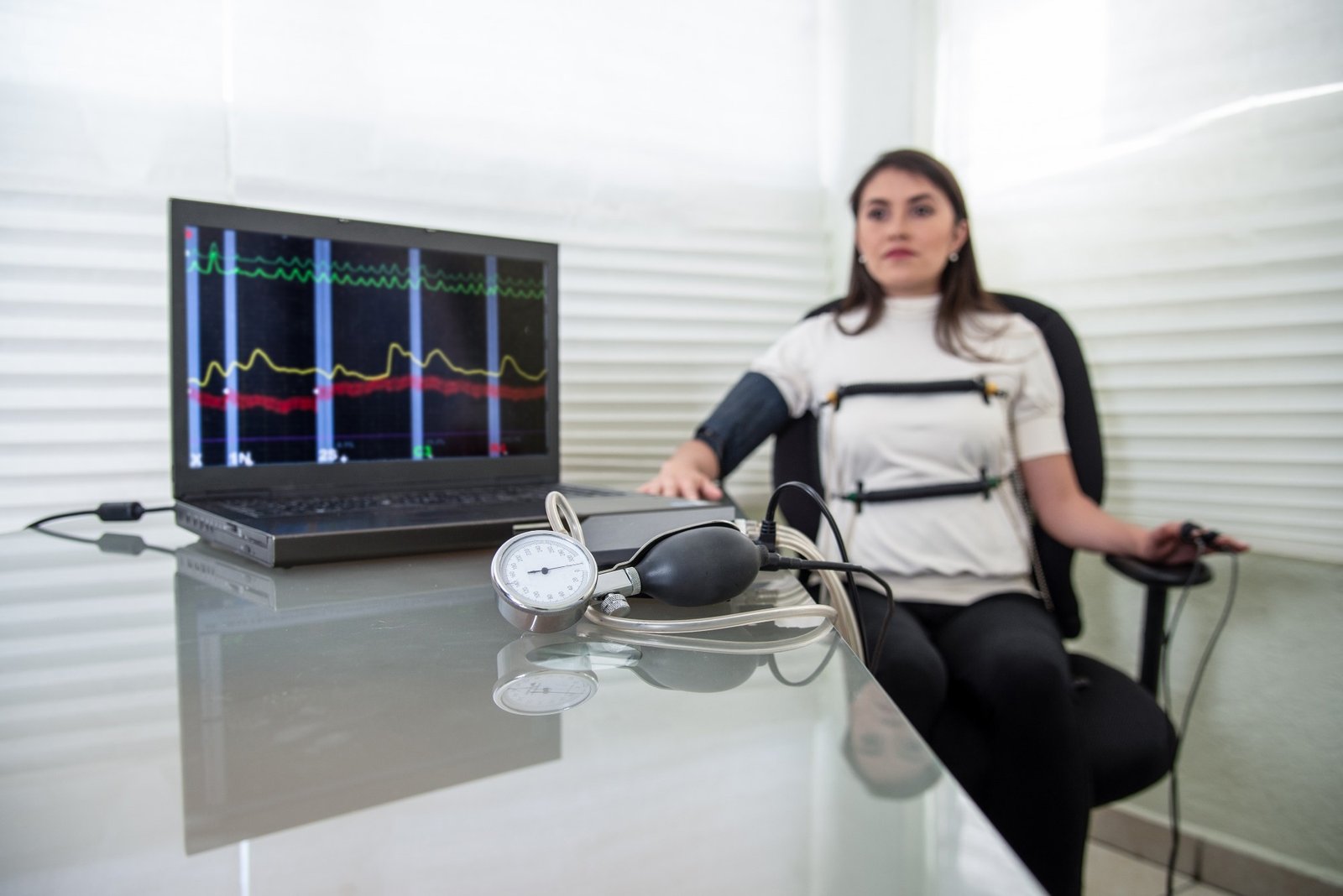
A soft wireless chest patch could replace bulky polygraph and sleep testing wires by continuously tracking the body’s hidden stress signals in real-world settings, from emergency medical training to infant sleep disorders.
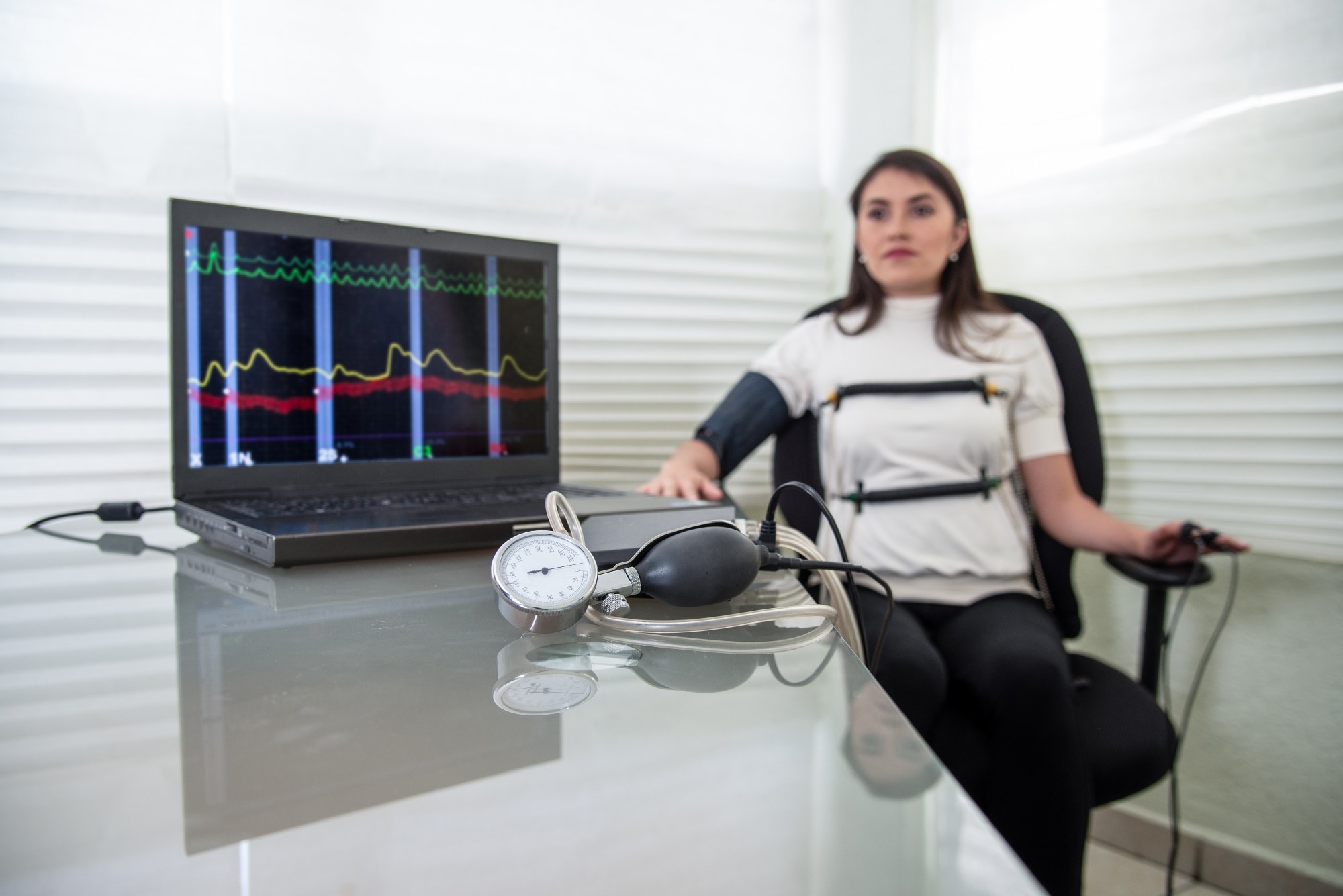 Research: A wireless, skin-interfaced multimodal sensing system for continuous psychophysiological monitoring – a wearable polygraph device. Image credit: clicksdemexico/Shutterstock.com
recent scientific progress This study aims to develop and validate a new wearable platform capable of continuous time-synchronized measurements of cardiac, respiratory, electrodermal, and thermal signals for advanced psychophysiological assessment and translational clinical applications.
Challenges in psychophysiological monitoring
Accurate psychophysiological monitoring is essential for characterizing stress and autonomic dysfunction across various disease states. Subtle fluctuations in cardiac, respiratory, electrodermal, and thermal activity serve as biomarkers of physiological damage and stress. These parameters are interdependent, and stress induces regulated yet individualized changes through autonomic pathways. Therefore, simultaneous multimodal sensing is required for comprehensive evaluation.
Traditional approaches such as polygraphy and polysomnography deploy multiple wired sensors attached to the body, which limits their practicality and comfort. The inherent complexity and discomfort of these systems can create secondary stresses and reduce measurement fidelity, potentially limiting their applicability in clinical settings and among vulnerable groups.
Wearable bioelectronic devices, particularly soft skin-integrated platforms with wireless multimodal sensing, have emerged to address these limitations by enabling simultaneous low-burden data acquisition throughout daily activities. However, most current wearable devices are limited to one or two parameters or rely on sweat biomarkers, which are hampered by glandular activation requirements and temporal delays.
To date, no platform exists that combines cardiac, respiratory, electrodermal, and thermal monitoring in a single small, patient-friendly device that has been validated in both clinical and laboratory settings.
Development and verification of skin interface type multimodal sensing system
Researchers developed a wireless skin-interfaced multimodal sensing system (SIMSS) for continuous psychophysiological monitoring. SIMSS captures heart and respiratory rates, their variability, heart sound intensity, electrodermal activity, temperature, and thermal conductivity, allowing comprehensive real-time assessment of autonomic and stress-related physiology.
Although machine learning (ML) algorithms applied to SIMSS data accurately classify stress events and physiological states, these findings were obtained from relatively small participant cohorts across validation studies. In the validation study, data were collected from seven subjects during polygraph interviews using both the SIMSS and a commercially available polygraph system, with partial analyzes reported by six participants.
After a 10-min break, participants answered a randomized set of control and sensitive questions in 30-s intervals. Multimodal features extracted from SIMSS data enabled ML to sensitively detect physiological changes during questioning.
For sleep monitoring, 13 pediatric patients aged 7 to 30 months wore a SIMSS device on their chest without interfering with the clinical polysomnography (PSG) system. In a separate simulation laboratory training, 16 second-year pediatric residents wore both SIMSS and a reference ECG device, and data was collected over seven sessions to assess performance in realistic scenarios.
SIMSS demonstrates highly accurate detection of physiological stress
SIMSS continuously tracks respiratory rate, respiratory rate variability, electrodermal activity, and skin temperature, allowing comprehensive monitoring of stress-related autonomic responses. Applying ML to these multimodal data allows for accurate differentiation between stress and rest, recreating important physiological information captured by polygraph systems in real time and in a natural setting.
Multimodal approaches have also improved the mechanistic interpretation of autonomic responses that are coordinated across physiological systems, rather than relying on a single stress marker. The device captured physiological responses to perceived stress during a speech-in-noise task, and the results were consistent with pupillometric results.
As a wearable polygraph, SIMSS reliably captured physiological responses during the interview, consistent with commercial systems and confirming sympathetic activation. The device sensitively detected rapid increases in stress markers across multiple domains in response to sensitive questions.
The device detected widespread autonomic activation during cognitive stress, particularly during demanding phases. Group analysis confirmed consistent and significant physiological increases despite individual differences. ML using device data has enabled detailed profiling of stress reactivity associated with stress-related disorders.
Validation of physical stress monitoring showed that the device results were broadly consistent with those of an FDA-approved reference device and corroborated by cortisol measurements. Coordinated increases in physiological markers during cold pressor testing closely matched increases in electrocardiogram (ECG) and blood pressure monitoring, capturing stress-induced vasomotor and microvascular changes.
ML distinguished between physical stress and rest with high sensitivity and specificity and identified heart rate and respiratory variability as key markers. This device captured distinct features of both interoceptive and exteroceptive stress, validating its utility in diverse environments.
This wireless device has provided a non-invasive alternative to traditional PSG for infant sleep monitoring, allowing comfortable and continuous nighttime assessment, although this technology is still in the research validation stage.
During children’s sleep, SIMSS recordings closely matched PSG results and reliably detected arousal, hypopnea, and desaturation., Inhibits urination while minimizing motion artifacts. ML confirmed high sensitivity and specificity for detecting sleep events using respiratory, cardiac, and thermal signals as the main predictors.
In infants with Down syndrome, the device revealed distinct autonomic signatures, higher parasympathetic activity, and lower stress markers compared to healthy controls, supporting the potential for early risk assessment and intervention in this vulnerable pediatric population.
The use of SIMSS during emergency medical training demonstrated the applicability of the device in a dynamic environment. Session-specific stress responses were reliably detected, independent of movement artifacts or strict matches to electrocardiogram (ECG) baseline values, with cardiac and electrodermal markers increasing during difficult scenarios and decreasing during debriefing.
Group analyzes showed high variability in stress markers across sessions, especially in complex scenarios, reflecting varying stress reactivity across participants. The authors noted that further studies with larger and more diverse populations are important to assess generalizability and long-term real-world performance.
In particular, higher physiological stress responses are associated with poorer performance, highlighting the potential of devices to inform educational strategies and resilience training.
conclusion
Researchers have developed a versatile and clinically relevant platform that accurately captures psychophysiological stress and sleep events in a variety of environments. However, this study primarily represents early-stage validation work, and additional large-scale, long-term studies will be required before widespread clinical adoption.
Expanding its use to intensive care, behavioral health, and neurovisceral medicine has the potential to further integrate physiological sensing and precision therapy. By uncovering connections between dysautonomia, stress responses, and health outcomes, this technology has the potential to enhance diagnosis, personalize education, and improve treatment monitoring across multiple disciplines, including stress medicine, pediatrics, and health behaviors.
Click here to download your PDF copy.
Reference magazines:
-
Kim, S.H. et al. (2026). A wireless skin-interfaced multimodal sensing system for continuous psychophysiological monitoring – a wearable polygraph device. Science progresses. Doi: https://doi.org/aed3162. https://www.science.org/doi/10.1126/sciadv.aed3162
