


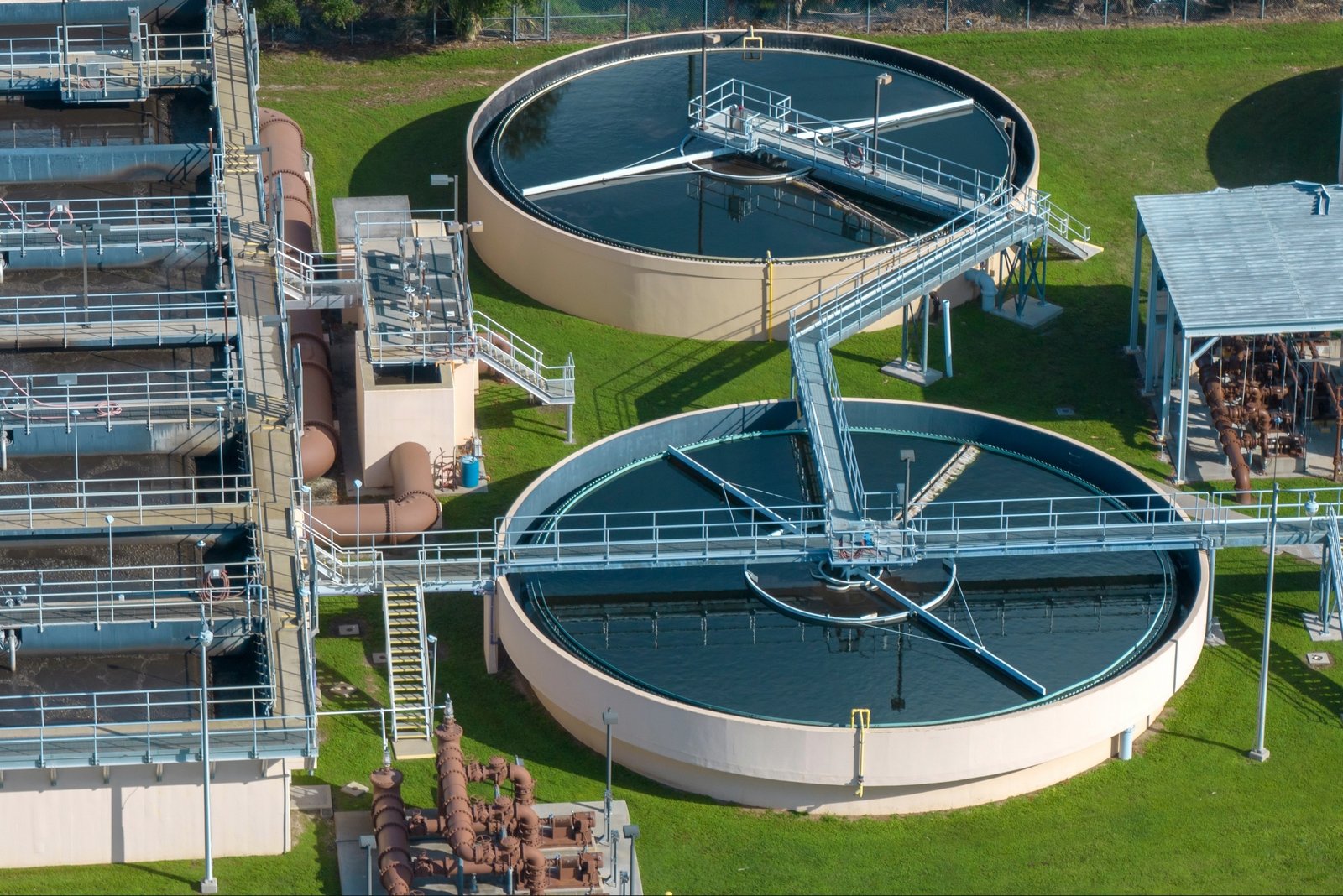
Although wastewater treatment plants were never really built with microplastics in mind, they still manage to capture a surprising proportion of them.
But when you start digging into what’s really going on beneath the numbers, that success sounds better than it actually is.

A new review considers whether artificial intelligence can help fill some of the gaps that remain in detecting, tracking and managing microplastic pollution as it passes through treatment processes.
The peer review was led by corresponding author Konstantinos Tsamoutsoglou from the Technical University of Crete.
This is a compilation of studies published between 2019 and 2026. The review covers the sources of microplastics, their concentrations, detection methods, treatment techniques, and the growing role of AI in this field.
Where do microplastics come from?
Microplastics enter treatment facilities from almost everywhere, including domestic and industrial wastewater, fibers from clothes being washed, personal care products, and general municipal wastewater.
These facilities were initially designed with very different priorities. As a result, the capture of microplastics, especially the tiniest of them, has always been more of a happy accident than something intentional.
“Wastewater treatment facilities provide an essential barrier to microplastic pollution, but removal does not necessarily mean elimination,” Tsamtzoglou said.
“By combining reliable analytical measurements with artificial intelligence, treatment facilities have the potential to move from occasional monitoring to faster, predictive, and more informed management.”
Most microplastics are caught here
Reported concentrations of microplastics vary widely from study to study. Every processing facility is built a little differently. Researchers also use a variety of methods to sample and detect particles in the first place.
However, even with such variation, fairly consistent patterns emerge throughout the treatment process.
The preliminary and primary treatment stages remove approximately 72 percent of the incoming microplastics. Second-line treatment can increase clearance rates up to approximately 88%, and third-line treatment can increase clearance rates to 94%.
But these numbers hide a fundamental problem of scale. A 94% removal rate does not mean that the treated water is actually plastic-free.
These plants push out an amazing amount of water every day.
Even small concentrations left in wastewater can add up to millions of particles directly into rivers, lakes, and coastal waters.
Particles smaller than about 150 micrometers are particularly easy to slip through. They remain suspended in the water rather than settling where traditional treatment systems are designed to trap them.
plastic won’t disappear
This review also delves into the quieter parts of this story. Treatment facilities capture an estimated 60-80% of microplastics, but cannot destroy them. Instead, particles accumulate in sewage sludge.
Farmers often reuse the sludge as fertilizer or soil conditioner, which is generally considered sustainable and beneficial.
However, captured microplastic particles can land on agricultural land and remain there for long periods of time.
Particles can interact with soil microorganisms and plant roots, or ultimately enter runoff and enter terrestrial food webs.
This finding suggests that rather than removing microplastic pollution, wastewater treatment is quietly relocating it. This process moves the problem out of rivers and oceans and into farmland instead.
Areas where AI can bring about change
Artificial intelligence offers some practical ways to help operators keep track of all this.
Computer vision systems can automatically detect and classify plastic particles in microscopic images, reducing the tedious manual work currently performed by lab technicians.
It also helps reduce inconsistencies caused by different people making slightly different decisions.
Under controlled laboratory conditions, some of these image-based models have already reached classification accuracy of 85-95%.
Machine learning can also connect particle counts with day-to-day operational data such as flow rate, turbidity, suspended solids, and how sludge is recycled through the system.
A model trained on that combined data could help predict how well the plant is actually removing particles.
It can also flag potential sources of contamination, allowing early detection of abnormal conditions and real-time adjustments to treatment and sludge handling.
3 steps to smarter surveillance
Based on all this, the authors present a three-part framework for building truly useful AI-driven monitoring.
The first step is to thoroughly and consistently collect laboratory, imaging, spectroscopic, and operational data.
Researchers can use that data to train models to classify particles and predict plant performance.
The final step is to incorporate all this into early warning systems and decision support tools that plant operators can actually use in their daily work.
AI is not ready yet
Researchers trained many existing models on small, tidy laboratory datasets that fall short of capturing how messy real-world wastewater actually is.
Monitoring methods also vary widely between studies. This discrepancy makes it difficult to compare results between institutions. It also becomes difficult to expect a model trained in one plant to perform well elsewhere.
Filling these gaps will require larger standardized datasets and real-world independent validation.
Researchers also need transparent algorithms that operators can trust, along with full-scale testing in operating processing facilities.
Human expertise remains important
Researchers are careful not to overstate what AI can do here.
They make it clear that it complements, not replaces, chemical analysis and the hard-earned expertise of the people who actually run these processing plants.
Combining the two could allow for more accurate monitoring and smarter control of microplastic pollution.
This combined approach has the potential to address both water and terrestrial pollution, and clearly goes beyond the treatment plant fence line.
The research will be published in a journal Artificial intelligence and environment.
—-
Like what you read? Subscribe to our newsletter for fascinating articles, exclusive content and the latest updates.
Check us out on EarthSnap, the free app from Eric Ralls and Earth.com.
—-
