


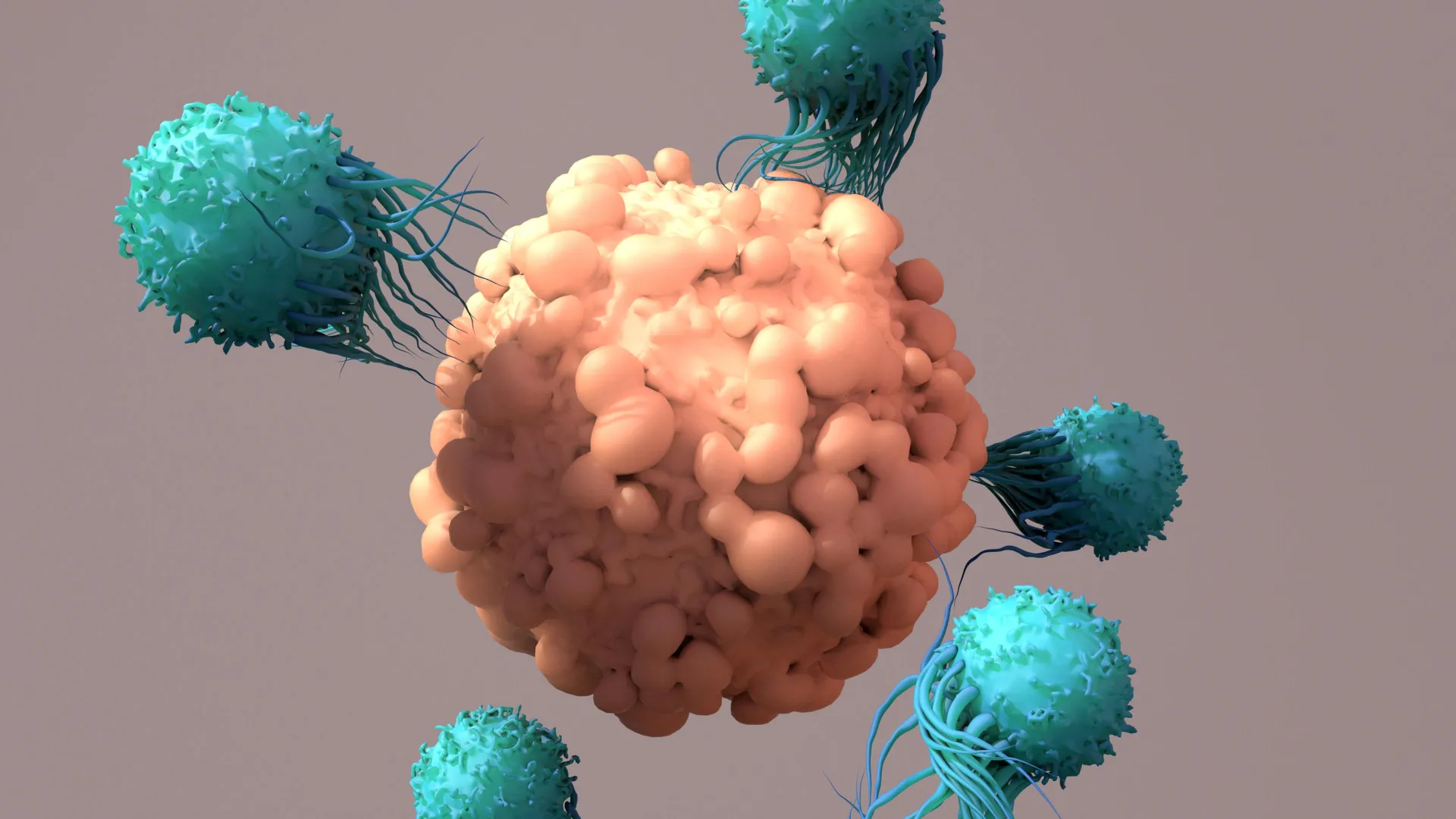
Researchers at Columbia University and Tübingen University Hospital have discovered a protein that appears to play a key role in weakening CAR T cells over time. Scientists discovered that by disabling a protein known as NFIL3, these engineered immune cells remained active longer and were better able to attack tumors. The survey results are cancer discoverycould help improve CAR T cell therapy, especially for solid tumors that have proven difficult to treat.
CAR T-cell therapy is one of the most advanced forms of personalized cancer treatment. This approach involves collecting a patient’s own immune cells, genetically modifying them to recognize cancer, and then returning them to the body to seek out and destroy tumor cells.
This treatment has shown remarkable results for some blood cancers. However, it is not very effective against solid tumors. An international team led by Professor Michel Sadran, MD, PhD, of Columbia University, in collaboration with Judith Feucht, MD, PhD, of Tübingen University Hospital, set out to better understand why. Sadelain is widely recognized as one of the pioneers of CAR T cell therapy and has played a key role in its development and clinical use.
NFIL3 is associated with CAR T cell depletion
To identify the factors that limit CAR T cell performance, researchers conducted a large-scale analysis of about 400 transcription factors (proteins that control which genes are turned on or off in cells).
Their study pointed to NFIL3 as the primary cause of CAR T cell depletion, a process in which cells gradually lose their ability to function effectively. When the researchers removed NFIL3, CAR T cells remained active for longer, proliferated more efficiently, and maintained stronger antitumor effects.
The research team used CRISPR/Cas9 gene editing technology to disable the gene involved in the production of NFIL3. CRISPR is often referred to as genetic scissors, allowing scientists to precisely cut and modify DNA.
“Switching off NFIL3 could be a decisive step to significantly improve the long-term efficacy of CAR T cells,” Professor Feucht explains.
Enhancing tumor control in animal research
The benefits of depleting NFIL3 have been demonstrated in several mouse models. CAR T cells lacking this protein were more effective at controlling tumors and contributed to longer survival times.
These results suggest the possibility of improving the treatment of cancers, particularly solid tumors, that currently have little response to CAR T cell therapy.
“Our goal is to improve the efficacy of CAR T cells in solid tumors,” says Serena May, co-first author of the study and a member of Professor Feucht’s research group. “We hope this will open up new possibilities for the treatment of cancer patients,” Feucht added.
Bridging laboratory research and patient care
Professor Feucht combines cancer research with hands-on clinical care. She carries out research within Germany’s only Oncology Cluster of Excellence, iFIT (Image-Guided and Functionally Directed Tumor Therapy), while also treating children and adolescents in the Department of Pediatrics at the University Hospital Tübingen.
Her research follows a “bench-to-bedside” approach and focuses on translating scientific discoveries into treatments that directly benefit patients.
Although additional studies are needed before this strategy can be tested and used in humans, the findings provide encouraging evidence that targeting NFIL3 may enhance CAR T cell therapy and expand its utility against a broader range of cancers.
