


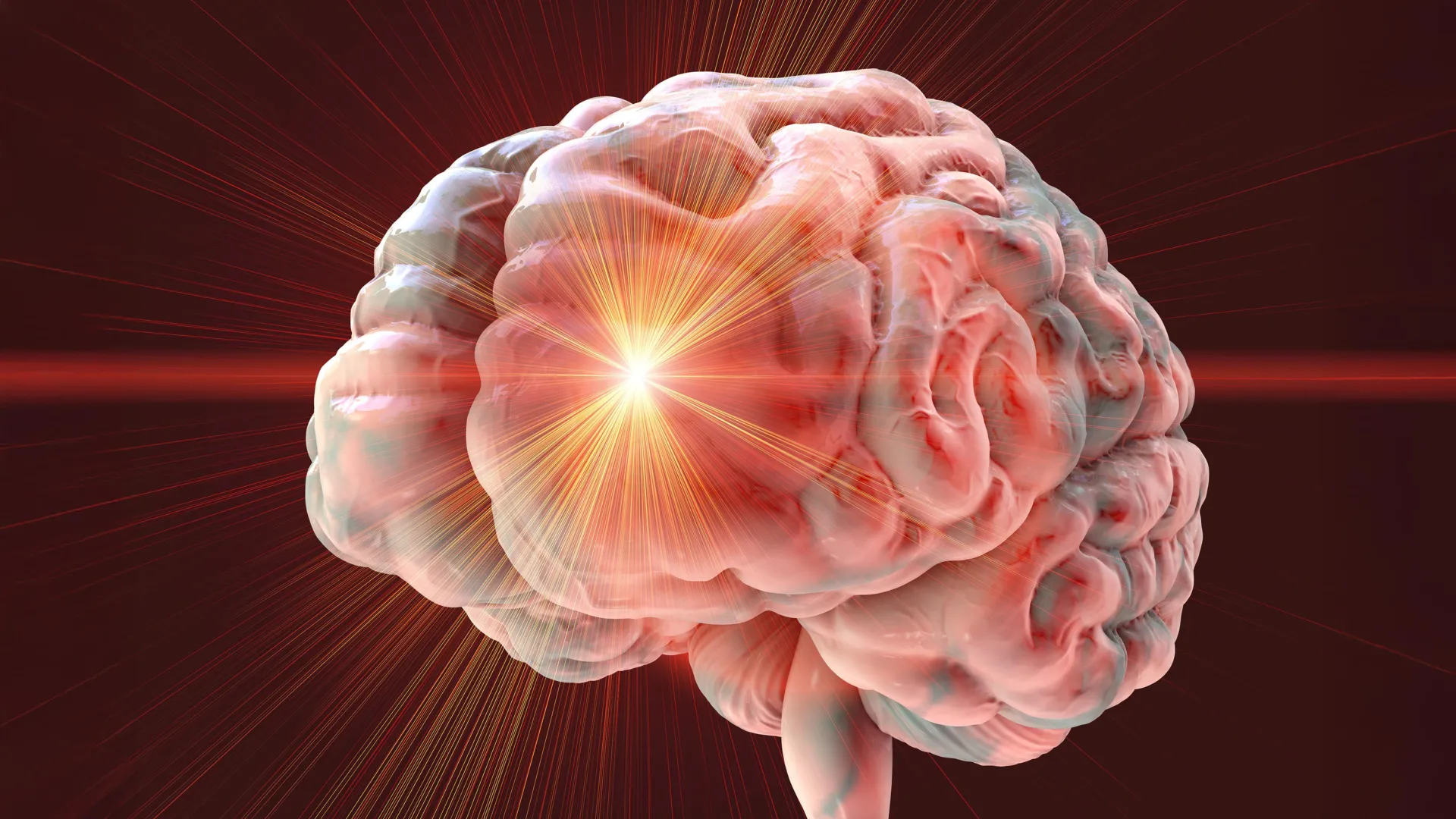
A drug combination widely studied for its anti-aging potential may have significant downsides. Researchers at the University of Connecticut report that the treatment caused significant brain damage in mice, raising concerns about its increasing use in longevity research and off-label anti-aging therapies.
The survey results are PNASshowed that the drug combination dasatinib + quercetin (D+Q) damaged myelin, the protective coating that surrounds nerve fibers and helps electrical signals travel efficiently between the brain and body.
“When you give this cocktail to animals, both young and old, it damages myelin and causes myelin to disappear, even more so in young animals than in older animals,” said Stephen Crocker, an immunologist at the University School of Medicine.
Loss of myelin can cause numbness, pain, difficulty walking, and problems with memory and thinking. Myelin damage is also a hallmark of multiple sclerosis.
Anti-aging drugs and brain health concerns
D+Q has become one of the most popular drug combinations in anti-aging research. Scientists have studied its ability to eliminate aging cells that cause inflammation and age-related diseases. This treatment is currently being studied for diseases such as type II diabetes and Alzheimer’s disease.
Outside of clinical settings, some people interested in longevity are experimenting with the drug on their own, despite warnings from medical experts. However, few studies have investigated how the combination affects the brain.
Researchers Evan Lombardo ’23 (CLAS), currently a neuroscience graduate student at Dartmouth College, and Robert Pijewski ’21, Ph.D., now at Anna Maria College, wanted to see if D+Q could help repair brain damage associated with multiple sclerosis.
To test this idea, the researchers treated both young mice (6 to 9 months old) and older mice (22 months old) with this combination of drugs. They also studied oligodendrocytes grown in laboratory dishes. These specialized brain cells are responsible for producing and maintaining myelin.
Severe myelin loss and “chemobrain” effects
The results surprised the researchers.
Healthy mice typically exhibit a thick layer of myelin surrounding nerve fibers in the brain. In treated mice, these protective layers were dramatically reduced after exposure to D+Q. Young mice suffered even more damage than older mice.
The researchers also found that the corpus callosum, a key structure that connects the two halves of the brain and supports many important functions, deteriorated in the treated mice. Similar damage is sometimes seen in people undergoing chemotherapy, with symptoms often referred to as “chemical brain.”
Brain cells return to an immature state
When the scientists looked more closely at the damaged tissue, they found that the oligodendrocytes had not died. Instead, the cells appeared to degenerate to a more youthful form.
The research team also observed abnormal metabolism within the cells.
“We suspect that the drug blocks the energy the cells need, and the cells respond by reducing their complexity and returning to a younger state, but with reduced functionality,” Crocker says.
Interestingly, the cells that changed were similar to different cell populations previously identified in people with multiple sclerosis. Researchers believe this could provide important clues about how the disease develops.
New clues about multiple sclerosis
The findings suggest that in multiple sclerosis, myelin-producing cells are exposed to stress and may revert to a younger, less functional state rather than dying completely. If that’s true, it could mean the cells still have the potential to recover.
Researchers are now studying whether these damaged cells can be repaired to encourage brain repair.
“If we can mimic this, we have a great opportunity to see if cells can recover and repair the brain,” Crocker says.
