


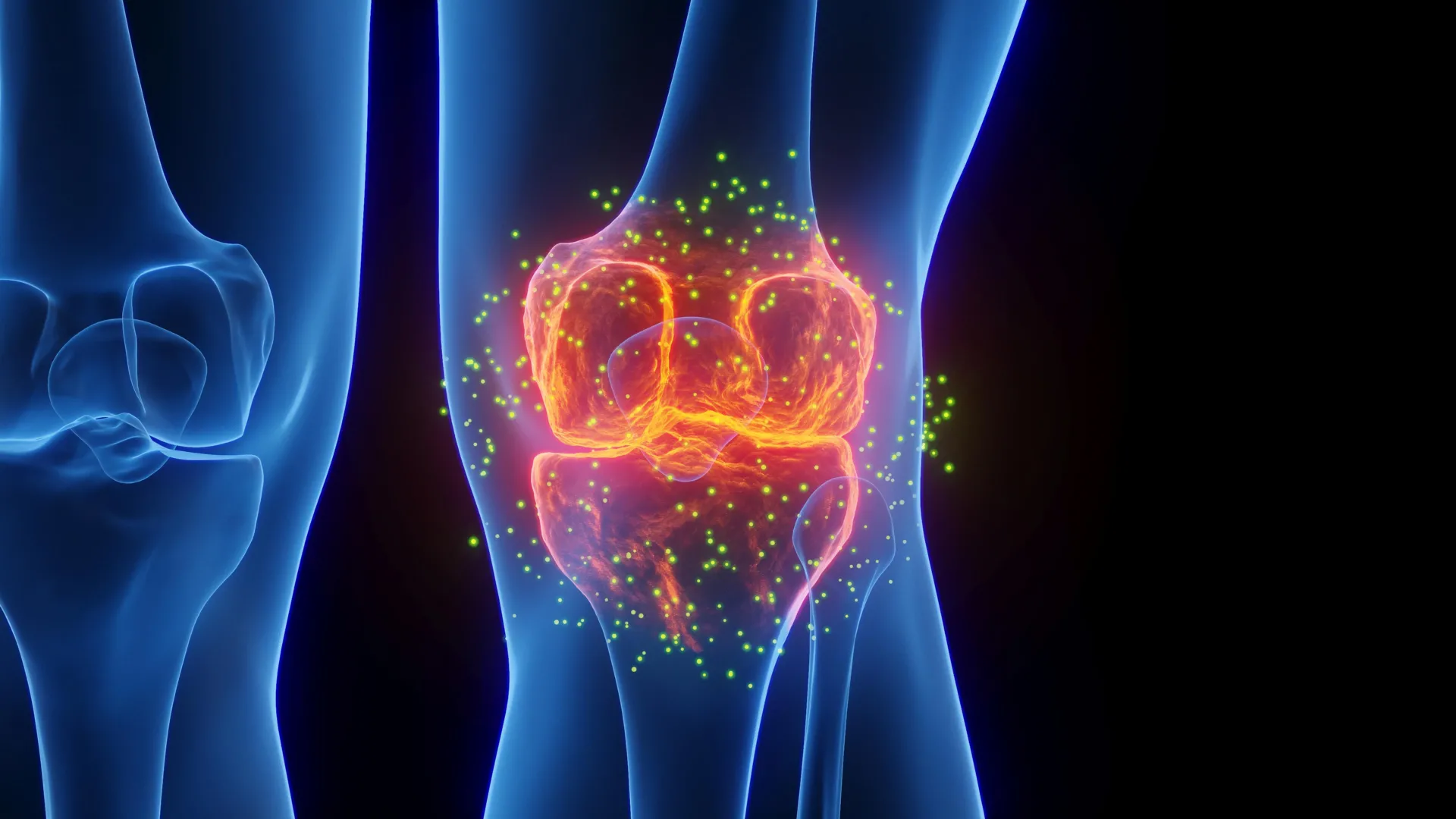
Minimally invasive surgery for chronic knee pain is allowing some patients to obtain significant relief without undergoing major surgery.
For Cynthia Schlaff-Fletcher, 74, the outcome was “remarkably” successful.
About a year after undergoing knee embolization (GAE) on her right knee, Schlaf-Fletcher says the improvement is comparable to the total knee replacement she had previously had on her left knee.
“I couldn’t be happier,” said Schlaf Fletcher, MD, who underwent the surgery by Lee Casadavan, MD, MS, assistant professor of radiology at the University of Colorado Anschutz School of Medicine.
Now, with the pain reduced, she says she enjoys daily activities much more, such as gardening and riding a stationary bike.
How common artery embolization works
GAE is an outpatient surgery aimed at relieving chronic knee pain by reducing blood flow to inflamed areas within the joint. This treatment helps reduce swelling and discomfort by targeting abnormal blood vessels associated with inflammation.
“When you think of treating knee osteoarthritis, you often think of medications, physical therapy, and maybe steroid injections, but at the other end of the spectrum is total knee replacement. There hasn’t really been anything for patients in between,” says Casadaban, a vascular interventional radiologist. “GAE is a promising minimally invasive surgery that may have a role for people who have failed conservative treatment but are not yet ready for major surgery.”
People with mild to moderate osteoarthritis tend to benefit the most, Casadaban said. Patients with more advanced disease can also undergo surgery, but the effects are generally less long-lasting.
“We found that about 70 percent of our patients had amazing results. Their pain scores were reduced by half, and in some cases even more. Some patients don’t feel any pain at all after surgery,” Casadaban says. “Patients whose pain has not been relieved after trying many other treatments are happy to return to their normal activities.”
After experiencing complications from knee replacement surgery, Schlaff Fletcher was keen to explore other options. Looking back, she says choosing GAE was the right decision.
What happens during the procedure?
GAE usually takes 1 to 2 hours and is performed under conscious sedation.
During surgery, the radiation therapy team will make a small incision near the crease of your leg. Using x-ray images and a contrast dye as a guide, the doctor advances a small catheter through the femoral artery until it reaches the genicular artery around the knee.
Once in place, the team releases microscopic beads that block blood flow to abnormal blood vessels in the painful area identified by the patient.
Patients are then monitored for several hours and are usually able to go home the same day. Doctors usually recommend rest for a few days during recovery.
GAE was developed in Japan about 10 years ago and is steadily gaining attention around the world. Starting in 2021, the FDA has granted “breakthrough device status” to several devices related to surgery in the United States.
Research suggests long-term pain relief
Initial and ongoing research continues to produce promising results.
“Theoretically, GAE reduces inflammation inside the knee joint, and the symptom relief could last for years,” Casadaban says. “Four-year data published in Japan shows that if you have one outpatient surgery, the pain relief can last for four years. In the United States, we now have two-year data showing that if you get a good response, the pain relief can last for two years. This really speaks to the theory that all you have to do is fix something inside the joint.”
Casadavan is currently leading two clinical trials at Anschutz University. One study looked at changes in knee joint fluid in patients undergoing GAE. The other is evaluating a temporary arterial treatment device called Nexsphere-F, which blocks small blood vessels in the knee that cause inflammation and pain.
Expanding beyond knee osteoarthritis
Osteoarthritis is a degenerative joint disease that affects millions of people each year and can occur in various joints throughout the body.
Although GAE is currently only used for knee conditions, researchers and doctors are starting to consider its use in other painful musculoskeletal conditions, such as frozen shoulder, tennis elbow, and plantar fasciitis, Casadaban said.
