


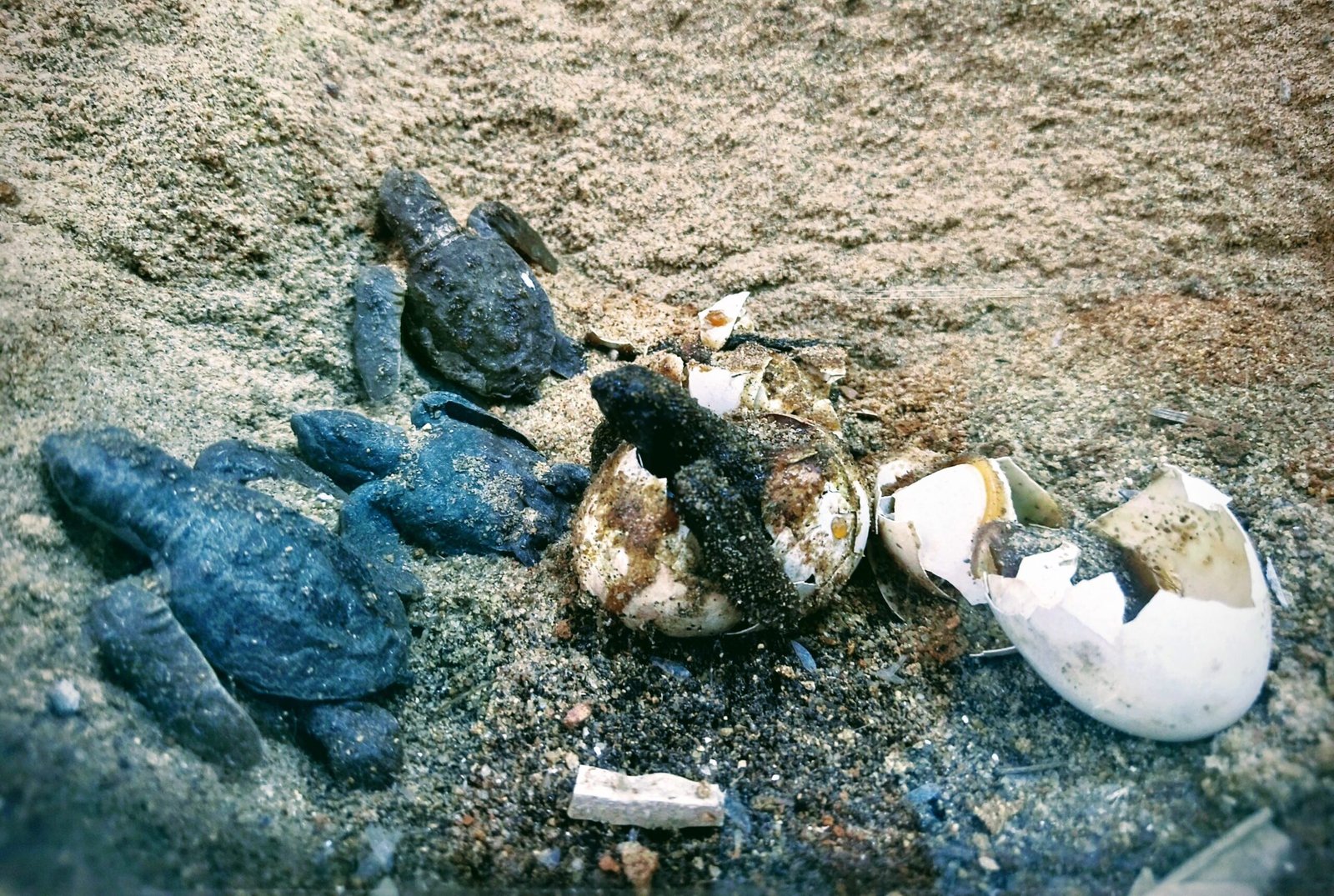
- A new study has discovered large amounts of plastic waste related to terrestrial and human activities at four major Olive Ridley mass nesting beaches in Rushikuliya.
- Plastics, including bottles and wrapping paper, accounted for more than 85% of the trash recorded. These included cross-border waste from six neighboring countries.
- In some locations, discarded fishing nets accounted for more than 32% of the total litter, while in others thermocol accounted for more than 31%.
- Abandoned fishing gear poses a serious threat of entanglement, with research documenting 237 chick deaths and 121 entanglements of Olive Ridley chicks. This threat also extends to adult turtles in nearby waters.
See all ideas that matter
Rushikuliya breeding area in Ganjam district of Odisha is one of the most important turtle breeding areas in the world. Every year, hundreds of thousands of sea turtles (Lepidocherys olivacea) gather here to lay eggs in a synchronous mass nesting event, or arrivalalmost 700,000 Olive Ridleys will come ashore to spawn in February 2025 alone.
But plastic pollution and related problems plague this important 10-kilometre stretch along India’s east coastline. A recent study by the National Institute of Oceanography (NIO) in Goa reported the presence of large amounts of plastic waste and discarded fishing nets on four nesting beaches of Rushikulla, reflecting the growing global crisis of marine plastic pollution.
nesting between plastic
A survey of four nesting beaches at New Podampetta, Purnabandha, Siddhannagar and Purayagi during the peak of the nesting season in 2025 recorded over 1,100 pieces of trash, of which over 85 per cent was plastic. The presence of plastic bottles, wrappers, and bags indicated that both land runoff and direct human activities were the main sources.
Fishery-related debris such as discarded nets, thermocol, and pieces of nylon rope (collectively referred to as “ghost gear” or abandoned, lost, or otherwise discarded fishing gear (ALDFG)) accounted for 41% of all litter recorded at all sites. In New Podampetta, fishing nets alone accounted for about 32% of the litter recorded, while in Siddhannagar, thermocol also accounted for just over 31%.
 A sea turtle released into the sea in Visakhapatnam. Representative image by Drashokk (CC BY-SA 4.0) via Wikimedia Commons.
Worryingly, standardized environmental quality indices such as the Plastic Abundance Index (PAI) and the Clean Coast Index (CCI) classify all four beaches as ‘dirty’ to ‘very dirty’, with very high plastic content, and rubbish levels at Rushikuliya fall within the high range reported globally from nesting beaches.
Despite multiple attempts, Mongabay-India did not receive a response from NIO at the time of publication.
This reality is not limited to the Odisha coast.
“Most nesting beaches in India are located near densely populated coastal areas. Studies have reported the presence of plastic debris on almost all beaches along India’s coastline, including in remote areas like Lakshadweep,” explains Chandana Pusapati, who previously worked on turtle research at the Dakshin Foundation and is currently a doctoral researcher at Laurentian University in Canada.
Although most of the debris recorded in the study was generated from local land-based and fishing activities, some plastic items were labeled with Southeast Asian countries including Myanmar, Malaysia, Vietnam and Singapore, indicating that transboundary pollution is reaching Odisha’s coast via circulating ocean currents. Ocean circulation models account for this phenomenon, showing that plastic debris can travel long distances and accumulate in coastal areas far from where it originates.
The sources of this waste are outside local jurisdictions, making management complex. International frameworks such as the United Nations Convention on the Law of the Sea (UNCLOS), the International Convention for the Prevention of Pollution from Ships (MARPOL), and regional initiatives under UNEP’s Regional Sea Plans emphasize cooperation between coastal states to protect the marine environment, but enforcement and monitoring remain uneven.
 Beaches along India’s coastline, especially those near populated areas, are facing an ecological crisis. At the same time, most of the turtle nesting beaches in India are located near such populated areas. Image by Zozimus Fernandes via Wikimedia Commons (CC BY-SA 3.0).
Compounding risks
Plastic makes up the majority of marine and coastal debris around the world, making it one of the most pervasive ecological threats. An estimated 4.8 to 12.7 million tonnes of plastic waste entered the ocean in 2010, rising to 19 to 23 million tonnes (about 11% of total generation) in 2016, and projected to reach an astonishing 53 million tonnes per year by 2030. Although exact numbers are unknown, it is estimated that thousands of marine animal species, including seabirds, fish, turtles, and mammals, ingest plastic each year. year.
“Increasing plastic pollution on nesting beaches and feeding grounds poses a new threat, especially for females and chicks,” explains Pusapati. “Additionally, brown turtles prefer to nest near estuaries where plastic and other terrestrial waste often accumulates.”
Hatchling sea turtles are especially vulnerable because of their size, limited physical strength, and dependence on natural cues (such as coastal slope, sand texture, and moonlight) to navigate them to the ocean. Physical barriers such as trash and discarded nets, as well as artificial lighting at night (particularly LED), interfere with these cues, causing disorientation and increasing the amount of time spent exposed at the beach. Even partial entanglement can increase crawling time, increasing the risk of dehydration, heat stress, and predation by birds and feral dogs. Rushikuliya’s coastal erosion has also exposed its nests and eggs, increasing the potential threat from rising sea levels due to climate change.
While general plastic pollution degrades nesting habitat, abandoned fishing gear (ALDFG) poses a more direct threat to hatchling survival. Abandoned or damaged nylon nets and synthetic ropes were widespread on the upper beaches, used by fishermen (for repairs) and hatchlings alike. The study recorded 237 deaths and 121 entangled hatchlings, most of them entangled in ghost nets or ropes, which can form a nearly invisible barrier when partially buried in sand.
Similar entanglements have been reported from beaches in the Maldives, Australia and Sri Lanka. Although ALDFG makes up only about 10% of marine debris volume, it accounts for a disproportionate share of wildlife mortality due to its entangled nature. On some Indian coastlines, ALDFG accounts for more than 47% of total beach debris, with plastic predictably making up the rest. Fishing gear made from non-biodegradable synthetic polymers such as nylon can remain in the environment for decades, continuing to trap animals.
 Plastic makes up the majority of trash in oceans and beaches around the world. More than 85% of the litter recorded during a survey at four northern flycatcher nesting beaches in Odisha was plastic. Representative image by Hajj0 ms (CC BY-SA 3.0) via Wikimedia Commons.
Impact beyond the beach
The impact of plastic extends to our oceans, and turtles come into contact with trash throughout their lives. Oly Ridleys are particularly vulnerable because they live in diverse habitats, travel long distances, and prey on a wide range of prey.
Vidisha Kulkarni, who was program director for the Dakshin Foundation’s Ocean Flagship Program at the time the comments were provided, shares the team’s observations. “Turtles often mistake clear plastic bags for prey such as jellyfish, and cannot easily distinguish between the two. Turtles have backward-facing papillae in their esophagus that prevent food from regurgitating, and this adaptation becomes a problem when they ingest plastic,” she says.
Ingested plastic can cause blockages, lacerations, or a false sense of fullness, ultimately leading to starvation. Furthermore, microplastics can pose toxic risks by accumulating in tissues and organs, which can then enter the food web and accumulate across trophic levels through bioaccumulation.
“High concentrations of microplastics and heavy metals have been detected in egg yolks and shells, and newly hatched chicks are exposed to a pollution burden even before they hatch,” added Kulkarni, who is currently pursuing a PhD at the Srishti Manipal Institute of Art, Design and Technology.
Conservation implications for important breeding areas
“Alibada occurs at two places on mainland India’s coastline. Both are located along the Odisha coast: Gahirmatha and Rushikulla,” Kulkarni explained, highlighting the importance of the Odisha coastline.
Pusapati added: “After a significant population decline in the 1980s and early 1990s, consistent conservation efforts by the state forest department and local NGOs, including nest protection and coastal monitoring, have stabilized the olive ridley population and even increased it in some areas.”
Currently, fishing nets are often removed from beaches in Rushikuliya during Aribada events, and human activities are regulated. However, these interventions are usually short-term and localized.
 Fishery-related debris, such as discarded nets, thermocol, and pieces of nylon rope, makes up a significant portion of beach debris, and sea turtles are often captured. Representative image by NOAA Marine Debris Program via Wikimedia Commons (CC BY 2.0).
The study recommends coordinated, targeted, site-specific conservation actions, including strict enforcement of seasonal fishing bans, improved waste management at the local level, and programs to collect derelict fishing gear and replace it with environmentally friendly alternatives. Addressing local and transboundary sources of waste and protecting turtle populations also requires long-term community-based interventions and awareness campaigns targeting local stakeholders, as well as stronger regional cooperation.
Although data on terrestrial runoff are available, field studies on the physiological effects of this pollution on turtles and offshore data on debris movement are still limited.
“Ocean monitoring could complement these findings, as plastic debris can wash up on shore from the ocean, which we observed during the period. arrival This is when turtles that are already entangled in fishing nets come out of the water,” Pusapati concludes.
High litter densities, tangled hatchlings, and changes in the habitat itself are sounding alarm bells on Odisha’s nesting beaches. Even if hatchling mortality due to entanglement is relatively low, consistent year-on-year population declines, coupled with increased plastic pollution, could undermine the resilience of populations, especially those of species already classified as vulnerable by the IUCN.
Banner image: An Olive Ridley chick hatched in Rushikriya. They are particularly vulnerable due to their size and limited power, and face myriad threats during their seaward voyages. Image by Aliva Sahoo via Wikimedia Commons (CC BY-SA 4.0).

