


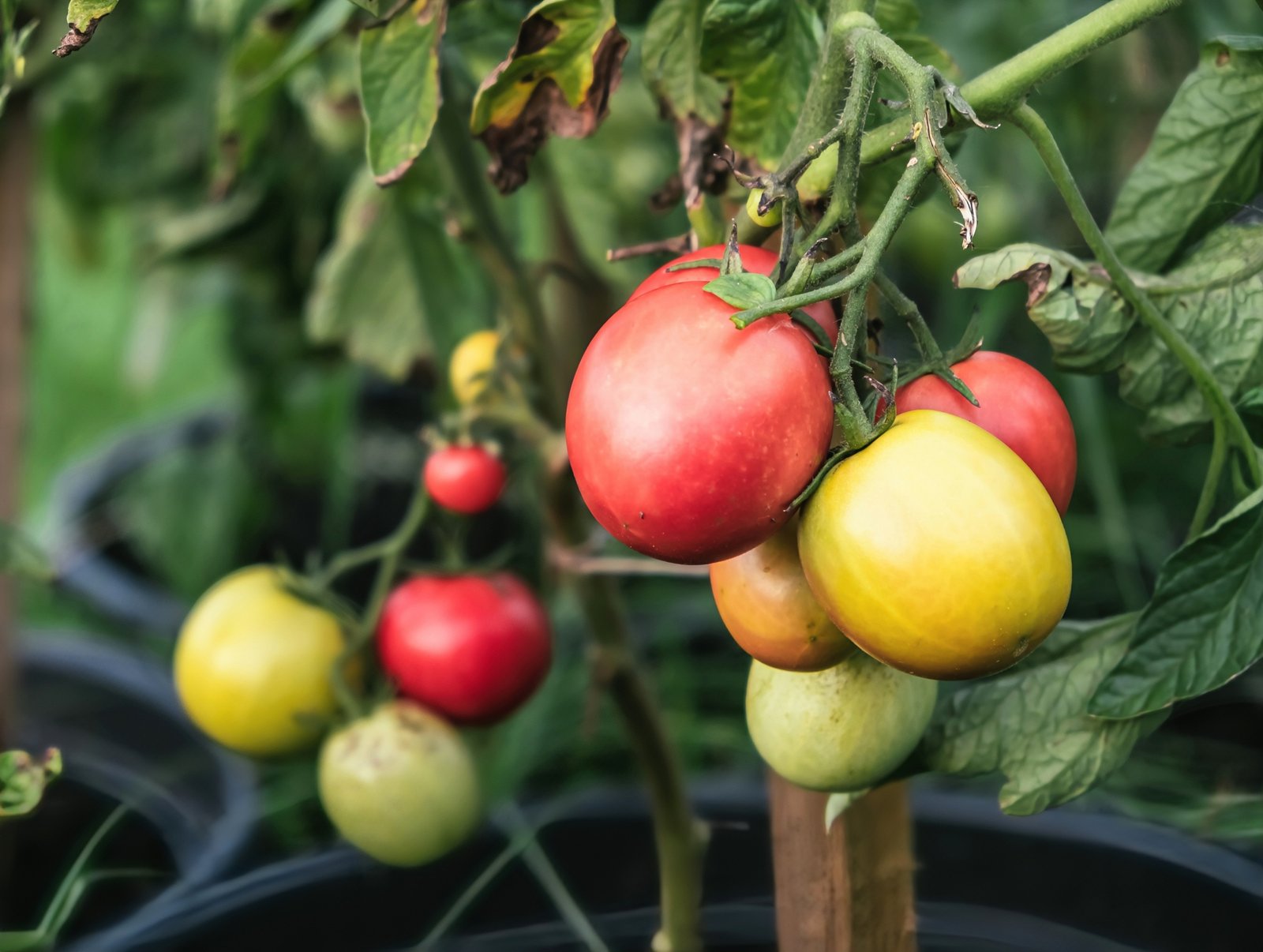
Researchers have found that plastic particles can get into wheat and tomato plants and inhibit their growth. The study recasts farm soil as part of the pathway by which plastics enter the food system.
In silty loam soils, wheat and tomato roots grabbed large plastic particles and moved smaller plastic particles further down.
Where does plastic end up?

A team led by Dr Sima Giajalomi from Griffith University set out to investigate the movement of plastic particles in crops under farm-like conditions.
The researchers documented how the plastic remained concentrated around the roots, while some of the smallest materials penetrated the plant tissue.
At Griffith’s Australian River Research Institute, an environmental research centre, Dr Giajalomi studied weathered plastics similar to types already aged in agricultural soils.
While this has led to findings based on the types of pollution that crops may face, it leaves open the more difficult question of which plants are most affected by plastic buildup.
Tomatoes are the hardest hit.
When fibrous plastic accumulated around the roots, tomatoes absorbed more damage than wheat.
Under the most severe treatment, tomato shoots were reduced by 67 percent, roots by 47 percent, and root biomass by 82 percent.
Although wheat was less susceptible, total root length was still reduced by 39% with the high fiber treatment.
These losses are important because shorter roots draw less water and nutrients, reducing the plant’s ability to grow.
Roots are densely packed with fibers
Fibers were more visible in the root hairs and nearby soil because long strands were more easily entangled than fragments.
This physical crowding may have interfered with fluid and nutrient uptake, which is a simple mechanical problem before becoming a more widespread stress.
Chlorophyll, a light-capturing green pigment, also declined most sharply in plants exposed to the fibers.
“We also found that plants can trap MPs in the soil, reducing their movement in the environment, which can also accumulate around their roots,” Dr. Giajaromi said.
Damage is amplified when particles are mixed in.
Plastic pollution in fields rarely arrives one particle at a time, and the tomato seedlings reflected that troubling reality.
When microplastics were mixed with smaller particles, tomato shoots were reduced by 47 percent and roots by 27 percent.
This pattern indicates additive or synergistic harm, meaning that different plastics may compound stresses rather than acting alone.
Wheat again showed a modest effect, suggesting that crop species and root structure influence which plants are hit hardest.
inside of stems and leaves
The most disturbing results were from the smallest debris that migrated from the soil to living plant tissue.
These particles are nanoplastics and are so small that they can pass through barriers that stop larger pieces.
In both crops, senescent nanoplastics reached the base of roots and stems, and in tomato they also appeared in the vascular tissue of leaves.
Once there, it travels upwards on the plant’s water transport system, potentially making leaf tissue a sign of internal transport rather than surface contamination.
Risks change as the population ages
New plastic beads behave differently than weathered ones, and that difference may explain why older contamination is more important.
The researchers observed uptake of old nanoplastics but not pristine particles, suggesting that worn surfaces interact differently with roots.
Sunlight, abrasion, and oxidation can change the surface chemistry of particles, changing how they aggregate, move, and stick.
Real-world exposure therefore depends not only on size, but also on how long the plastic has already been degraded.
Why certain plastics keep appearing
One reason the results were unsuccessful is that the levels matched what researchers had measured at sites that receive treated sewage sludge, the solid waste left after sewage treatment and often applied as fertilizer.
A 2026 field study in southern Ontario, Canada, found that soil amended with biosolids contained on average about three times more microplastic particles than nearby untreated fields.
Fibers are important here because large amounts of threads are shed from laundry, and these threads often survive wastewater treatment.
This helps explain why fibrous plastics, especially polyester, keep popping up where crops are supposed to grow.
Crops that exceed wheat and tomatoes
Evidence from other crops already shows that edible plants can internalize plastic through multiple routes.
A 2026 study found nanoplastics in the roots, leaves, and edible tissues of lettuce, carrots, and wheat.
This study revealed that root-to-leaf movement is much stronger in lettuce compared to wheat and carrots.
The new tomato results broaden the pattern and suggest that food pathway problems cannot be isolated to one exotic crop.
Impact on food safety
None of this proves that people are already ingesting harmful amounts of plastic from tomatoes and wheat.
The study did not count particles in the edible fruit, so it is not yet possible to measure all nanoplastics in plant tissue.
Still, transfer from the soil to stems and leaves partially bridges the gap between environmental contamination and human exposure.
“These findings show that agricultural soils are not just a sink for plastics, but a pathway into the food system, meaning plastics can end up on our plates,” said Dr Giajalomi.
Farmers, waste managers and regulators are now faced with a harsher reality: plastic in the soil can slow crop growth, collect on roots and invade plants.
The next step is to track whether weathered nanoplastics reach edible tissue at harvest and determine which plastic inputs should be cut first.
The research will be published in a journal Environmental science and pollution research.
—–
Like what you read? Subscribe to our newsletter for fascinating articles, exclusive content and the latest updates.
Check us out on EarthSnap, the free app from Eric Ralls and Earth.com.
—–
