


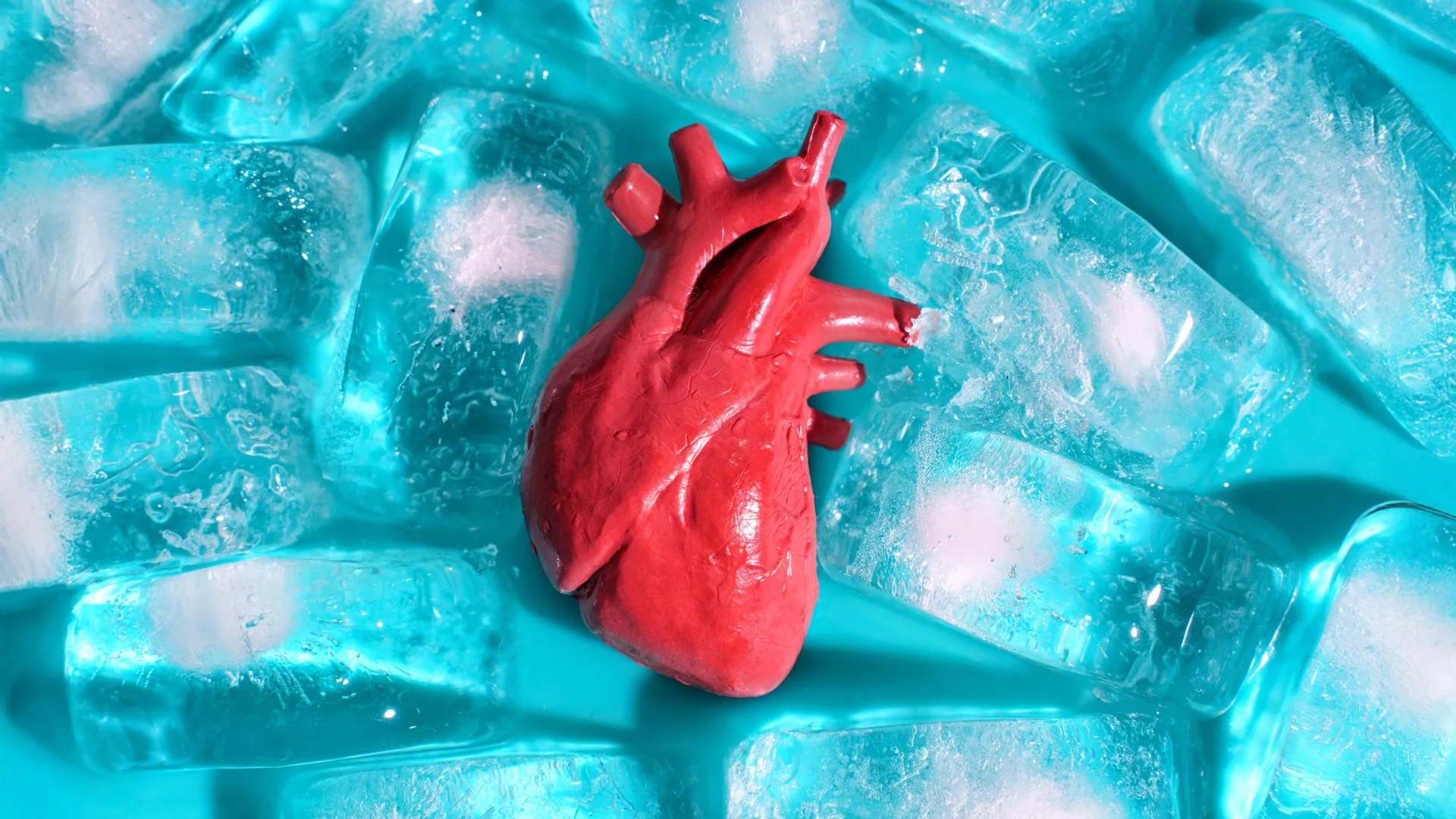
Cryopreservation, the process of preserving living tissue by cooling it to extremely low temperatures, often sounds like something out of science fiction. In fact, scientists have been studying and refining this technology for nearly a century. After decades of slow progress, things started to change in 2023 when researchers at the University of Minnesota successfully transplanted a cryopreserved kidney into another rat. This breakthrough demonstrated that frozen organs could one day be used for transplantation into humans.
Despite these advances, preservation of larger organs remains a major hurdle. One of the biggest problems is cracking, which can occur if the tissue cools too quickly. These fractures can damage the organ and render it unusable, making crack prevention an important goal for organ preservation and transplantation.
A Texas A&M University team led by Dr. Matthew Powell-Palm of the J. Mike Walker ’66 Department of Mechanical Engineering has introduced a new approach aimed at addressing this problem. Their research outlines methods that can reduce the likelihood of cracking during cryopreservation.
Vitrification and the role of glass transition temperature
To keep organs viable for long periods of time outside the body, scientists rely on a process called vitrification. This technique involves cooling the tissue in a special solution until it becomes glass-like. In this state, cells are effectively “frozen in time” without forming damaging ice crystals.
The composition of the vitrification solution plays an important role in how well the tissue survives the process. By tailoring this mixture, researchers can examine how different properties affect the risk of cracking.
“In this study, we investigated different glass transition temperatures, which we believe play a major role in crack initiation,” said Powell Palm, assistant professor of mechanical engineering. “We found that the higher the glass transition temperature, the less likely it is to crack.”
Designing safer cryopreservation solutions
This discovery gives scientists clearer direction for improving cryopreservation methods. By developing vitrification aqueous solutions with higher glass transition temperatures, researchers may be able to better protect organs from structural damage during freezing.
“Crack is only part of the problem,” Powell-Palm said. “The solution also needs to be biocompatible with the tissue.”
Broad impact beyond organ transplants
Advances in cryopreservation extend far beyond transplant medicine. Improved preservation techniques could help conserve wildlife and biodiversity, enhance vaccine storage, and help reduce food waste. This method can extend the viability of biological materials and thus has the potential to benefit many areas of life science research and applications.
“This research makes a significant contribution to our understanding of the thermodynamics of aqueous solutions,” said co-author Dr. Guillermo Aguilar, James and Ada Forsyth Professor and Chair of the Department of Mechanical Engineering. “We look forward to further encouraging results in this direction, which will ultimately improve the survival rates of biological systems at all scales, from single cells to whole organs.”
Research team and support
Dr. Sohail Kavian also participated in this study. Students Crystal Alvarez and Ron Sellers and undergraduate Gabriel Arizmendi Sanchez are both from the School of Mechanical Engineering.
“At the heart of mechanical engineering is the need to understand how something works. This project integrates physical chemistry, glass physics, thermodynamics, and cryogenic biology,” said Powell-Palm. “These students did an outstanding job applying the holistic thinking required in mechanical engineering to this work.”
Funding for this research was provided by the National Science Foundation’s Center for Advanced Technology and Engineering for Preservation of Biological Systems, which supports cutting-edge research in cryopreservation.
