


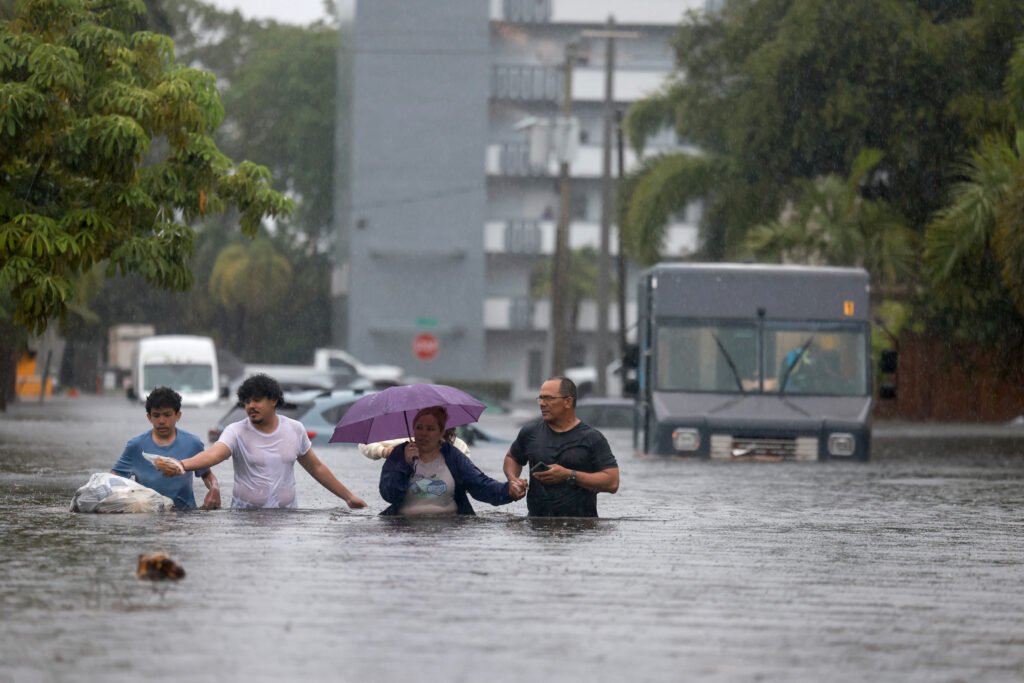
Since returning to the White House for a second term, President Donald Trump and his administration have made significant cuts to environmental programs and programs that benefit disadvantaged communities and communities of color. These are the groups with the least resources to cope with climate impacts such as rising temperatures and more damaging storms.
The cuts have put pressure on nonprofits to fill funding gaps. Yoca Arditi Rocha I am the CEO of CLEO Institute. CLEO Institute is a Florida-based nonprofit organization dedicated to educating and empowering communities to take action on climate change.
This interview has been edited for clarity and length.
Amy Green: How have changes in the federal government and federal policy under the Trump administration impacted Florida’s environmental justice agenda?
Yoca Arditi Rocha: The Trump administration has delivered a real punch to communities that have long been exposed to pollution, even though they have few resources to adapt to or deal with it.
Programs to improve housing, encourage clean energy and energy efficiency improvements, protect health and save money while protecting the natural world have been cut.
So by eliminating these life-saving programs, we are moving from protecting the most vulnerable to actually throwing them into the deep end of the pool without a life jacket.
That said, while many underserved communities are on the front lines of these issues, all Americans are feeling it as well.
We are truly at a tipping point. Climate, energy, and affordability realities are converging, and electricity prices are rising across the country. Energy is a cost of living issue along with food, housing, and healthcare.
As a result, many people in these communities are making life-changing decisions, such as purchasing essential food and medicine and paying their electricity bills. Particularly in places like Florida, where we can’t sustain rising temperatures due to the global warming crisis we face.
Green: How have changes in the federal government and federal policy specifically impacted your organization?
Arditi Rocha: We have been working on this problem for more than a decade and a half. Some of the life-saving safety nets that were created to protect people’s lives have actually been destroyed.
These policy changes have indeed created a vacuum, with organizations like ours operating in a moment of scarcity and hostility. But at the same time, we recognize that our efforts now are more important than ever. So we’re trying to fill that gap. Because building community resilience requires an informed and prepared population.
Green: Are there any programs in your organization that have been particularly impactful?
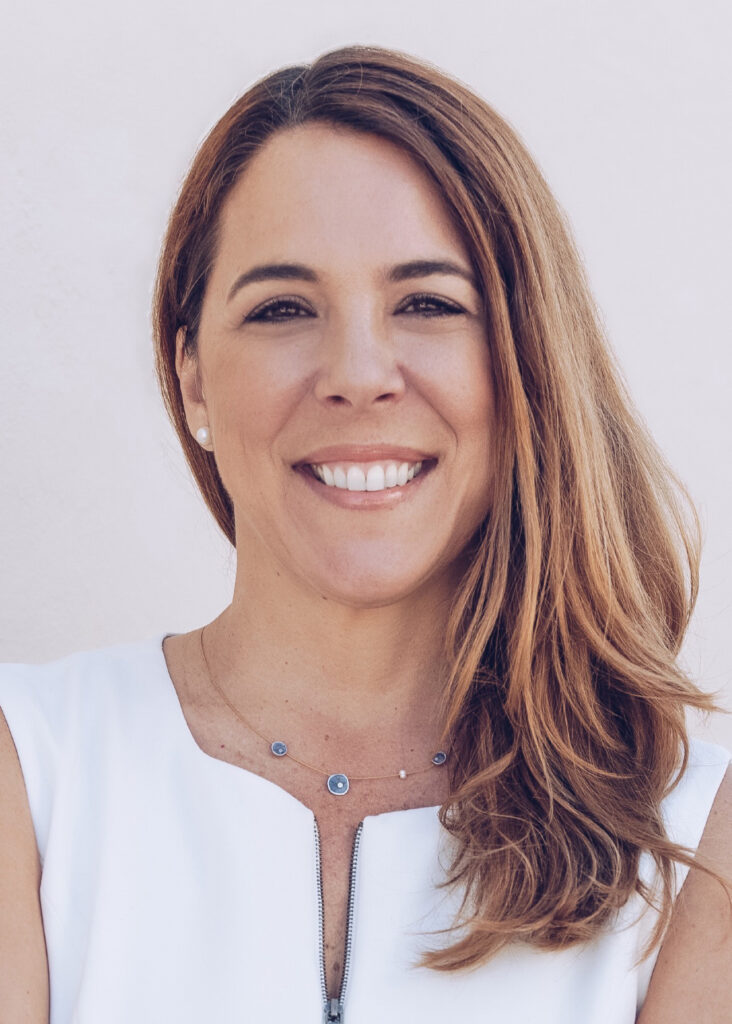 Yoca Arditi-Rocha is the CEO of CLEO Institute.
Arditi Rocha: Unfortunately, we saw that last year. We lost a significant (Environmental Protection Agency) Community Transformation Grant that we had been awarded by the EPA as a municipal partner in South Florida. The partner was Palm Beach County.
This would have provided climate literacy and resilience training to communities facing need. Therefore, all of these funds will be recovered, resulting in approximately $3 million in total grants.
This is a very clear example of how policy decisions made at the federal level are directly impacting the public and our ability to build resilience on the ground.
Green: Some people may not know what climate literacy is. Can you give an example of exactly how much funding that grant provides?
Arditi Rocha: We come to communities and tell people why temperatures are rising. Why are extreme weather events like rain bombs becoming more and more common? And how can we better prepare for such situations?
And we start with a thorough analysis of basic climate science. What sources of pollution enter the atmosphere and form the layer of pollution that is warming the planet? And how is it absorbed into the ocean? And how melting glaciers are causing sea levels to rise, along with warming seas and oceans.
That means getting back to the basics and connecting the dots to help people understand where the pollution is coming from, how they can deal with it, and how they can prepare to better protect the lives of people in their communities.
We also do it at school. We do it in community settings. We do it virtually. We do it personally. We do this through communication campaigns. We do it in multiple languages. In some cases, bring in an interpreter if language is a barrier, or provide interpretation in the language primarily spoken in the community. That’s why South Florida has made these trainings available in Spanish and English.
This story is funded by readers like you.
Our nonprofit newsroom provides free advertising for our award-winning climate coverage. We rely on donations from readers like you to continue our work. Donate now to support our work.
donate now
Green: How did your organization react to that loss of funding? Did you manage to fill that gap?
Arditi Rocha: Unfortunately, we were not able to close that gap.
GREENE: When it comes to environmental justice, what’s going on in Florida? What are the most pressing environmental justice issues here, or what are the biggest environmental justice issues?
Arditi Rocha: Let’s just say that you can’t be neutral when governance withdraws protection and doubles down on pollution. It’s a choice about whose lives, health, and future matter most, and that’s at the heart of the environmental justice movement.
When we talk about resource scarcity, whether it’s rising energy costs, rising extreme weather events, rising insurance prices, rising food prices, etc., the communities that are on the front lines of these issues are the ones that are disproportionately underserved by social, economic, or racial justice issues and are bearing the brunt of it.
Although Florida has a large diaspora of many communities, particularly Latinx communities from across Latin America, Black and brown communities tend to be the most vulnerable and at the forefront of environmental justice issues facing Florida.
GREENE: With federal changes, what will happen to Florida’s environmental justice agenda heading into the midterm elections?
Arditi Rocha: I think basically the entire environmental justice program at the federal level has been eradicated. Florida is no different than any other state in the country currently facing climate impacts.
We are witnessing a perfect storm brewing. Unfortunately, the companies that minimized the impact are bearing the brunt. But the reality is that we all are.
GREENE: What do these environmental justice communities need from the federal government?
Arditi Rocha: First of all, they need to be heard, right? We need to make sure their voices are heard. And one of the things we’re focused on is making sure people understand that their voice and their vote is a superpower.
But every year, divestment actually traumatizes many communities. Today, we are witnessing the compounding of the same crises that are impacting people’s lives.
So we need to start by recognizing that decades of this disenfranchisement and racism have made most of our communities, especially black and brown, even more vulnerable in the face of all these compounding crises.
GREENE: What are you focused on heading into the midterm elections?
Arditi Rocha: What is clear to me is that this issue is no longer a niche one. It’s the center. Energy costs, utility responsibility, and climate impacts are moving to the center of the national political debate, and voters are feeling it. They are starting to connect the dots.
If you remember at the beginning of this administration, there was an effort to frame the United States as having some kind of energy crisis in order to justify the expansion of fossil fuel production.
But in reality, there was no energy crisis at that time. We have it now, but the war has made it worse, and it has also created a cost of living crisis.
Electricity rates and prices are listed on the ballot paper. And going back to the issue of climate justice, it’s they who don’t have a safety net. They are right at the center of this storm.
About this story
As you may have noticed, this article, like all news we publish, is free to read. That’s because Inside Climate News is a 501c3 nonprofit organization. We don’t charge subscription fees, keep our news behind paywalls, or fill our website with ads. We provide climate and environmental news free to you and anyone who wants it.
That’s not all. We also share our news for free with dozens of other news organizations across the country. Many of them cannot afford to do their own environmental journalism. We’ve established bureaus across the country to report on local news, partner with local newsrooms and co-publish stories to ensure this important work is shared as widely as possible.
The two of us started ICN in 2007. Six years later, we won the Pulitzer Prize for national reporting and now run the nation’s oldest and largest dedicated climate newsroom. We tell the story in its entirety. We hold polluters accountable. We expose environmental injustice. We debunk misinformation. We explore solutions and inspire action.
Donations from readers like you fund all aspects of our work. If you haven’t already, will you support our ongoing work, our coverage of the biggest crises facing our planet, and help us reach more readers in more places?
Please make a tax-deductible donation. Each one makes a difference.
thank you,

amy green
florida reporter
Amy Green covers the environment and climate change from Orlando, Florida. She is a mid-career journalist and author whose extensive reporting on the Everglades is featured in the book MOVING WATER, published by Johns Hopkins University Press, and on the podcast DRAINED, available wherever you get your podcasts. Amy’s work has been recognized with numerous awards, including the prestigious Edward R. Murrow Award and the Society of Public Media Journalists Award.
