


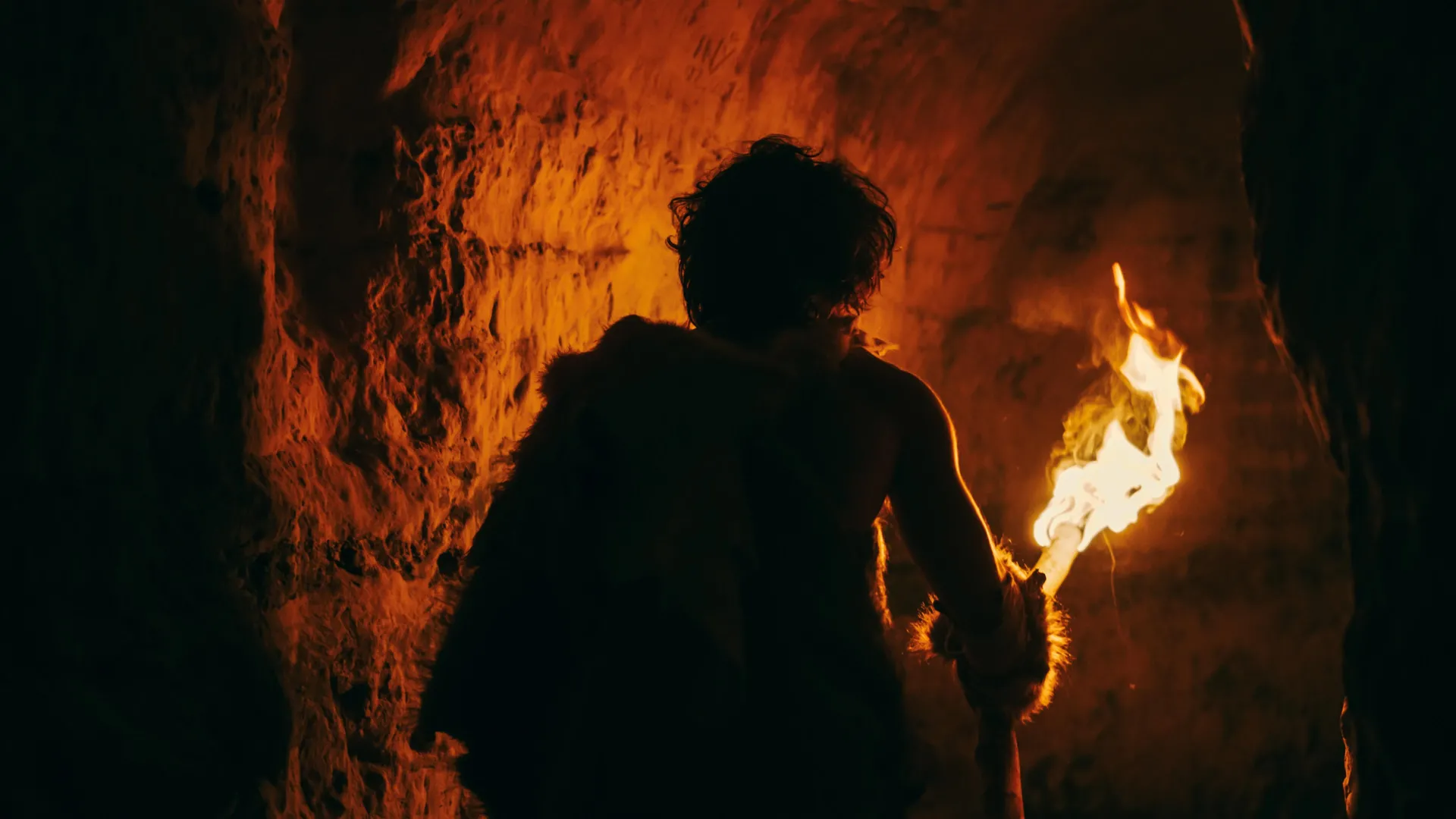
Scientists have discovered new evidence that early human ancestors used fire in South Africa’s Wonderwork Cave between 1.07 million and 1.79 million years ago. The discovery traces back one of the earliest records of fire use associated with humans and provides new clues about how our ancestors first learned to harness fire.
Using newly developed technology that can detect signs of combustion in fossilized bones, researchers repeatedly identified signs of fire deep within the cave. Because these traces were found far beyond the reach of natural wildfires, the discovery suggests that early humans intentionally brought naturally occurring fires into the caves and kept them burning.
The research was carried out in an ongoing collaboration led by Dr. Liora Korska-Horwitz of the National Natural History Collection of the Hebrew University of Jerusalem (co-director of the Wonderwork Cave project with Professor Michael Chazan of the University of Toronto) and an international team of scientists from Spain, Argentina, Canada, the United States, South Africa, Portugal, and Israel. The project combines archaeology, paleontology, geology and other scientific approaches to investigate one of the most important developments in human evolution: the use of fire.
Evidence of earlier use of fire
The new study builds on previous research at Wonderwork Cave in South Africa’s Kalahari Desert. In 2012, members of the research team reported evidence of fires dating back approximately 1 million years (published in PNAS by team members in 2012). This is believed to be the earliest known evidence of the intentional use of fire anywhere in the world.
Continued excavation and analysis has now extended that timeline. Researchers identified evidence of fire use in archaeological deposits dating back 1.07 million to 1.79 million years ago, making Wonderwork Cave one of the oldest known sites associated with human use of fire. The findings, published in PLOS One, provide new insights into how our ancient human ancestors interacted with fire long before they learned how to start their own fire.
Fire had many benefits, including warmth, protection from predators, light after dark, and ultimately the ability to cook food. Still, determining when humans first started using fire remains one of archaeology’s most difficult questions.
“Evidence of fire from such ancient sites is often subtle and difficult to detect,” said Dr. Korska-Horwitz. “Our research provides new tools to identify ancient fire signatures and reveals the repeated presence of fire deep within Wonderwork Cave.”
New technology detects burnt fossil bones
This study also introduces a new approach based on the luminescent properties of burnt bone.
When exposed to specific wavelengths of light, intensely heated bones emit a unique glow. The researchers combined this non-destructive luminescence method with established chemical analysis to reliably identify burned animal bones.
This technique is portable, non-invasive, and can be used on large fossil collections without causing damage.
To test the method, the team examined hundreds of tiny fossilized bones left behind by owls that once roosted in the cave. Because these remains were naturally accumulated over time, they provide an independent, non-human record of past events preserved on the cave floor.
A fire breaks out deep inside the miraculous cave.
Researchers found clear evidence of fire within an archaeological layer associated with early Aschule remains, likely related to Homo erectus. The burn scar was found about 30 meters into the cave, far beyond any area that might have been affected by a natural wildfire. They were also located in a layer without guano deposits, ruling out spontaneous combustion as an explanation.
The evidence does not suggest that these early hominins could start fires whenever they wanted. Instead, the findings show that it likely gathered fire from natural sources, such as lightning strikes or wildfires in the African savannah.
Researchers say these ancient humans brought fire into their caves many times and maintained it for periods of time before finally extinguishing it. The researchers also suggested that the owl pellets may have served as fuel, potentially explaining why the small rodent bones they contained showed signs of burning.
Still, the ability to carry and keep fire burning inside a cave represents a major behavioral milestone.
“These findings show that early humans were not simply passive observers of natural fires,” explained Dr. Korska-Horwitz. “They actively engaged with fire and incorporated it into their lives.”
A new window into the origins of fires
In addition to extending the timeline of fire use, this research provides archaeologists with a valuable new tool to investigate when and how humans first began using fire.
As scientists apply this technique to archaeological sites around the world, they may find answers to long-standing questions about the origins and evolution of one of the most revolutionary technologies in human history.
