


THis little device slides smoothly into the modest space above my washing machine. A pipe snakes down from there, sucking in wastewater from the laundry. At the end of each wash cycle, your washer will make a gentle whistling sound. According to inventor Adam Root, this is the sound of groundbreaking technology in action. That invention is a microplastic filter.
“The number one thing I hear[from customers]is, “I can’t believe how much laundry comes out of my washer,” says Root. “Someone sent me (a photo of) a dinner plate.”
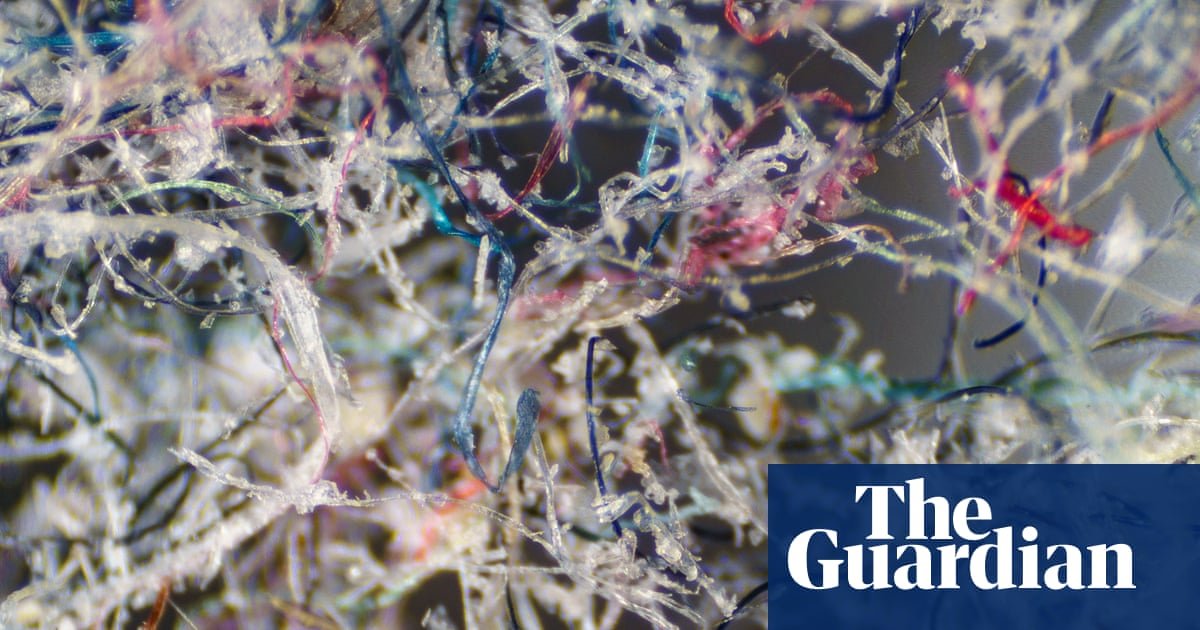
About three weeks after installation, it will beep to let you know it’s time to empty it. Remove the canister and scoop out the contents with the built-in scraping tool pushed into the lid like a yogurt spoon. My excavations revealed a surprisingly large stew of gray matter. Root says it’s probably a scary mix of microfibers, skin cells, hair, and dust.
Emma Bryce tries out the newly installed microplastic filter in her washing machine. Photo: Emma Bryce
Root’s invention is the basis of his Bristol-based company, Matter Industries, which claims it can capture 97% of microfibres before they escape from washing machines. In 2025, Matter was runner-up in the marine category of the Earthshot Prize. (Root was right behind High Seas Alliance director Rebecca Hubbard, who campaigned for the historic High Seas Treaty.) Matter’s filters are now available in more than 30 European markets and the UK, and the company also plans to expand into the US.
The experiment that led to all this was carried out a few years ago on a wet garage floor strewn with buckets, with an investment of just £250. Root installed a homemade microplastic filter in a quirky old washing machine. “I was using a broomstick to turn it on and off. There was water everywhere. I was scared I was going to get an electric shock,” he recalls. After several risky attempts, he says, “we managed to get something that worked. We demonstrated that we could capture microfibers.”
His invention joins others such as Zeros, and US-based companies Cleaner and Filtroll, which are working to filter microplastics before they reach waterways.
According to Root, his filter cleaning itself is what makes his invention unique. Matter Industries has found that each wash cycle generates approximately 1 g of textile waste, and the mesh must be particularly fine to capture as much textile waste as possible. However, this makes the filter more prone to clogging, so Root’s version automatically rinses after each wash to clean the mesh surface and allow waste water to continue flowing through.
Left to right: Adam Root, Konrad Koloska, and Luis Frank (all from Matter) at the 2024 filter launch. Photo: Matter Industries
This machine captures all types of fibers, not just plastic fibers. And that’s a good thing, says Anja Brandon, director of plastics policy at the U.S. nonprofit Ocean Conservancy. “While our primary concern when it comes to microfibres is plastic, we know that other fibers are rich in chemicals and colorants that can have an impact as well.” The instructions warn to put waste in the trash rather than flushing it down the drain.
An estimated 69% of all clothing contains fossil fuel-based plastic fibers such as polyester, nylon, and acrylic, and billions of fibers are released into the environment. In the UK, household washing machines release between 6,000 and 87,000 tonnes of clothing fiber into rivers and ultimately the ocean every year. The United States’ large population, frequent washing, and preference for activewear will significantly increase production.
Several studies have shown that microfibers are the most ubiquitous type of microplastic in the environment. “These are one of the most common types of microplastics found in tissue samples of all species, so they’re a big part of the problem,” Brandon says. These can make up more than 90% of the microplastics consumed by marine animals and are also present in the air, drinking water, and food.
Ultimately, Root wants to install filters at the city’s sewage treatment plants to capture as much microplastics as possible before they enter the ocean. He is also campaigning for legislation to introduce microfibre filters in all washing machines in the UK.
Small plastic parts and microplastics in the sand of Famara Beach, Spain. Experts believe a global plastics treaty is essential to prevent such pollution. Photographer: Suzanne Fritsche/Alamy
Root started out as a mechanical engineer before moving into a product innovation role at Dyson. But he says it was scuba diving that opened his eyes to the extent of ocean pollution. “I didn’t really feel like I was doing anything super positive,” he says. After that, he quit his job and started his solo career. “I saw an opportunity to make a big difference.”
Thanks to a small grant from the Prince’s Trust, he was able to assemble a prototype on his garage floor that won him Innovate UK’s Young Innovator of the Year award and helped launch the company in 2018. Since then, Matter Industries has raised $20m (£15m), hired 50 people and partnered with Bosch and Siemens to manufacture units featuring Matter’s proprietary Regen filtering technology.
Matter will soon pilot the technology on an industrial scale in textile mills in Portugal, Egypt and Bangladesh. Factories produce several kilometers of fabric every day, all of which requires multiple washings and dyeings. This process squeezes out huge amounts of textile waste. The amount is 360 tons per year for one factory sampled during the field survey, and in some cases is discharged directly into rivers. While it is important to capture domestic microplastics, industrial wastewater is also a major global pollutant. “You have to be in a place where there is contamination,” Root says.
Matter Industries has partnered with Bosch and Siemens to manufacture units with integrated Regen filtering technology. Photo: Matter Industries
But not everyone agrees that this is where our pollution-fighting efforts should be trained. Richard Thompson, professor of marine biology at the University of Plymouth, first alerted the world to the threat of microplastics in a landmark event in 2004. study. His team’s research then found that microfibers become a problem long before the washing stage. “Probably most of the world’s population doesn’t have a washing machine,” he says. “We showed that more than half of[microplastic]emissions actually occur while wearing clothes.”
Mr Thompson sees microplastic filters as “part of the answer”, adding: “I don’t want to throw cold water on any solution.” But he worries that overestimating downstream fixes means overlooking important things that need to be fixed upstream, such as designing better textiles. Thompson highlights the evolving Global Plastics Treaty as a forum where countries can work together to bring about such systemic change.
Root agrees that redesigning textiles is important. But he worries that improvements in synthetic fibers could take time, especially since they are intertwined with the huge global oil industry. Alongside long-term efforts to migrate systems, he sees filters as a tool to help mitigate damage. “I picture myself knee-deep in water, and I have a shovel, so I start at my feet and just try to get out,” Root says. “I think we should think about what we can change.”
