


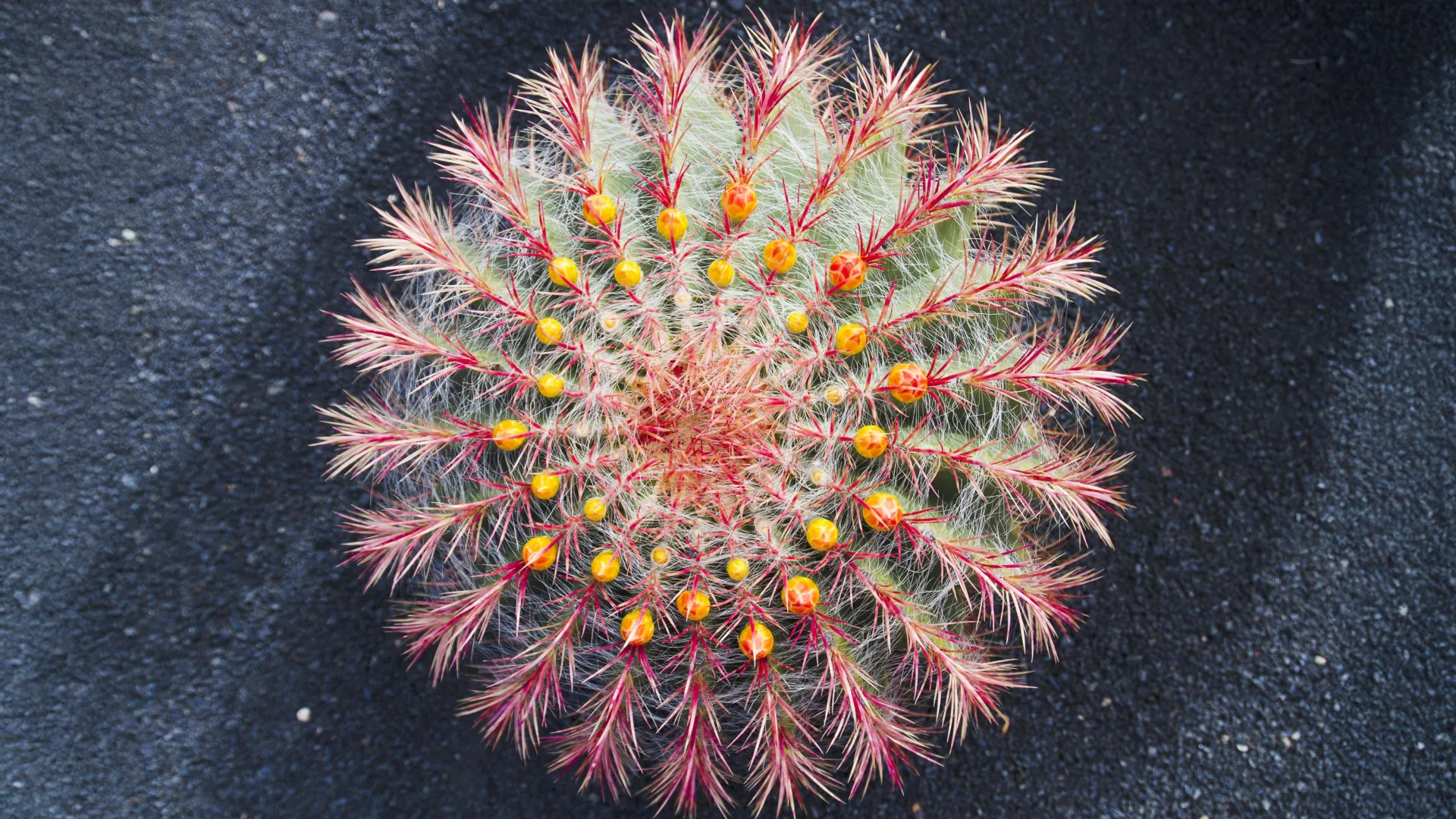
Cacti are notoriously slow-growing, but scientists have discovered that these desert plants are actually evolving at an astonishing pace. A new study shows that cacti form entirely new species surprisingly quickly, revealing that deserts are much more dynamic than they seem.
Biologists have believed for decades that pollinators and highly specialized flowers are the main forces in the development of new plant species. However, researchers at the University of Reading have discovered that cacti follow a different pattern. Rather than flower size or pollinator type driving diversification, the key factor appears to be how rapidly cactus flowers change shape over time.
Rapid evolution of cactus flowers
The research team analyzed flower length data from more than 750 cactus species. The flowers vary in size by a factor of 185, from tiny flowers measuring only 2 mm to giant flowers reaching 37 cm.
Despite this large variation, flower length had little to do with how quickly new cactus species appeared. What stood out was the speed at which flowers evolved. Cactus species whose flower shapes changed most rapidly were also far more likely to branch out into new species. Researchers have found this pattern consistently across both recent and ancient evolutionary history.
The survey results are biology letterschallenges ideas dating back to Charles Darwin. Darwin’s research on orchids suggested that highly specialized floral structures play a major role in the formation of new species.
Lead author Jamie Thompson, from the University of Reading, said: “While we may think of cacti as hardy, slow-growing plants, our research shows that the family Cactaceae is one of the most rapidly evolving plant groups on Earth. Understanding how quickly cacti have evolved reveals that deserts, often thought of as harsh and static, are actually hotbeds of rapid natural change.”
“We expected that cacti with longer, more specialized flowers would be the ones that would produce the most new species. Instead, flower size made little difference. What matters is how quickly flower shape changes. Cacti whose flowers evolve rapidly are much more likely to split into new species than cacti whose flowers remain the same, no matter how elaborate.”
“This result has real implications for conservation. Floral evolution has contributed to the generation of cactus species over millions of years, so the pace of evolution should be part of conservation efforts. Being able to evolve rapidly does not guarantee resilience, but especially at a rate that most cacti cannot keep up with. With the speed at which the Earth is changing, it could help predict which species are most in need of help. Rather than looking for a single trait to predict which cacti are most at risk, conservationists may instead need to look at how fast species are evolving.”
Cactus family tree mapping
Cacti contain approximately 1,850 known species and are one of the most rapidly diversifying plant groups on Earth. During the past 20 to 35 million years, they have spread widely throughout the Americas.
The study also relied on a newly developed open access database called CactEcoDB. The database, created by Jamie Thompson and 10 co-authors from three continents, including six researchers from the University of Reading, combines seven years of research into the relationships between cactus characteristics, habitat and evolution.
The resource was published by natural science data It is expected to help scientists better understand cactus biodiversity and conservation challenges. With nearly a third of cactus species currently at risk of extinction, the researchers say this database will be an important tool for studying how these plants will respond to climate change in the future.
