


According to a UNICEF report, half of the world’s children are exposed to at least three overlapping climate disasters that threaten their health, education and survival.
As the climate crisis worsens, children around the world are at risk of heatwaves, storms, floods and droughts, with more than 1 billion facing at least three at the same time.
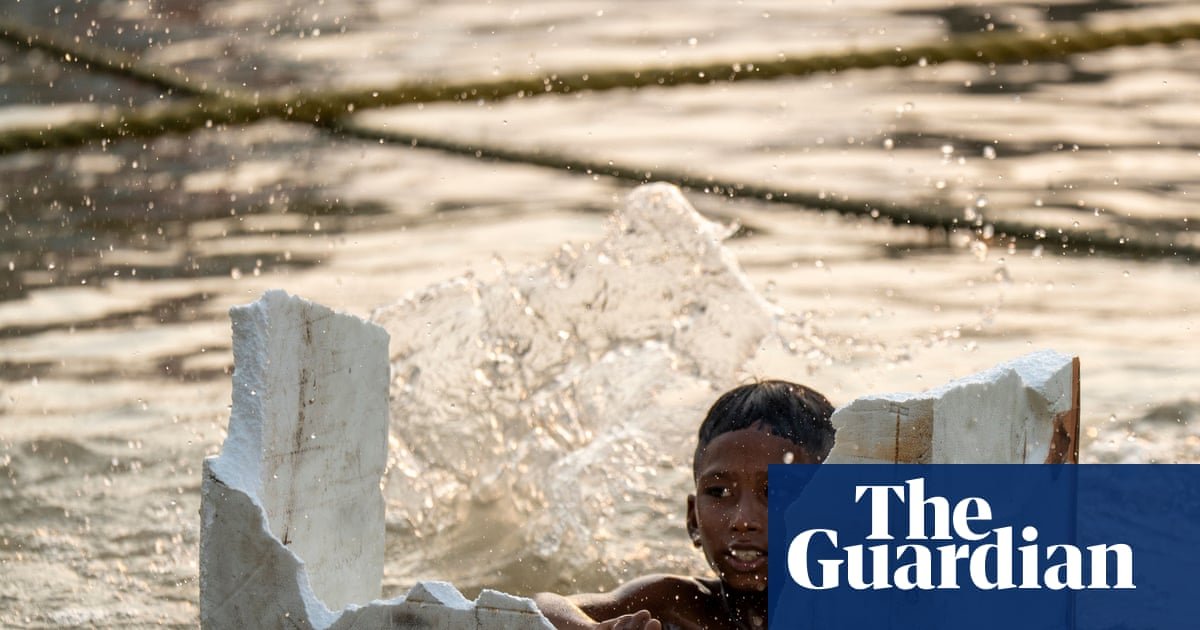
Striking footage released by a United Nations agency shows children in Papua New Guinea swimming across a crocodile-infested river to get to school after heavy rains washed away a vital footbridge and it could not be replaced.
Hundreds of children make the journey across the Kemp-Welch River every day. Photo: Roanne Paul/UNICEF
Fifteen-year-old Lorna is one of those who has to swim across the Kemp Welch River in Laungkarana, Papua New Guinea’s Rigo district, to get to school. The community has several small boats, but priority is given to the youngest children, according to a visiting UNICEF official.
“During our period, the elders don’t allow us to cross the river to class because they think the crocodiles will gather there…My dream is to become a teacher or a pilot. I want a new bridge so I can go to school safely every day,” Lorna said.
UNICEF says the community has been unable to raise funds to replace the bridge that was washed away in 2012 and faces growing challenges exacerbated by the climate crisis.
Lorna, who has to swim across a river every day to get to school, dreams of becoming a teacher or a pilot when she grows up. Photo: Roanne Paul/UNICEF
Lorna principal Charlie Valli David said the loss of the bridge was a huge loss to the community.
“During the monsoon season, strong currents, dead trees and debris can dam rivers, resulting in injuries and deaths,” he says. “Many children get sick from cold, dirty river water, which creates learning gaps, especially among women.”
The Children’s Climate Risk Report has revealed that rising temperatures and extreme weather events are increasing stress on infrastructure, warning that major roads and bridges are being hit, with dire consequences for local communities.
They found that almost every child in the world, including those in high-income countries, is currently exposed to at least one risk, and 123,000 have experienced six or more during their lifetime.
“The lives of children continue to be transformed by the effects of heatwaves, bushfires, droughts and floods,” said UNICEF Executive Director Catherine Russell. “Half of the world’s children now live with at least three climate threats that overlap and shape their daily lives.”
Millions of children in Italy are exposed to prolonged heatwaves and droughts. Photo: Anadolu Agency/Getty Images
UNICEF analyzed young people’s exposure to eight climate hazards: coastal flooding, drought, heat waves, fires, heat waves, river flooding, sandstorms, dust storms and tropical storms.
According to the study, Africa’s Sahel region is one of the worst-hit regions in the world, with more than four million children facing the triple threat of heatwaves, extreme heat and sandstorms. Meanwhile, children in Asian countries such as Bangladesh, Myanmar and Pakistan were found to be more exposed to climate change than anywhere else in the world.
High-income countries are not immune to the combined effects of climate change. In Italy, for example, more than 6 million children are exposed to prolonged heat waves and drought.
UNICEF has outlined plans to better protect children, calling on governments and businesses to focus on the services children depend on, reduce emissions and improve climate adaptation.
Mr Russell said: “This analysis will help governments and decision-makers plan better and invest more effectively in resilient services. By strengthening health and education systems and improving infrastructure with children in mind, we can protect them from the threats of today’s climate and secure their future.”
