


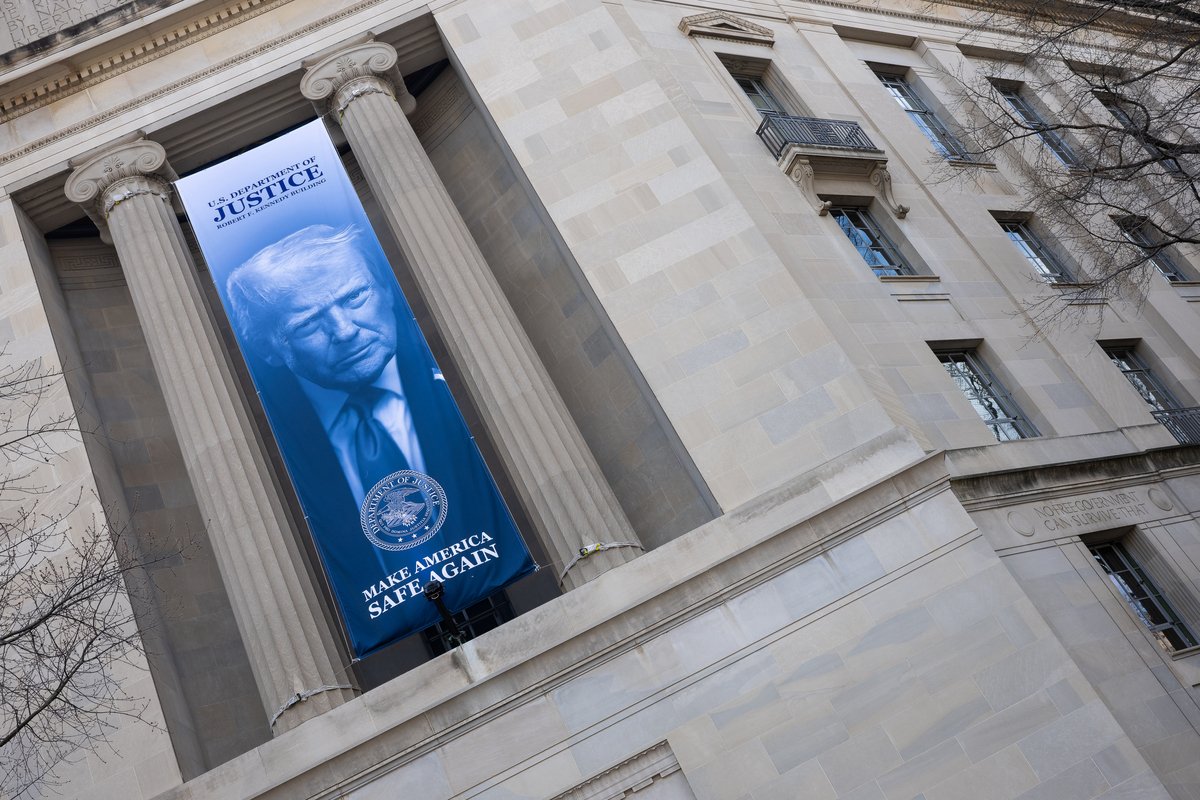
The Trump administration has argued that the federal government can cancel Clean Air Act lawsuits brought by citizens against polluters, but environmental lawyers warn that this would rewrite decades of enforcement law.
If successful, the argument made by the Justice Department in a court filing supporting Elon Musk’s artificial intelligence companies would dramatically undermine the ability of Americans to fight pollution at tens of thousands of industrial sites across the country.
“This would be a fairly fundamental change in how federal pollution control laws are enforced,” said Tom Mariani, former director of environmental enforcement at the Justice Department.
The Clean Air Act allows citizens and environmental groups to sue polluters. Generally, the federal government or state can intervene if they plan to intervene and take over enforcement of the case. The law itself limits citizen lawsuits only when the government “initiates and vigorously prosecutes civil proceedings.”
But now the Justice Department says it can intervene if it doesn’t want to prosecute a case or prevents the public from taking action themselves. The department argues that the Clean Air Act gives the government a “right of removal” that “gives the government the right to dismiss the entire case,” and that it is unconstitutional to prevent the government from dismissing citizens’ lawsuits.
“The ultimate responsibility for enforcing federal law lies with the executive branch, not private interest groups,” Deputy Attorney General Stanley Woodward Jr., the Justice Department’s No. 3 official, said in a press release supporting the motion. “The Department of Justice is committed to preserving our constitutional order while protecting national security and promoting America’s energy and innovation.”
Legal experts say the Justice Department’s approach is the opposite of what it should have been.
“This is simply the government saying that we can intervene to prevent prosecution, so that no one else can do the same,” Mariani said.
Pat Parenteau, professor emeritus at Vermont Law School, agrees. He said the Justice Department’s position was “insane” and misinterpreted the law. Still, it could have far-reaching environmental implications beyond the Clean Air Act.
“When you invoke Article 2 of the Constitution, which says the people have no right to enforce the law, that’s all there is to it. That’s what’s at stake here,” he said.
Similar arguments have recently been advanced by conservative law firms in Clean Water Act cases, but this is the first time the federal government has co-signed the position.
The Justice Department’s filing comes amid a controversy over Musk’s artificial intelligence company xAI and the way it powers its data centers near the Tennessee-Mississippi border.
The NAACP, Earthjustice, and the Southern Environmental Law Center sued the company in April. The group alleges that xAI operated at least 59 polluting turbines at the gas plant without first obtaining permits or installing pollution control devices required by the Clean Air Act. Such turbines can emit cancer-causing chemicals and chemicals that cause respiratory illnesses. The group filed the lawsuit in part because Mississippi environmental regulators told xAI that the company doesn’t need a permit for turbines that have been in operation for less than a year.
The Justice Department says this means no one else can sue.
“The best interpretation of the Clean Air Act, ensuring that the executive branch maintains supremacy over federal law enforcement, is necessary to avoid serious constitutional problems with the Act’s people’s action provisions,” the department told Mississippi Chief Judge Debra Brown, who was appointed by former President Barack Obama to handle the xAI case.
The Justice Department also said it was objecting to the lawsuit, citing national security concerns because the department relies on xAI’s Grok government model, which utilizes the data centers in question.
XAI also argued that “the Clean Air Act’s citizen action provision itself violates Article II of the U.S. Constitution because it vests federal law enforcement authority outside the executive branch.” The company argued in a legal brief that the case should be dismissed, noting that Mississippi regulators found the company did not need a “temporary” gas turbine permit.
The company’s legal opponents countered those claims in a press release Tuesday.
“At a time when the ultra-rich appear to be protected and supported by some government agencies, it is important to ensure that polluting industries do not profit at the expense of the health of Black communities,” said Abre Connor, NAACP Director of Environmental and Climate Justice. “Laws like the Clean Air Act are bedrock insurance that hold polluters accountable for decisions that harm their communities. This should not be up for debate. The NAACP will continue to defend democracy and oppose bullying and authoritarianism by the federal government.”
The Justice Department’s motion to intervene sent ripples through the broader environmental community.
John Wolk, federal clean air director for the Natural Resources Defense Council, said he did not believe the Justice Department’s motion would be effective. He hopes the judge will dismiss it.
Still, he noted, “there are tens of thousands of industrial facilities in the United States that are regulated by the Clean Air Act.”
“If the Trump Justice Department gets away with this maneuver, the administration will be able to block citizen enforcement lawsuits whenever it wants to help polluters and doesn’t like the rules of the Clean Air Act,” he said.
Wolk also noted that the unique circumstances of the xAI case make the Justice Department’s position “even more unusual.”
This is the second data center in the last two years where xAI has been accused of generating electricity without a federal pollution permit. In the two months since environmental groups filed the lawsuit, xAI allegedly continued to increase the number of unapproved natural gas turbines on the property from 27 to 57.
“It’s literally breathtaking that the Trump administration wants to use this as a test case to shut down people’s right to stand up for their health,” Wolk said.
