

Close Menu

    Subscribe to Updates

    Get the latest creative news from FooBar about art, design and business.

    What's Hot

    Early life stress hormones reflect chronic adversity in the Palestinian territories

    June 17, 2026

    RFK Jr.’s ‘new’ mental health approach immediately questioned by experts

    June 17, 2026

    FTC lawsuit targets gender-affirming care, alleges fraud, deception

    June 17, 2026
    Facebook X (Twitter) Instagram
    Facebook X (Twitter) Instagram
    Health Magazine
    • Home
    • Environmental Health
    • Health Technology
    • Medical Research
    • Mental Health
    • Nutrition Science
    • Pharma
    • Public Health
    • Discover
      • Daily Health Tips
      • Financial Health & Stability
      • Holistic Health & Wellness
      • Mental Health
      • Nutrition & Dietary Trends
      • Professional & Personal Growth
    • Our Mission
    Health Magazine
    Home » News » Key proteins in Alzheimer’s disease actively protect neurons from nuclear damage
    Discover

    Key proteins in Alzheimer’s disease actively protect neurons from nuclear damage

    healthadminBy healthadminJune 17, 2026No Comments3 Mins Read
    Key proteins in Alzheimer’s disease actively protect neurons from nuclear damage
    Share
    Facebook Twitter Reddit Telegram Pinterest Email


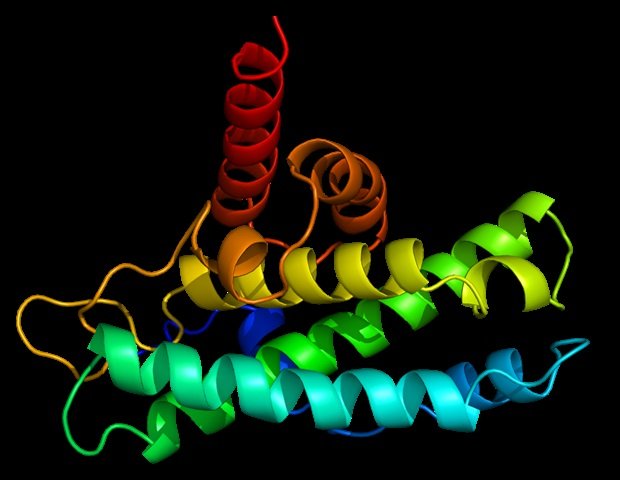
    Researchers at the Niigata University Brain Research Institute have discovered a new function for amyloid precursor protein (APP), a molecule long studied as a precursor to amyloid-β (Aβ) in Alzheimer’s disease (AD). This study demonstrates that APP actively protects neurons by expelling damaged nuclear material through a process called lysosomal exocytosis, providing a fundamentally new way of thinking about AD.

    APP is best known as the protein whose enzymatic cleavage generates the Aβ peptide. Accumulation of Aβ in the brain is a hallmark of AD. However, the physiological function of full-length APP before cleavage is still not well understood. It is well established that aging, oxidative stress, and DNA damage compromise cell nuclear integrity and can leak nuclear contents, such as DNA fragments, chromatin, and histone proteins, into the cytoplasm. This “nuclear waste” can cause strong inflammatory responses and cell death, but the mechanisms by which neurons process this material are largely unknown.

    The research team investigated the role of APP in nuclear damage protection using a comprehensive set of experimental models, including cultured cells, human iPSC-derived neurons, mouse brain, and postmortem human Alzheimer’s disease brain tissue.

    When nuclear damage occurs, wild-type APP colocalizes with nuclear-derived material near lysosome-associated molecules and facilitates the export of this debris out of the cell. ”


    Dr. Godfried Dagnon (first author, Assistant Professor, Department of Disease Neuroscience, Brain Research Institute, Niigata University)

    Dr. Dagnon further explains that this clearance is dependent on lysosomal exocytosis. Lysosomal exocytosis is the fusion of lysosomes and cell membranes to release their contents outside the cell.

    Crucially, cells with reduced APP expression or carrying familial AD-associated APP mutations were unable to efficiently remove nuclear waste and instead accumulated this material intracellularly. This accumulation was accompanied by increased expression of inflammatory markers and cell death indicators. Inhibiting lysosomal function or exocytosis-related molecules abolished the cytoprotective effects of wild-type APP.

    In experiments in mouse brains, reducing APP makes neurons more susceptible to nuclear damage, while restoring wild-type APP reduces DNA damage markers. Remarkably, the familial AD-associated mutant APP failed to recapitulate this protection. Researchers observed accumulation of nuclear-derived material within neurons, abnormal nuclear morphology, and reduced levels of APP per neuron in postmortem human Alzheimer’s disease brain tissue. These findings are consistent with loss of APP-dependent nuclear waste clearance in disease.

    “These findings prompt us to completely reconsider the role of APP,” says lead author Dr. Hideaki Matsui, a professor in the department. Professor Matsui explains, “APP is not only a source of harmful Aβ peptides, but also appears to be a cell guardian that removes nuclear debris under conditions of nuclear stress. When this function is lost due to reduced APP levels or disease-associated mutations, the resulting accumulation of nuclear waste may lead to the neuroinflammation and neurodegeneration seen in Alzheimer’s disease.”

    The research team’s findings add a new dimension to the biology of Alzheimer’s disease, placing nuclear damage and lysosomal dysfunction as potential upstream contributors to disease pathology. Future studies will investigate how the nuclear waste removal function of APP is related to Aβ accumulation, and at what stages of aging and neurodegeneration this mechanism becomes dysfunctional.

    sauce:

    Reference magazines:

    Dagnon, G. Others. (2026). Protective role of APP in nuclear waste removal via lysosomal exocytosis. Proceedings of the National Academy of Sciences. DOI: 10.1073/pnas.2524190123. https://www.pnas.org/doi/10.1073/pnas.2524190123


    Source link

    Visited 2 times, 2 visit(s) today
    Share. Facebook Twitter Pinterest LinkedIn Telegram Reddit Email
    Previous ArticleRobotics and augmented reality improve precision in complex jaw surgery
    Next Article WashU research identifies common targets for new diarrhea vaccines
    healthadmin

    Related Posts

    WashU research identifies common targets for new diarrhea vaccines

    June 17, 2026

    Robotics and augmented reality improve precision in complex jaw surgery

    June 17, 2026

    Experts outline multidisciplinary approach to managing clinical obesity

    June 17, 2026

    Targeted vaccination strategies strengthen global biosecurity and biosafety

    June 17, 2026

    Tulane University School of Medicine researchers enhance breast cancer research workflows with advanced liquid handling

    June 17, 2026

    Infant limb movements follow rhythmic cycles during sleep

    June 17, 2026
    Add A Comment
    Leave A Reply Cancel Reply

    Categories

    • Daily Health Tips
    • Discover
    • Environmental Health
    • Exercise & Fitness
    • Featured
    • Featured Videos
    • Financial Health & Stability
    • Fitness
    • Fitness Updates
    • Health
    • Health Technology
    • Healthy Aging
    • Healthy Living
    • Holistic Healing
    • Holistic Health & Wellness
    • Medical Research
    • Medical Research & Insights
    • Mental Health
    • Mental Wellness
    • Natural Remedies
    • New Workouts
    • Nutrition
    • Nutrition & Dietary Trends
    • Nutrition & Superfoods
    • Nutrition Science
    • Pharma
    • Preventive Healthcare
    • Professional & Personal Growth
    • Public Health
    • Public Health & Awareness
    • Selected
    • Sleep & Recovery
    • Top Programs
    • Weight Management
    • Workouts
    Popular Posts
    • 1773313737_bacteria_-_Sebastian_Kaulitzki_46826fb7971649bfaca04a9b4cef3309-620x480.jpgHow Sino Biological ProPure™ redefines ultra-low… March 12, 2026
    • pexels-david-bartus-442116The food industry needs to act now to cut greenhouse… January 2, 2022
    • 1773729862_TagImage-3347-458389964760995353448-620x480.jpgDespite safety concerns, parents underestimate the… March 17, 2026
    • 1774403998_image_28620e4b6b0047f7ab9154b41d739db1-620x480.jpgGait pattern helps distinguish between Lewy body… March 24, 2026
    • 1773209206_futuristic_techno_design_on_background_of_supercomputer_data_center_-_Image_-_Timofeev_Vladimir_M1_4.jpegMulti-agent AI systems outperform single models… March 11, 2026
    • the-pros-and-cons-of-paleo-dietsThe Pros and Cons of Paleo Diets: What Science Really Says April 16, 2025

    Demo
    Stay In Touch
    • Facebook
    • Twitter
    • Pinterest
    • Instagram
    • YouTube
    • Vimeo
    Don't Miss

    Early life stress hormones reflect chronic adversity in the Palestinian territories

    By healthadminJune 17, 2026

    Children growing up in active conflict zones experience sustained stress that alters their biology, resulting…

    RFK Jr.’s ‘new’ mental health approach immediately questioned by experts

    June 17, 2026

    FTC lawsuit targets gender-affirming care, alleges fraud, deception

    June 17, 2026

    Elevated brain glutamate levels are associated with severe reactions to mistakes

    June 17, 2026

    Subscribe to Updates

    Get the latest creative news from SmartMag about art & design.

    HealthxMagazine
    HealthxMagazine

    At HealthX Magazine, we are dedicated to empowering entrepreneurs, doctors, chiropractors, healthcare professionals, personal trainers, executives, thought leaders, and anyone striving for optimal health.

    Our Picks

    Elevated brain glutamate levels are associated with severe reactions to mistakes

    June 17, 2026

    Endangered vaquita gets digital lifeline

    June 17, 2026

    WashU research identifies common targets for new diarrhea vaccines

    June 17, 2026
    New Comments
      Facebook X (Twitter) Instagram Pinterest
      • Home
      • Privacy Policy
      • Our Mission
      © 2026 ThemeSphere. Designed by ThemeSphere.

      Type above and press Enter to search. Press Esc to cancel.