


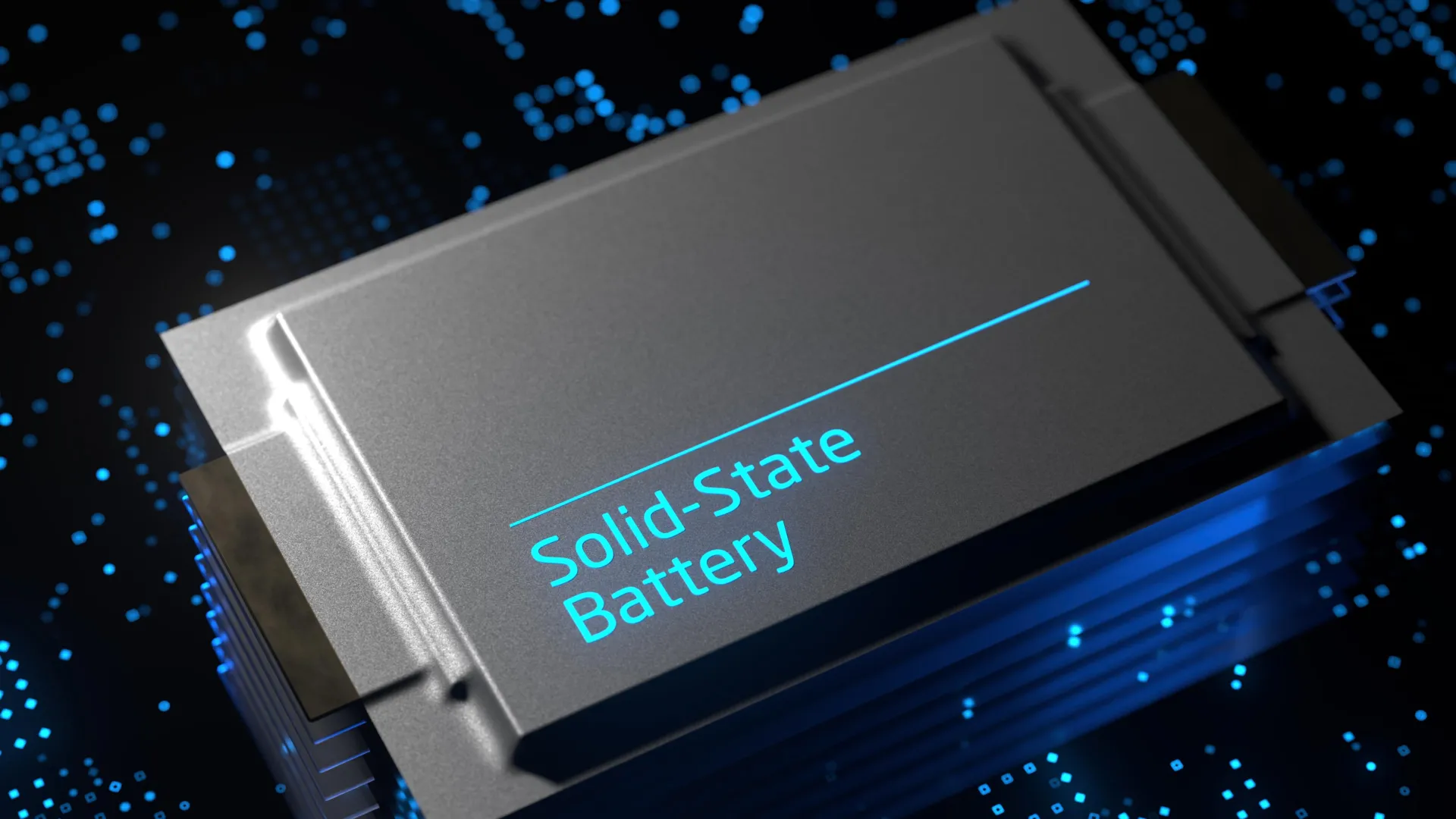
Smartphones, electric cars, and countless portable electronic devices all rely on batteries. As the demand for better energy storage increases, improving battery capacity, longevity and safety will play a major role in future electrification. One of the most promising technologies is solid-state batteries, which allow smartphones to run for days on a single charge and give electric vehicles up to three times more range than many current models.
Unlike traditional lithium-ion batteries, which use a liquid electrolyte between two solid electrodes, solid-state batteries replace the liquid with a solid electrolyte. This design has several potential benefits, including increased energy density, increased safety, and extended battery life. However, one stubborn problem has delayed commercial adoption. During charging, small tree-like structures called dendrites can grow from the lithium anode and pierce the solid electrolyte, causing an internal short circuit.
Now, an interdisciplinary team at the Max Planck Institute for Sustainable Materials Research (MPI-SusMat) has determined exactly how these dendrites cause the disruption that ultimately leads to battery failure. Their findings were published in the magazine nature.
How dendrites crack solid-state batteries
Researchers have long puzzled how soft lithium dendrites can break through hard ceramic electrolytes.
“Although the electrodes and the dendrites that form are composed of soft lithium metal, like gummy bears, the dendrites can penetrate the ceramic electrolyte and cause a short circuit,” said Dr. Yuwei Zhang, lead author of the new publication and head of the “Chemical Mechanics of Battery Materials” group at MPI-SusMat. “How are soft dendrites able to fracture hard solid ceramics? There are two hypotheses: internal stress builds up inside the dendrites, inducing mechanical failure of the solid electrolyte. Or, electrons leak along the grain boundaries of the solid electrolyte, promoting the formation of lithium nuclei that later interconnect.”
To determine which explanation is correct, the researchers used a sophisticated combination of sample preparation and material characterization techniques. All steps were performed under vacuum and at cryogenic temperatures to eliminate interference from oxygen, water, and even the electron beam of the microscope.
The researchers investigated both the internal stress and plastic deformation of lithium dendrites trapped within the crack. Their analysis found no lithium accumulation in front of the dendrite tips, ruling out one of the proposed mechanisms.
“The soft lithium metal can penetrate the hard ceramic electrolyte, like a continuous water jet penetrating a rock. We calculated that the hydrostatic stress within the dendrite would eventually lead to brittle failure of the solid electrolyte,” said Zhang.
The researchers also confirmed their conclusions using phase field simulations and backscattered electron diffraction measurements.
New strategies to prevent battery failure
With a better understanding of how dendrites disrupt solid electrolytes, the research team is now investigating ways to stop or slow the process.
Possible solutions include making solid electrolytes tougher to withstand cracking for longer periods of time, introducing microscopic voids that redirect dendrite growth and move cracks away from vulnerable areas, and adding protective coatings to lithium electrodes to reduce dendrite formation in the first place.
The researchers say their study shows the importance of understanding how materials behave at the microscopic level. These insights could help transform solid-state batteries from a promising concept to a practical technology for future smartphones, electric vehicles, and other electronic devices.
