


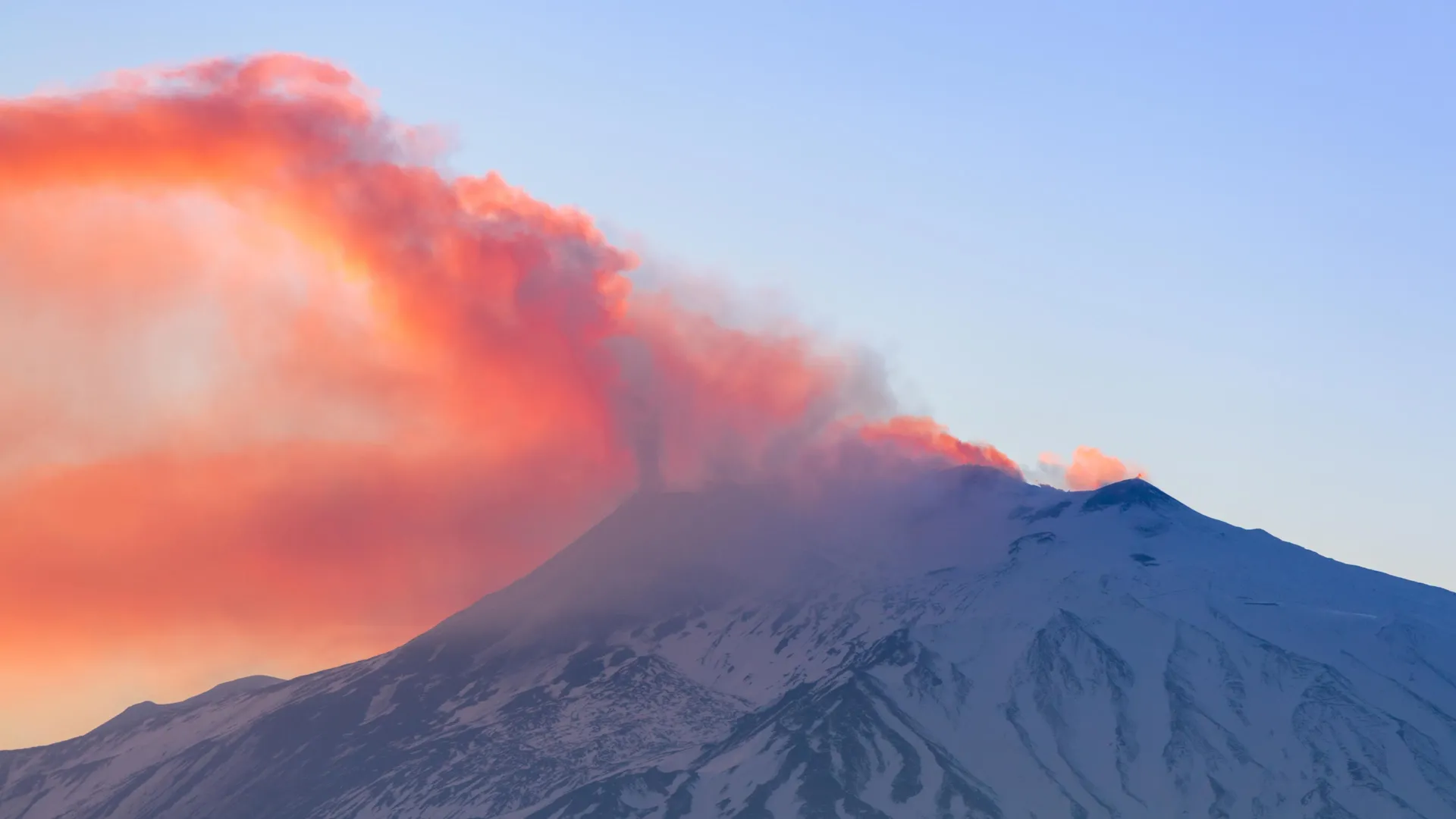
Mount Etna has fascinated geologists for decades. This towering volcano on the Italian island of Sicily is Europe’s most active, erupting several times a year, but scientists don’t fully understand how it formed.
Now, researchers at the University of Lausanne (UNIL) have proposed a new explanation that could change that. Their research suggests that Mount Etna may have formed through an unusual volcanic process that is different from those behind other large volcanoes on Earth, making it potentially unique.
More than 500,000 years old and rising more than 3,000 meters (9,800 feet) above sea level, Mount Etna has long resisted attempts to fit into existing models of volcanic formation. The new discovery is Journal of Geophysical Research — Solid Earthwas developed in collaboration with Anna Rosa Corsaro of the National Institute of Geophysics and Volcanology in Catania. The study could also help improve volcanic hazard assessments carried out by researchers at INGV in Catania, Italy.
Why Mount Etna Doesn’t Match Other Volcanoes
Volcanoes form when molten rock from the Earth’s mantle rises to the surface and solidifies. Traditionally, geologists have divided volcanoes into three main types based on how magma is produced.
- At the boundary between two tectonic plates, the plates separate and mantle material rises and melts, forming a new ocean floor.
- A subduction zone where one tectonic plate subducts beneath another. Water transported into the mantle lowers the melting point of surrounding rocks, creating magma and producing explosive volcanoes like Japan’s Mt. Fuji.
- In the middle of tectonic plates, abnormally hot mantle material rises in places known as hot spots, forming volcanic archipelagoes such as Hawaii and La Réunion.
Mount Etna doesn’t fit neatly into any of these categories.
Although this region is near a subduction zone, the chemical composition of its lava is more similar to volcanoes that formed above the hotspot, even though there is no hotspot beneath the region.
Magma source hidden deep underground in Sicily
Researchers propose that Etna is fed by a small pocket of magma that already exists in the upper mantle, about 80 kilometers (50 miles) below the Earth’s surface. This magma may have remained in place for a long time before being pushed up, rather than forming just before an eruption, as is common in many volcanoes.
Research shows that the collision between the African and Eurasian plates causes these pockets of magma to gradually move toward the surface. When a tectonic plate bends near a subduction zone, it cracks and magma rises through the Earth’s crust, much like fluid being squeezed out of a sponge.
This mechanism could explain both Mount Etna’s unusual chemistry and long history of frequent eruptions.
Possibility of a fourth type of volcano
The research team believes that Mount Etna may belong to a fourth, lesser-known category known as “petit spot” volcanoes. Petit Spot volcanoes, first identified by Japanese geologists in 2006, are small underwater volcanoes that provide evidence of pockets of magma that already exist near the top of Earth’s mantle, an idea originally proposed in the 1960s.
Until now, this process has only been relevant to relatively small volcanic structures.
“Our study suggests that Etna may have formed by a mechanism similar to that which produces the Petit Spot submarine volcano,” explains Sébastien Piret, professor at the Department of Geosciences and Environment at the University of Lausanne and lead author of the study. “This was unexpected because previously such processes have only been observed in very small volcanic structures, usually less than a few hundred meters above sea level. In contrast, Etna is a large stratovolcano whose activity began about 500,000 years ago and now towers over 3,000 meters above sea level.”
If the hypothesis is correct, it could expand scientists’ understanding of how volcanoes form and encourage researchers to look for similar geological processes elsewhere in the world.
How did scientists test their theories?
To investigate Mount Etna’s history, researchers analyzed rock samples spanning about 500,000 years of volcanic activity. By reconstructing the chemical evolution of Etna’s lava and comparing it with experimental data, they found that the composition of the volcano’s magma remains remarkably stable despite changes in the surrounding crustal environment.
These results support the idea that the magma feeding Etna already exists in the upper mantle, and that the amount reaching the surface is primarily controlled by the movement of tectonic plates. Taken together, these findings strengthen the argument that Etna’s volcanic activity is driven by the same underlying processes that cause the Petit Spot volcano.
