


Texas lawmakers have made the boom in artificial intelligence data centers one of their top priorities and are also seeing a surge in campaign contributions from big tech companies.
Data center developers have already donated millions of dollars to influence this year’s Texas elections as state officials debate new policies ahead of the 2027 legislative session.
Texas has no limits on individual donations, so large campaign contributions are not uncommon. But the AI industry is well-funded, with some developers worth trillions of dollars. That dwarfs even the energy, real estate and utility companies that typically account for the bulk of Texas’ election spending.
Facebook’s parent company, Meta Platforms, has spent $65 million on state-level campaigns across the country, and the industry as a whole is spending millions more on congressional races in the lead-up to this year’s midterm elections. Meanwhile, Texas plans to elect a governor, lieutenant governor and dozens of state legislators in 2026.
“You could think of this as an AI midterm election, because there’s so much money out there,” said Marjorie Connolly, communications director for the Technology Oversight Project, a watchdog group. “There are many months left until the election.”
In Texas, Mr. Mehta spent $1.3 million on the state’s March primary. Elon Musk, who controls social media platform X and artificial intelligence company xAI, donated $500,000 from a trust fund to a political action committee supporting state Senate candidates. Most of the money went to Republicans.
Texas Gov. Greg Abbott (R), who started his 2026 campaign with $105 million, received at least $1.6 million from technology executives last year. Some technology companies, such as Google and Amazon, have been making small donations for years.
Additionally, campaign finance records are only available until the end of February, days before Texas’ primary election, which could increase spending. Observers expect tech companies to continue spending throughout the year as the general election approaches.
Texas has hundreds of data centers in operation or under development, second only to Virginia among U.S. states.
Mr. Abbott and the Republican-controlled state Legislature have positioned the state as a business-friendly haven for big tech and other industries. The state has minimal construction regulations and an abundant supply of relatively cheap electricity.
“Texas is a hub for AI development, where companies can combine innovation with growing energy,” Abbott said last year when announcing the Google investment.
The AI boom relies on data centers the size of industrial warehouses packed with computers. Residents fear the power-hungry centers will raise electricity bills, deplete water supplies and eat up large tracts of land, potentially displacing farms or landing them near existing homes.
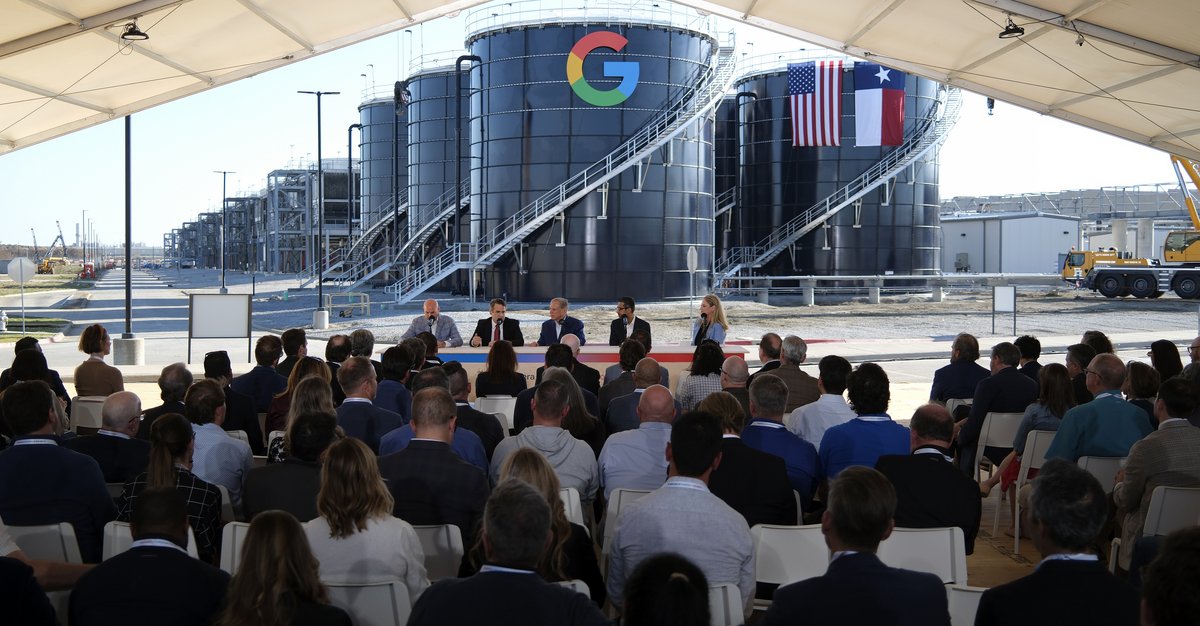
Google announced last year that it was building a $40 billion center in Armstrong and Haskell counties, between Dallas and Amarillo, to complement other operations it already has in Texas. Facebook is planning a $10 billion data center near El Paso, with other data centers in development from the Rio Grande Valley to the Texas Panhandle.
Last year, the Texas Legislature passed comprehensive legislation aimed at regulating the use of AI. It also bans AI used for sexually explicit purposes, such as child pornography and deepfakes, as well as technology that violates constitutional rights, causes discrimination, or encourages self-harm.
Leaders in the state House and Senate said in March that data center issues would be among the items lawmakers would consider in public hearings this year, after responding to complaints from farmers, rural landowners and others.
“Everywhere you go, people ask questions about data centers and costs and everything else,” Republican state Sen. Phil King said at a state Senate Commerce Committee hearing last week. “We need to be able to tell voters it’s done.”
This public pressure is one reason AI and tech companies are working so hard to influence state legislatures, said Brendan Steinhauser of the nonprofit The Alliance for Secure AI. Federal legislation to address the downsides of the economic boom has largely stalled, leaving states to make policy decisions.
“I think their goal is to oppose every regulation and restriction they see, because once something is passed, it’s hard to overturn it,” he said.
Meta said it wanted to avoid a “patchwork” of state AI regulations, pointing to the company’s previous statements.
“That’s why Meta is launching an initiative to help elect state candidates across the country who advance AI development, champion America’s technology industry, and defend America’s technology leadership at home and abroad,” Brian Rice, vice president of public policy, said in a statement.
None of the other tech companies responded to requests for comment from POLITICO.
“I’m very cautious.”
Some companies, including AI developer Anthropic, have launched PACs aimed at promoting the regulation and safe use of AI. However, they were not very active in Texas.
Google has donated tens of thousands of dollars to both the Republican and Democratic caucuses in the Texas Legislature over the past two years, and other technology companies have primarily supported Republican candidates in Texas.
Abbott received a $1 million donation from Joe Gebbia in 2025, according to data compiled by the nonprofit organization Transparency USA. Gebbia is one of the co-founders of Airbnb and currently serves on Tesla’s board of directors.
Abbott also received a $600,000 donation in 2025 from Austin businessman Mackenzie Price, who co-founded a network of AI-powered private schools.
Mehta’s “Create the Future” committee spent money on state Comptroller Sen. Kelly Hancock’s primary campaign and 11 other Republicans seeking seats in the state House and Senate, according to campaign finance reports.
Hancock lost despite earning $495,000 in lucrative advertising from the Meta Committee. Of the 11 candidates for Congress backed by Mr. Mehta, one is running in the special election in May, and 10 made it through the Republican primary to advance to the general election in November.
Mr. Abbott’s press office did not respond to requests for comment, and Mr. Gebbia and Mr. Price did not respond to messages left at the company.
Similarly, the Texas Senate Leadership Fund, a committee backed by Musk, focused on Republican candidates. Musk and xAI did not respond to requests for comment.
The Texas Senate Leadership Fund raised a total of $600,000 and spent $50,000 each on two state Senate candidates. He also spent $373,000 on advertising, polling and other expenses, although campaign reports do not specify whether those costs were for specific job seekers.
Tiffany Mueller, president of End Citizens United, a campaign finance group aligned with Democrats, said this level of spending can be very effective in congressional races, especially in small media markets like rural Texas.
Texas has long had a history of big-money political campaigns, she said. Companies can also use the funds to effectively buy favorable treatment from lawmakers while discouraging them from opposing industry contributions, Mueller said.
“The amount and scale of spending that we are seeing is very alarming,” she said.
Lt. Gov. Dan Patrick, a Republican who is seeking re-election, said the data center effort is important for the state.
In a recent interview with conservative activist Luke Macias, he said Texas can’t become the “Wild West” and that data centers need to provide their own power to avoid rising electricity bills for other users. Patrick launched the Texas Senate Leadership Fund and called for consideration of legislation affecting data centers and cryptocurrencies.
“I’m all for AI and cryptocurrencies,” he said, “but we can’t allow that to drive up prices for homes and businesses.”
