


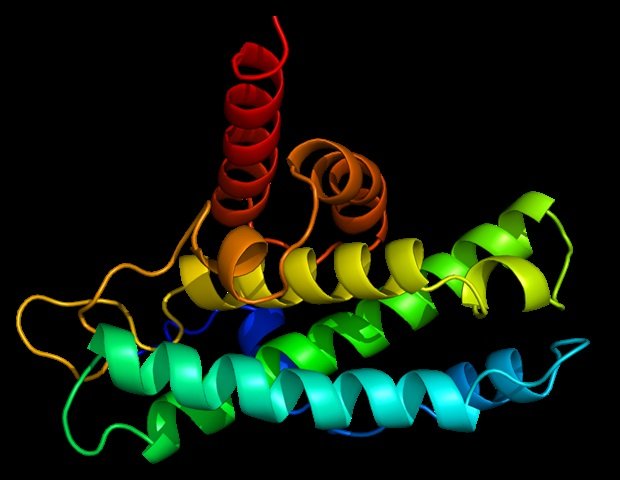
Protein language models are artificial intelligence tools that help us design proteins with useful properties, including entirely new structures never before seen in nature.
This technology has great potential to address global challenges, such as synthesizing enzymes that can absorb carbon dioxide from the atmosphere and building catalysts that can significantly reduce energy use and harmful waste byproducts in industrial processes.
Even though many of these models are beginning to shape real-world decision-making in biotechnology, major challenges remain. Protein language models (pLMs) operate primarily as black boxes, making it difficult to understand their decision-making processes and determine whether their predictions are reliable, biased, or safe to apply in the real world.
In the new perspective paper published today, nature machine intelligenceresearchers at the Center for Genome Regulation (CRG) are analyzing how “explainable AI,” the techniques and methods that enable humans to understand, trust, and interpret technology decisions, are currently being applied to protein language models.
“Protein language models are advancing rapidly, but our understanding of fundamental biological processes such as folding and catalysis has not progressed in parallel with these breakthroughs,” says Dr. Noelia Fels, group leader at CRG and corresponding author of the paper.
“In some ways, we’ve even lost some of the transparency that characterized physically-based models. Without better ways to explain what these models learn and how they make decisions, we risk building powerful tools that we can’t fully trust,” added Dr. Felts.
The authors also call for action from the research community to make protein design systems more transparent, reliable, and safe. “If we want protein language models to become reliable partners in discovery and design, explainability must not be an afterthought,” says Andrea Hanklinger, lead author of the paper.
Four places to look when explaining PLM decisions
The authors write that if we want to understand why an AI model made a predictive decision about the type of protein structure or property, we first need to ask where that explanation came from.
They identify four key locations along the model’s journey that are critical to being able to explain decision-making. The first is what training data the model learned from. This could explain, for example, whether the model has a bias in not taking human genetic diversity into account, or whether there is enough data on human proteins to begin with.
The second is the specific protein sequence given to the model. For example, in a house price prediction model, characteristics might include square meters, number of bedrooms, or location. In the context of a protein language model, it determines which amino acids or regions of a protein have the most influence on predictions.
The third is the architecture and internal components of the protein language model itself, which is similar to opening the hood of a car to check the engine. For protein language models, we need to check whether the artificial neurons used by the AI are processing the information correctly.
Finally, researchers can explore protein language models by tweaking them and seeing what happens. This is called input-output behavior and involves studying how the model’s answer changes if you slightly change the sequence of the protein or the question.
What are scientists trying to accomplish when they open a “black box”?
To understand how explainable artificial intelligence is being used in protein research today, the researchers reviewed the existing scientific literature and examined dozens of studies where explainable tools have already been applied to protein language models. This is the most comprehensive study of its kind to date.
The authors organize a scattered body of work into a set of distinct roles that explainability can play in protein research, helping to make a technically dense field much more approachable.
Most often, explainability is used as an “evaluation,” a way to check whether a model has learned patterns that biologists already know, such as recognizing binding sites or structural motifs.
“Evaluators can help benchmark the quality of a model, but they cannot extrapolate unknown examples, improve the model architecture, or, more importantly, reveal biological insights gained from the training data,” says Hanklinger.
A few studies have gone a step further and used these insights to “multitask” and reapply the learned signals to annotate new proteins or predict additional properties. The authors point out that these two roles dominate the field today, indicating that explainability is primarily used as a validation and support tool rather than a driver of discovery.
Researchers found that a limited number of studies used explainable AI insights as “engineers” or “coaches.” This helps orient the technology to trim unnecessary components and redesign the architecture to produce protein sequences toward desired traits.
Toward a “teacher” protein language model
The fifth role for explainable AI in protein languages is “teacher,” which stands out as the most ambitious and least realized role. This type of explainable AI can help uncover entirely new biological principles that humans were previously unaware of.
The authors compare reaching this milestone seen in other areas of artificial intelligence, such as when AlphaZero began discovering novel chess strategies that amazed grandmasters, or when AI systems helped decipher corrupted ancient texts by recognizing linguistic patterns invisible to the human eye. At this time, technology has moved from being an efficiency tool to providing new insights.
In protein science, reaching the teacher stage means AI systems that help researchers discover new rules for protein folding, catalysis, or molecular interactions that could change the way we design medicines, materials, and sustainable technologies.
“For us, the real holy grail is controllable protein design. Imagine being able to tell a model, ‘Design a protein that has this shape and is active at this pH.’ Not only do you receive a candidate sequence, but you also receive a clear explanation of why that design works and, importantly, why the alternatives fail,” explains Dr. Ferruz.
“For example, a model can explain that a particular mutation disrupts a hydrogen bond network essential for stability. Once we reach a level of control and mechanistic transparency, protein language models will move from being good generators to truly reliable design partners,” she added.
The authors emphasize that reaching teacher status for protein language models does not happen automatically. Today’s models have powerful pattern recognition capabilities, but often rely on statistical correlations rather than true understanding. The authors claim that reliability and validation are the main concerns and that several conditions must be met.
This paper asks the community to create robust benchmarks and evaluation frameworks to test whether explanations truly reflect the model’s inferences. We also want open source tools that make explainability accessible and comparable across labs. Most importantly, the insights gained from AI must ultimately be verified in the laboratory, turning mathematical patterns into experimentally confirmed biological knowledge.
sauce:
genome control center
Reference magazines:
DOI: 10.1038/s42256-026-01232-w
