

Close Menu

    Subscribe to Updates

    Get the latest creative news from FooBar about art, design and business.

    What's Hot

    Threatening men’s masculinity doesn’t make them more politically conservative, new study finds

    May 12, 2026

    Bicara Therapeutics hires Replimune from Sanofi as chief commercial officer

    May 12, 2026

    This bizarre giant dinosaur may change what we know about Jurassic giants

    May 12, 2026
    Facebook X (Twitter) Instagram
    Facebook X (Twitter) Instagram
    Health Magazine
    • Home
    • Environmental Health
    • Health Technology
    • Medical Research
    • Mental Health
    • Nutrition Science
    • Pharma
    • Public Health
    • Discover
      • Daily Health Tips
      • Financial Health & Stability
      • Holistic Health & Wellness
      • Mental Health
      • Nutrition & Dietary Trends
      • Professional & Personal Growth
    • Our Mission
    Health Magazine
    Home » News » This bizarre giant dinosaur may change what we know about Jurassic giants
    Nutrition Science

    This bizarre giant dinosaur may change what we know about Jurassic giants

    healthadminBy healthadminMay 12, 2026No Comments3 Mins Read
    This bizarre giant dinosaur may change what we know about Jurassic giants
    Share
    Facebook Twitter Reddit Telegram Pinterest Email


    Their long necks, huge bodies, small heads, and flared tails make sauropods one of the most famous dinosaurs ever discovered. These plant-eating giants include some of the largest land animals in Earth’s history, with some species reaching nearly 130 feet (40 meters) in length. Famous examples include Diplodocus and Brachiosaurus.

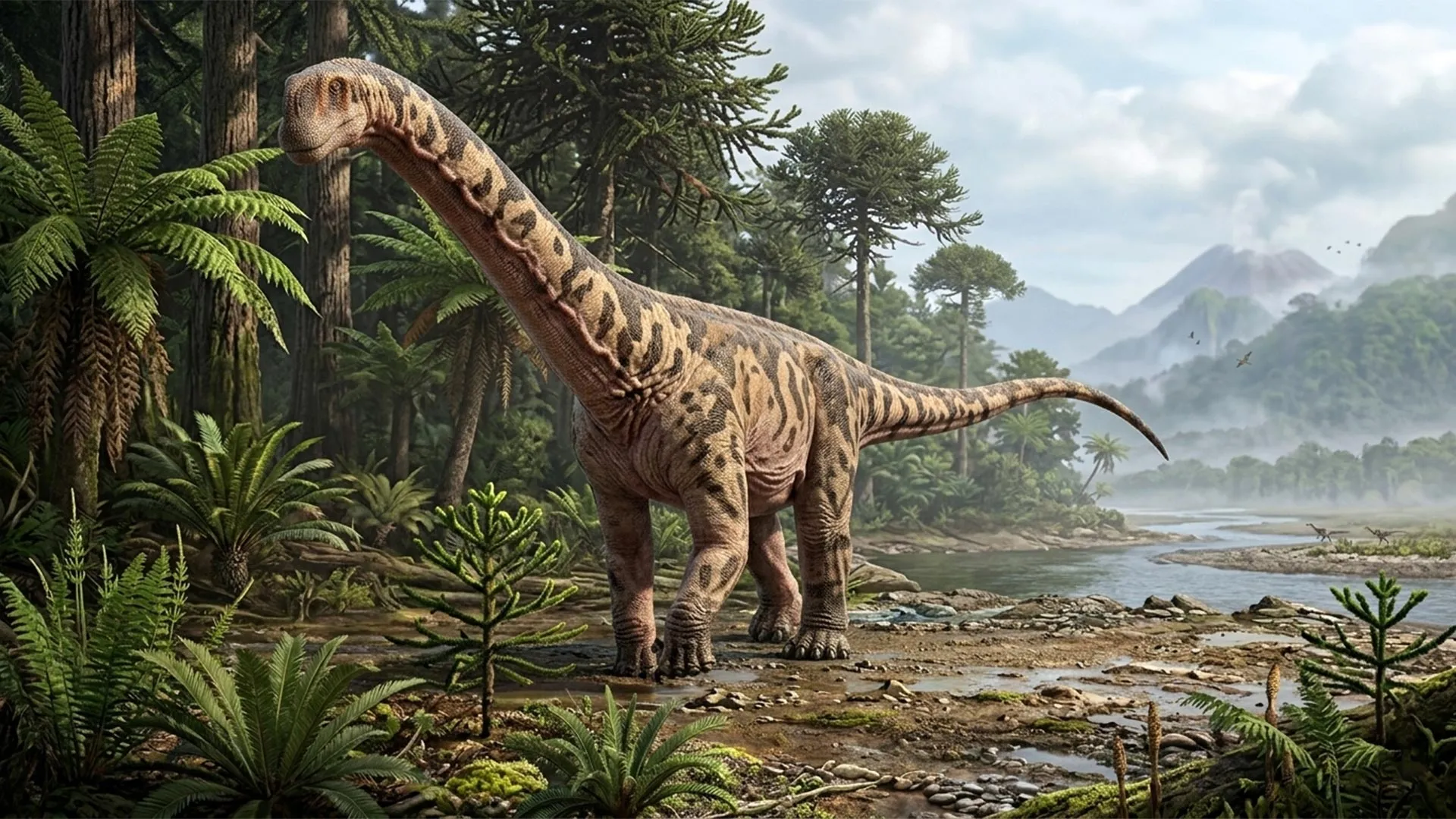
    Now, researchers studying fossils from southern Argentina have identified a new member of this iconic group. dinosaurs named Vicaracosaurus dionydeiwas smaller than the largest sauropods, but still had an estimated length of 65 feet (20 meters).

    Giant dinosaur fossil discovered in Patagonia

    Scientists recovered part of the dinosaur’s spine, including more than 30 vertebrae from its neck, back and tail, as well as several ribs and part of its pelvis. The bone structure revealed that the remains belonged to an adult animal that lived on the ancient southern supercontinent Gondwana some 155 million years ago.

    What makes this fossil particularly interesting is its unusual combination of features. Part of the skeleton closely resembles that of Giraffatitan, a brachiosaur dinosaur discovered in Tanzania. Other traits, particularly those of the dorsal vertebrae, are very similar to North American diplodocus and related species.

    “Phylogenetic analysis of the skeleton shows that: Vicaracosaurus dionydei “This fossil is related to the Brachiosauridae and would be the first Brachiosauridae to have lived during the Jurassic period of South America,” said LMU PhD student Alexandra Reuter, lead author of the study. The paleontologist examined the fossil as part of his doctoral research.

    New clues about Jurassic dinosaur evolution

    The discovery could help scientists better understand how giant sauropods evolved in the Southern Hemisphere during the Late Jurassic Period.

    “Our knowledge of the evolution of sauropods during the Late Jurassic has so far been almost entirely based on numerous fossil discoveries made in North America and other parts of the northern hemisphere. For a long time, there was only one significant site on the southern continent, in Tanzania: the fossil site of Chubut province in Argentina, the origin of Bicharacosaurus dionidei. “provides important comparative material and allows us to continually supplement and reassess our understanding, contributing to the elucidation of the evolutionary history of these animals, especially in the Southern Hemisphere,” says study leader Professor Oliver Raucht, dinosaur expert at the Bavarian State Collection of Natural History (SNSB).

    Dinosaur named after local shepherd

    first fossil Vicaracosaurus dionydei Found on his farm by shepherd Dionid Mesa. Researchers honored him by using his name in the species designation. The genus name comes from the colloquial Spanish word “bicharraco,” meaning “big animal.”

    The fossil was discovered in the Canadon-Carcareo rock formation in the Chubut province of Patagonia. The remains are currently stored at the Egidio Ferrio Museum of Paleontology in Trelew, Argentina.


    Source link

    Visited 1 times, 1 visit(s) today
    Share. Facebook Twitter Pinterest LinkedIn Telegram Reddit Email
    Previous ArticleAI-designed drug reduces fentanyl consumption in animal models by targeting serotonin receptors
    Next Article Bicara Therapeutics hires Replimune from Sanofi as chief commercial officer
    healthadmin

    Related Posts

    Scientists discover hidden chemical signature that could reveal extraterrestrial life

    May 12, 2026

    Amazing fossil discovery challenges the origin of animal life

    May 12, 2026

    James Webb Telescope reveals clearest mesh map of the universe ever

    May 12, 2026

    NASA’s Hubble reveals huge chaotic planetary nursery never seen before

    May 12, 2026

    JUPITER supercomputer breaks world record with 50 qubit quantum simulation

    May 12, 2026

    This simple physical fitness test may predict your lifespan

    May 12, 2026
    Add A Comment
    Leave A Reply Cancel Reply

    Categories

    • Daily Health Tips
    • Discover
    • Environmental Health
    • Exercise & Fitness
    • Featured
    • Featured Videos
    • Financial Health & Stability
    • Fitness
    • Fitness Updates
    • Health
    • Health Technology
    • Healthy Aging
    • Healthy Living
    • Holistic Healing
    • Holistic Health & Wellness
    • Medical Research
    • Medical Research & Insights
    • Mental Health
    • Mental Wellness
    • Natural Remedies
    • New Workouts
    • Nutrition
    • Nutrition & Dietary Trends
    • Nutrition & Superfoods
    • Nutrition Science
    • Pharma
    • Preventive Healthcare
    • Professional & Personal Growth
    • Public Health
    • Public Health & Awareness
    • Selected
    • Sleep & Recovery
    • Top Programs
    • Weight Management
    • Workouts
    Popular Posts
    • 1773313737_bacteria_-_Sebastian_Kaulitzki_46826fb7971649bfaca04a9b4cef3309-620x480.jpgHow Sino Biological ProPure™ redefines ultra-low… March 12, 2026
    • the-pros-and-cons-of-paleo-dietsThe Pros and Cons of Paleo Diets: What Science Really Says April 16, 2025
    • pexels-david-bartus-442116The food industry needs to act now to cut greenhouse… January 2, 2022
    • 1773729862_TagImage-3347-458389964760995353448-620x480.jpgDespite safety concerns, parents underestimate the… March 17, 2026
    • Improve Mental Health10 Science-Backed Practices to Improve Mental Health… March 11, 2025
    • 1773209206_futuristic_techno_design_on_background_of_supercomputer_data_center_-_Image_-_Timofeev_Vladimir_M1_4.jpegMulti-agent AI systems outperform single models… March 11, 2026

    Demo
    Stay In Touch
    • Facebook
    • Twitter
    • Pinterest
    • Instagram
    • YouTube
    • Vimeo
    Don't Miss

    Threatening men’s masculinity doesn’t make them more politically conservative, new study finds

    By healthadminMay 12, 2026

    Recent research published in Journal of Experimental Politics This suggests that threatening men’s sense of…

    Bicara Therapeutics hires Replimune from Sanofi as chief commercial officer

    May 12, 2026

    This bizarre giant dinosaur may change what we know about Jurassic giants

    May 12, 2026

    AI-designed drug reduces fentanyl consumption in animal models by targeting serotonin receptors

    May 12, 2026

    Subscribe to Updates

    Get the latest creative news from SmartMag about art & design.

    HealthxMagazine
    HealthxMagazine

    At HealthX Magazine, we are dedicated to empowering entrepreneurs, doctors, chiropractors, healthcare professionals, personal trainers, executives, thought leaders, and anyone striving for optimal health.

    Our Picks

    AI-designed drug reduces fentanyl consumption in animal models by targeting serotonin receptors

    May 12, 2026

    Scientists discover hidden chemical signature that could reveal extraterrestrial life

    May 12, 2026

    PCOS is now called PMOS. The renaming process lasted 10 years.

    May 12, 2026
    New Comments
      Facebook X (Twitter) Instagram Pinterest
      • Home
      • Privacy Policy
      • Our Mission
      © 2026 ThemeSphere. Designed by ThemeSphere.

      Type above and press Enter to search. Press Esc to cancel.