


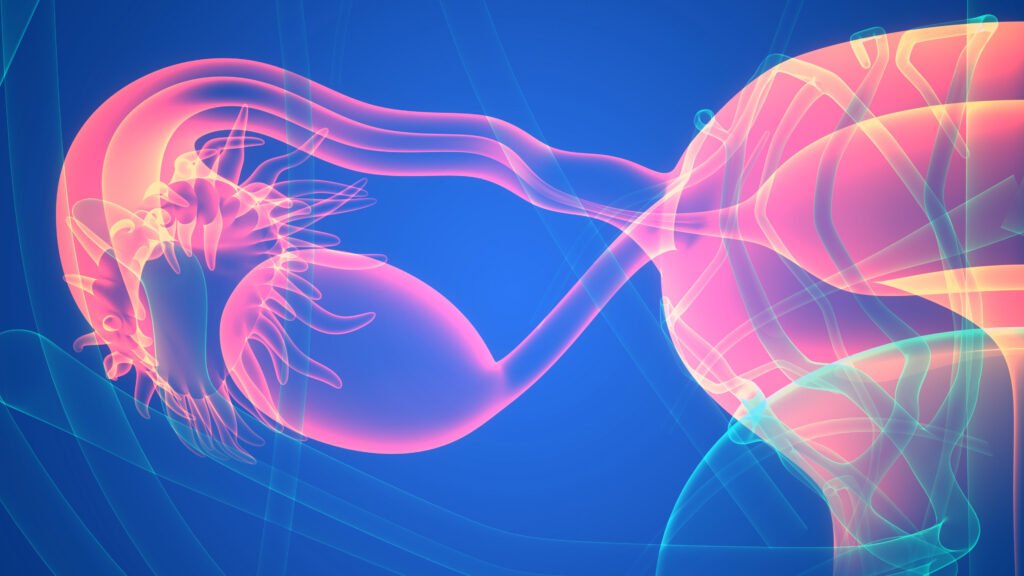
PCOS is dead. Long live PMOS.
The one-letter change in the nomenclature for a common metabolic disease in women revealed Tuesday may seem unremarkable, but it comes after more than a decade of intense debate over the need for a name that more accurately and completely describes what was previously known as polycystic ovarian syndrome (PCOS).
The revised name, Polyendocrine Metabolic Ovarian Syndrome (PMOS), was introduced in a paper published in The Lancet and presented at the European Endocrine Society meeting in Prague. Although this was a near-unanimous choice by a panel of clinicians, researchers, and patient advocacy groups, some dissatisfaction remains, in part because keeping “ovary” in the name does not take into account the possibility of a male form of the syndrome suggested by earlier studies.
The name PCOS had several limitations, including an inaccurate description of symptoms not expressed by cysts on the ovary. This has led patients to attribute their ovarian cysts to PCOS and to think that other conditions are at risk of being underestimated, said Rachel Morman, director of Verity, a UK-based charity for PCOS patients. Physicians also focus on cystic symptoms and may dismiss patients if they do not present with cysts, even if they suffer from metabolic or fertility issues associated with PCOS.
As a result, the disease is thought to affect up to 13% of women of reproductive age, causing symptoms such as weight gain, acne, hirsutism, irregular menstrual periods and pain, and mental health problems, but the World Health Organization estimates that 70% of people with the disease are undiagnosed.
The journey to a new name began in October 2015 with a battle. At a conference in Sicily, experts gathered to discuss changing the name of PCOS were at loggerheads with each other. “I think that meeting was very diverse. There were a lot of voices in the room, but it felt like no one was listening and everyone was talking over each other,” Morman said. “At the end of the meeting, we all agreed that the name was bad, but we couldn’t decide what it should be.”

Why ovarian syndrome has a new name: Men also appear to have polycystic ovary syndrome
Over the next decade, the PCOS community underwent one of the most powerful and extensive disease renaming processes in history. Building on previous surveys conducted in 2017 and 2023, a team led by Helena Tiede from Australia’s Monash University created a third survey to be conducted in 2025 among approximately 15,000 stakeholders. In all, around 22,000 people from around the world, including doctors, researchers, patients and charities, shared their thoughts on the new name.
When asked what they wanted to achieve with the new name, the main answer was avoidance of stigma, followed by ease of communication and scientific accuracy. They preferred precise and descriptive names over common names and expressed a strong interest in including endocrine system involvement in the condition.
The names were then tested in a workshop with participants from around the world representing all interest groups.
The winning candidate, PMOS, was chosen by a landslide earlier this year over two other candidates, Endocrine-Metabolic Ovulation Syndrome and Ovulatory Metabolic Endocrine Syndrome. Eighty-seven of the 90 voters (including physicians, researchers, patients, and advocates) supported it immediately, and one more supported it by the time the manuscript was submitted. “I’m really looking forward to seeing what happens as a result of this,” Morman said.
Angela Grassi, a registered dietitian and CEO of the PCOS Nutrition Center, and Sasha Otti, executive director of the PCOS Challenge, the main PCOS association in the United States, were the only two people to voice opposition. Their main concern was that the name had been changed too much and not enough. While research was ongoing and the possibility of a male expression of the condition was not recognized, which was one of the factors leading to the name change push, the acronym change required a significant marketing effort to popularize the new name.
Teed, who is also the lead author of the paper co-authored with a group of international experts and patient advocates on behalf of the Global Name Change Consortium, acknowledged the possibility of a male version of the condition, and said one key discussion point was therefore to eliminate any reference to the ovaries altogether.
But Moman said changing the name to account for the man was a mistake from a patient advocacy perspective. This is because decisions may be delayed until further research is completed and the focus may shift away from women. “I fundamentally disagree that waiting to change the name and then potentially changing it to include men is a wise move. In fact, I think it’s even more harmful than keeping the name PCOS,” she said, adding that extending the name to men would dilute the resources devoted to women, which are already scarce in terms of medical research efforts and funding.


Sign up for daily summary
Get all the health and medical news you need today in one email
Ultimately, after multiple votes, the consortium decided to keep references to the female reproductive system, but did not use “ovaries” and “ovulation” as they felt they were too specific. “There’s a lot more to the ovary, including hormonal changes within the ovary and follicular responses within the ovary,” Teed said.
She said another option would have been to use “reproductive” instead of “ovary,” but “it was felt that creating a name with reproductive in the title was too stigmatizing and likely to cause harm, especially in many cultures and regions of the world.”
Ultimately, she said, “The most accurate naming may actually be a little different than what we ultimately decided on, but we had to consider everyone’s perspective, culture, environment, and the impact they have.”
The prediction shared in the paper is that it will take about three years to promote and popularize the name, but Grassi is skeptical that efforts will be enough and worries about the costs to businesses and organizations like hers that revolve around the condition and are named after the now-obsolete acronym. “I feel it would be a mistake to change the acronym. It would cause a lot of confusion. This is money we would have to spend on rebranding. We would have to rebrand. We would have to buy a new trademark. We would have to buy a domain. My book ‘PCOS Workbook’ would have to be rewritten.”
But maintaining PCOS was never a possibility. Only a quarter of survey respondents said they would prefer to keep the acronym with a new name, and more than half completely rejected keeping the acronym unchanged. “They did it because they felt the changes were important, and they felt that if none of the letters were changed, it wasn’t a big enough change,” Teed said. She understands Grassi’s point, but also believes personal business interests are secondary to the patient’s perspective in the process.
“This is all done to turn the C into an M,” Grassi said, adding that he believes further research will likely reveal more about the male version and further changes will be needed. But Teed isn’t worried about this happening. “This was meant to be a very definitive process,” she says, but “unless there is a dramatic change in the science of this condition in the future, I wouldn’t expect it to change again.”
STAT’s reporting on health issues facing men and boys is supported by Rise Together. Rise Together is a donor-advised fund sponsored and managed by the National Philanthropic Trust and established by Richard Reeves, founding president of the American Association of Boys and Men. and by the Boston Foundation. Our financial supporters have no input into any decisions about our journalism.
