

Close Menu

    Subscribe to Updates

    Get the latest creative news from FooBar about art, design and business.

    What's Hot

    Scientists have developed a memory chip that breaks the rules of miniaturization

    May 3, 2026

    Powerful AI discovers over 100 hidden planets in NASA data, including rare and extreme worlds

    May 3, 2026

    Scientists stunned as pink katydid turns green camouflage

    May 3, 2026
    Facebook X (Twitter) Instagram
    Facebook X (Twitter) Instagram
    Health Magazine
    • Home
    • Environmental Health
    • Health Technology
    • Medical Research
    • Mental Health
    • Nutrition Science
    • Pharma
    • Public Health
    • Discover
      • Daily Health Tips
      • Financial Health & Stability
      • Holistic Health & Wellness
      • Mental Health
      • Nutrition & Dietary Trends
      • Professional & Personal Growth
    • Our Mission
    Health Magazine
    Home » News » Scientists have developed a memory chip that breaks the rules of miniaturization
    Nutrition Science

    Scientists have developed a memory chip that breaks the rules of miniaturization

    healthadminBy healthadminMay 3, 2026No Comments3 Mins Read
    Scientists have developed a memory chip that breaks the rules of miniaturization
    Share
    Facebook Twitter Reddit Telegram Pinterest Email


    Have you ever felt your smartphone getting hot after using it a lot or watched the battery drop at the worst possible moment? A big reason is the electronic circuits and memory inside the device, which consume energy and emit heat while working.

    At the most basic level, computer memory stores information as 0s and 1s by controlling how easily electricity passes through matter. If scientists can design memory that requires much less power, they could dramatically reduce the energy demands of phones, computers, and other electronic devices.

    A new approach to low-power memory

    One idea aimed at solving this problem dates back to 1971, when researchers proposed ferroelectric tunnel junctions (FTJs). This type of memory relies on ferroelectricity, a property that allows a material to switch its internal electrical polarization. Changing this polarity affects how easily current can flow, allowing the device to store data.

    Despite that promise, traditional materials used in this type of memory have struggled as devices have become smaller. As components became smaller, performance often decreased, limiting technology advancements.

    Hafnium oxide enables ultra-compact memory

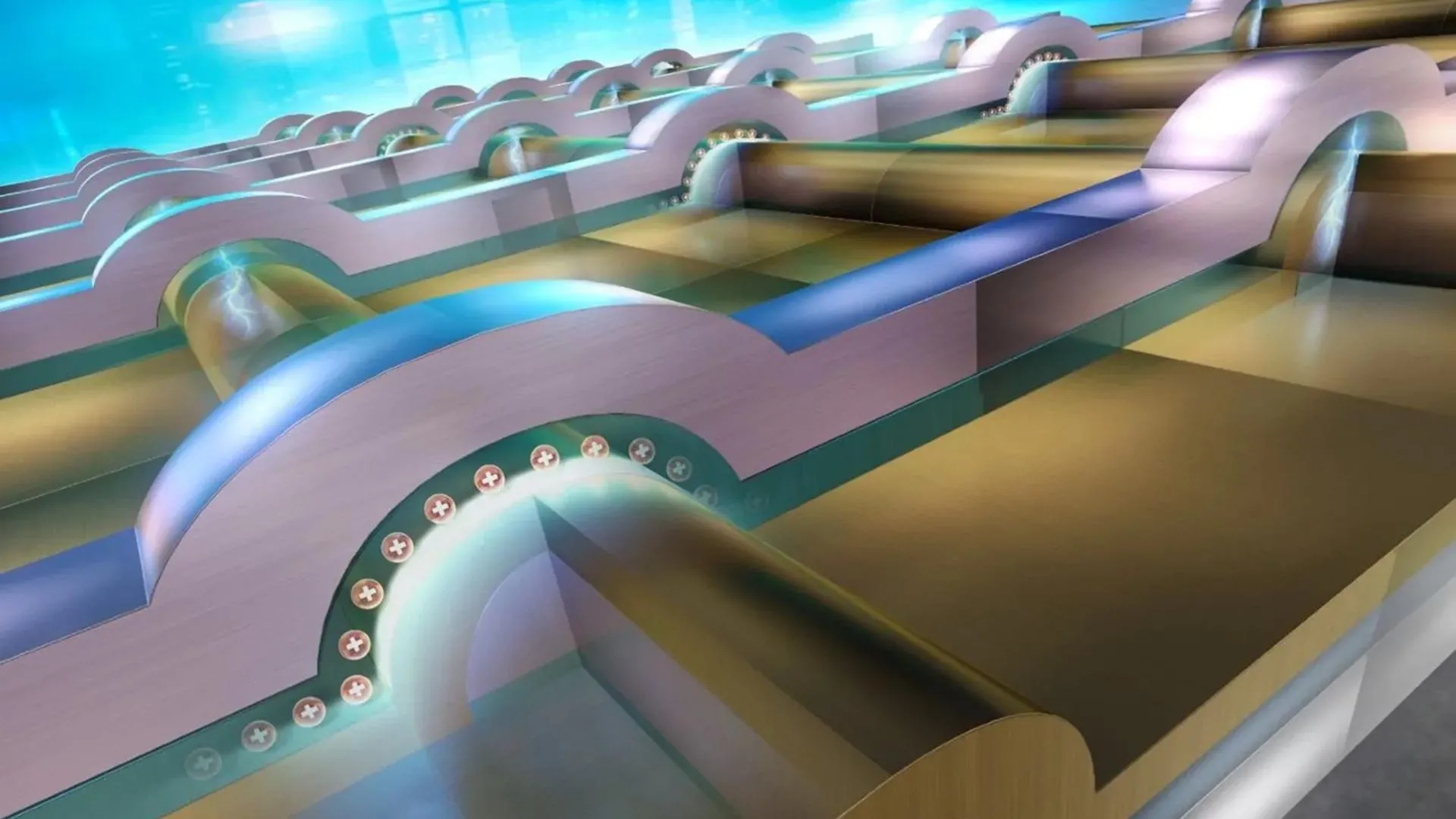
    A key breakthrough occurred in 2011, when scientists discovered that hafnium oxide, a widely used material, can retain electrical polarization even when it is very thin. Based on this discovery, Professor Yutaka Mashima and his team at Tokyo University of Science set out to develop an extremely small memory device with a diameter of just 25 nanometers, approximately 1/3000 times the thickness of a human hair.

    Solving leaks at the nanoscale

    Shrinking memory to this scale poses significant challenges. Current tends to leak through boundaries between small crystals in materials, and this has long prevented further miniaturization.

    Instead of trying to get around this problem, the researchers took a different approach. They made the devices even smaller and reduced the effects of their crystal boundaries.

    They also developed a new manufacturing method that naturally forms a semicircle by heating the electrode. This design created a near-single-crystal structure with fewer boundaries where leaks could occur.

    The breakthrough that smaller is better

    By combining this structural design with extreme miniaturization, the team achieved the device’s high performance. More importantly, they demonstrated the unexpected. In fact, the smaller the memory, the better the performance, overturning a long-held assumption in electronics.

    What this means for future devices

    If this technology is used in the real world, it could have far-reaching implications. Devices like smartwatches could operate for months on a single charge, and networks of connected sensors could operate without the need for frequent battery changes.

    In artificial intelligence (AI), this type of memory can support faster processing while using much less energy. Hafnium oxide is already compatible with existing semiconductor manufacturing, so integrating this new memory into everyday electronics could happen relatively quickly.

    Comments from researchers

    Challenging what is considered to be the limit of science, such as “We can’t make it any smaller,” or “If we make it smaller, it will break,” is like walking in the dark. It’s an ongoing struggle. However, by questioning traditional assumptions and exploring new ways to overcome these barriers, we were able to discover entirely new perspectives. We hope that this result will stimulate the curiosity of the young people who will lead the future, and contribute to building a better world. — Yutaka Mashima, Professor, Materials and Structures Laboratory, Research Organization, Tokyo University of Science.


    Source link

    Visited 1 times, 1 visit(s) today
    Share. Facebook Twitter Pinterest LinkedIn Telegram Reddit Email
    Previous ArticlePowerful AI discovers over 100 hidden planets in NASA data, including rare and extreme worlds
    healthadmin

    Related Posts

    Powerful AI discovers over 100 hidden planets in NASA data, including rare and extreme worlds

    May 3, 2026

    Scientists stunned as pink katydid turns green camouflage

    May 3, 2026

    ‘Big things’ may not happen alone: ​​Dual West Coast earthquake threat

    May 2, 2026

    Mechanical volcano built in the 18th century comes roaring back to life 250 years later

    May 2, 2026

    Increasing one protein can help the brain fight Alzheimer’s disease

    May 2, 2026

    Why do crabs walk sideways? Scientists date it back 200 million years

    May 2, 2026
    Add A Comment
    Leave A Reply Cancel Reply

    Categories

    • Daily Health Tips
    • Discover
    • Environmental Health
    • Exercise & Fitness
    • Featured
    • Featured Videos
    • Financial Health & Stability
    • Fitness
    • Fitness Updates
    • Health
    • Health Technology
    • Healthy Aging
    • Healthy Living
    • Holistic Healing
    • Holistic Health & Wellness
    • Medical Research
    • Medical Research & Insights
    • Mental Health
    • Mental Wellness
    • Natural Remedies
    • New Workouts
    • Nutrition
    • Nutrition & Dietary Trends
    • Nutrition & Superfoods
    • Nutrition Science
    • Pharma
    • Preventive Healthcare
    • Professional & Personal Growth
    • Public Health
    • Public Health & Awareness
    • Selected
    • Sleep & Recovery
    • Top Programs
    • Weight Management
    • Workouts
    Popular Posts
    • 1773313737_bacteria_-_Sebastian_Kaulitzki_46826fb7971649bfaca04a9b4cef3309-620x480.jpgHow Sino Biological ProPure™ redefines ultra-low… March 12, 2026
    • the-pros-and-cons-of-paleo-dietsThe Pros and Cons of Paleo Diets: What Science Really Says April 16, 2025
    • pexels-david-bartus-442116The food industry needs to act now to cut greenhouse… January 2, 2022
    • Improve Mental Health10 Science-Backed Practices to Improve Mental Health… March 11, 2025
    • 1773729862_TagImage-3347-458389964760995353448-620x480.jpgDespite safety concerns, parents underestimate the… March 17, 2026
    • 1773209206_futuristic_techno_design_on_background_of_supercomputer_data_center_-_Image_-_Timofeev_Vladimir_M1_4.jpegMulti-agent AI systems outperform single models… March 11, 2026

    Demo
    Stay In Touch
    • Facebook
    • Twitter
    • Pinterest
    • Instagram
    • YouTube
    • Vimeo
    Don't Miss

    Scientists have developed a memory chip that breaks the rules of miniaturization

    By healthadminMay 3, 2026

    Have you ever felt your smartphone getting hot after using it a lot or watched…

    Powerful AI discovers over 100 hidden planets in NASA data, including rare and extreme worlds

    May 3, 2026

    Scientists stunned as pink katydid turns green camouflage

    May 3, 2026

    Brain scans of 800 incarcerated men reveal a link between psychosis and enlarged cortical surface area

    May 3, 2026

    Subscribe to Updates

    Get the latest creative news from SmartMag about art & design.

    HealthxMagazine
    HealthxMagazine

    At HealthX Magazine, we are dedicated to empowering entrepreneurs, doctors, chiropractors, healthcare professionals, personal trainers, executives, thought leaders, and anyone striving for optimal health.

    Our Picks

    Brain scans of 800 incarcerated men reveal a link between psychosis and enlarged cortical surface area

    May 3, 2026

    Transgender people face higher rates of discrimination and violence than cisgender sexual minorities.

    May 2, 2026

    How video gaming habits serve as a window into cognitive health

    May 2, 2026
    New Comments
      Facebook X (Twitter) Instagram Pinterest
      • Home
      • Privacy Policy
      • Our Mission
      © 2026 ThemeSphere. Designed by ThemeSphere.

      Type above and press Enter to search. Press Esc to cancel.