


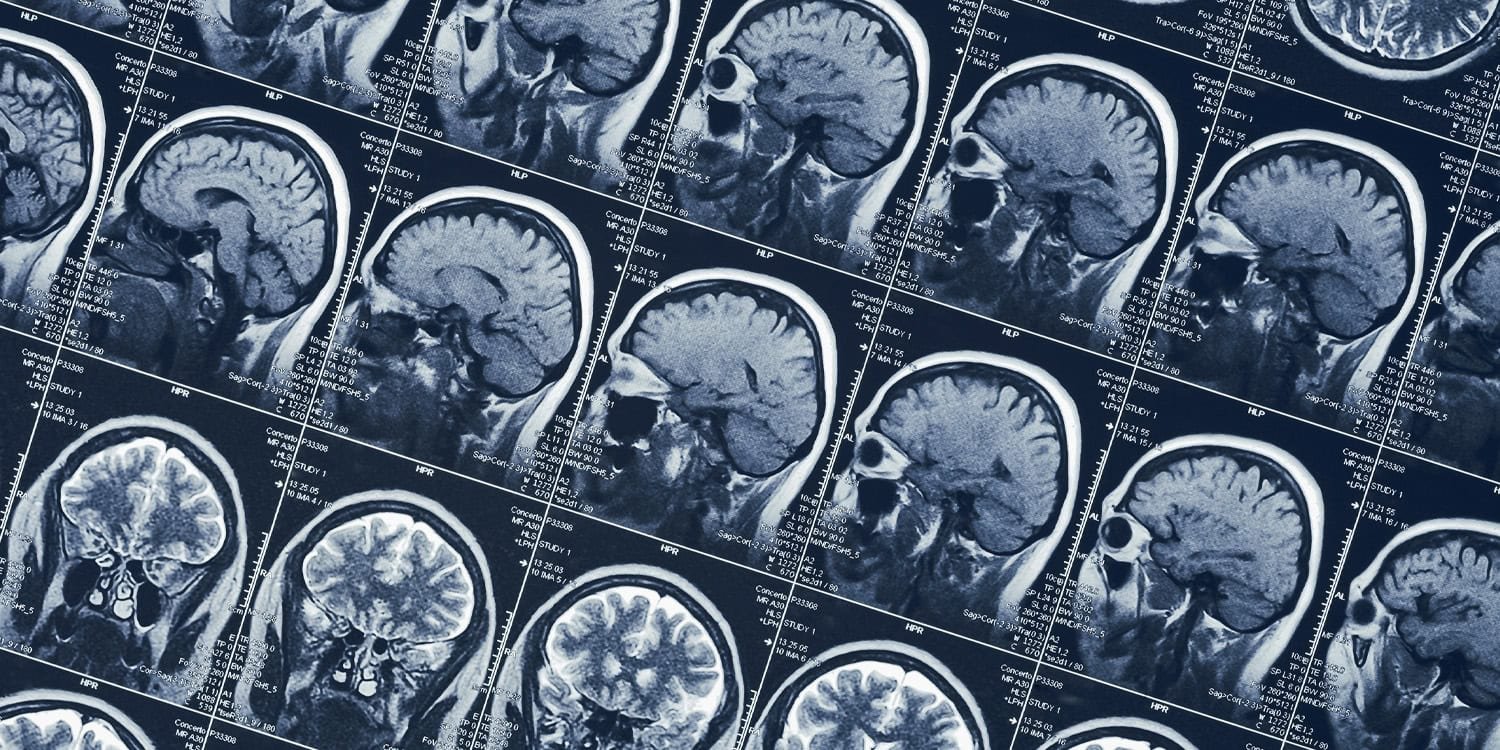
People with high levels of psychopathy tend to have a hard time feeling cared for by others, and new research links these psychological traits to certain structural properties of the brain. A recent analysis of brain scans from more than 800 incarcerated men found that men who scored high on psychopathy had enlarged brain surface area and a compressed arrangement of brain tissue. The resulting paper will be published in the journal Biological Psychiatry: Global Open Science.
Empathy is not a single trait. This includes some unique psychological skills that allow people to successfully navigate social situations. Cognitive empathy allows people to actively understand another person’s perspective and mental state. Empathic concern is the emotional capacity to actually feel sympathy and concern for the well-being of others.
In clinical psychology, psychopathy is usually characterized by a severe lack of these empathic traits. They are also clearly classified by high levels of manipulativeness, impulsivity, and antisocial behavior. Historically, researchers seeking to understand the biological roots of mental illness have investigated the physical structure of the brain.
Most previous imaging studies have looked at overall gray matter volume. Gray matter is the dark tissue of the brain that contains the bodies of nerve cells. It is responsible for processing information, in contrast to white matter, which acts as a communication cable connecting different areas.
Global gray matter volume is a combination of two distinct anatomical features. These features are cortical thickness, which refers to the final depth of the outer layers of the brain, and surface area, which represents the overall expanded sheet of folded brain tissue. Because these two structural traits develop differently during a person’s lifetime and are influenced by various genetic factors, looking at them separately provides a more accurate biological picture.
To build a detailed map of how empathy and psychopathic traits match brain anatomy, first author Marcin A. Radecki collaborated with senior researchers Kent A. Keel and Luca Cecchetti. Radecki is affiliated with the University of Cambridge and the IMT Lucca School of Advanced Studies. Kiel works through the Mind Research Network, and Cecchetti conducts research through the IMT School of Advanced Studies Lucca.
The team wanted to evaluate a very large sample of participants to find specific associations between empathic profiles, psychopathic behavior, and the physical shape of the brain. They collected data from 804 adult men incarcerated in correctional facilities in the Southwest and Midwest. Mobile scanners have allowed researchers to reach a much larger inmate population than is typically possible in traditional hospital settings.
To assess these men’s levels of empathy, the team relied on a standardized self-report questionnaire called the Interpersonal Reactivity Index. In this study, participants were asked to rate how well a particular statement explained something. This process produced specific scores for both perspective-taking and empathic concern.
The research team also calculated a formal score for psychopathy using detailed diagnostic clinical interviews and institutional file reviews. This standard assessment measure is known as the Revised Psychopathy Checklist. Diagnostic tools fall into two major structural categories.
One category measures interpersonal and emotional traits. These include traits such as superficial charm, grandiosity, and a persistent lack of remorse. Another category captures lifestyle and antisocial characteristics, such as behaviors such as impulsivity, irresponsibility, and a documented history of extensive criminal activity.
Finally, the researchers took detailed pictures of each participant’s brain using a mobile magnetic resonance imaging scanner brought directly to the correctional facility. By processing these brain scans with special analysis software, they were able to calculate the exact thickness and surface area of the brain’s outer tissues. This software divided the brain into hundreds of small sections, allowing for highly detailed regional mapping.
In analyzing psychological data, researchers found diverse and distinct relationships between different forms of empathy and categories of psychopathy. Interpersonal and affective psychopathic traits were uniquely associated with lower empathic concern. In contrast, antisocial and lifestyle traits were uniquely associated with impaired ability to take others’ perspectives.
Brain imaging results have provided surprising insights into the physical structure of the cerebral cortex. Men who met the clinical threshold for high psychopathy had increased total brain surface area. This structural expansion was particularly pronounced in specific areas of the brain specialized for social and emotional processing.
These brain regions included superior temporal regions and the auditory cortex, in addition to regions belonging to the paralimbic system. The paralimbic system acts as a highly integrated bridge between the brain’s emotional centers and higher cognitive structures. Changes in these regions were strongly consistent with previously established templates for how the brain processes social interactions and sensory processing.
These physical brain structure differences were strictly associated with psychopathy scores and not directly with self-reported empathy survey scores. The finding of increased surface area is in stark contrast to some past anatomical imaging studies. Previous studies have often reported reduced overall brain volume in highly psychopathic individuals.
The authors suggest that separating surface area from generalized volume provides a sensitive measure of antisocial traits. Surface area is determined by various cellular mechanisms during brain development, including how neurons migrate and fold into ridges over time. These underlying developmental mechanisms act independently of the factors that determine the actual thickness of cortical layers.
In addition to regularly measuring area and thickness, the researchers also used structural gradients to examine the macroscale organization of the brain. The brain is organized along a continuous topographic map that represents transitional spaces. These maps range from primary sensory areas dealing with basic senses such as vision and movement to complex association areas.
These gradients help scientists understand how the brain’s basic sensory functions differ structurally from higher-order integrative processing centers. In men with high levels of psychopathy, this natural structural gradient in cortical thickness was visibly compressed. A compressed gradient indicates reduced physical differentiation between the two ends of the brain tissue spectrum.
In essence, the structural layout connecting different functional sensory and associative networks was less segregated and closer to a centralized average. The brain gradient compression observed in these men mirrors findings seen in other major psychiatric disorders. Similar loss of structural differentiation has also been reported in studies assessing schizophrenia and depression.
The authors note that the current study has several limitations, which point to directions for continued research. Because empathy was assessed using a brief self-report questionnaire, the psychometric scores may be influenced by a high degree of social desirability bias. Subjects may have lacked the necessary psychological awareness to accurately assess their own lack of empathy.
Performance tests that ask participants to recognize facial expressions or interpret tone of voice may reveal stronger connections to the actual structure of the cortex. Self-reported empathy data did not map to brain structures in a way that produced statistically sound correlations. The body image results corresponding only to the empathy questionnaire measures were not statistically significant in the general analysis.
Furthermore, the subjects for this project were only incarcerated adult males. Differences in the structural layout of the brain and basic empathic abilities are known to differ between men and women based on various environmental and developmental factors. The researchers cautioned that these specific brain trait relationships may not generalize to freely living women in the general population or individuals with psychopathic traits.
Future research should aim to examine diverse populations outside of the correctional system to determine whether anatomical patterns hold universally. Scientists also need to investigate the actual subtle cellular mechanisms that cause the brain to fold and expand during early development. Understanding exactly how and why cortical surface area expands in these people could ultimately inform early treatment programs aimed at promoting empathy and reducing severe antisocial behavior.
The study, “Cortical structures associated with empathy and psychopathy in 800 incarcerated men,” was conducted by a large team of international researchers. Authors: Marcin A. Radecki, J. Michael Maurer, Keith A. Harenski, David D. Stephenson, Erika Sampaolo, Giada Lettieri, Giacomo Handjaras, Emiliano Ricciardi, Samantha N. Rodriguez, Craig S. Neumann, Carla L. Harenski, Sara Palumbo, Silvia Pellegrini, Jean Decety, Pietro Pietrini, Kent A. Kiel and Luca Cecchetti.
