

Close Menu

    Subscribe to Updates

    Get the latest creative news from FooBar about art, design and business.

    What's Hot

    Brain scan reveals two different types of autism

    June 3, 2026

    Triple-drug strategy permanently regresses pancreatic tumors

    June 3, 2026

    Study finds tire pollution may pose a threat to human health

    June 3, 2026
    Facebook X (Twitter) Instagram
    Facebook X (Twitter) Instagram
    Health Magazine
    • Home
    • Environmental Health
    • Health Technology
    • Medical Research
    • Mental Health
    • Nutrition Science
    • Pharma
    • Public Health
    • Discover
      • Daily Health Tips
      • Financial Health & Stability
      • Holistic Health & Wellness
      • Mental Health
      • Nutrition & Dietary Trends
      • Professional & Personal Growth
    • Our Mission
    Health Magazine
    Home » News » Scientists develop ‘smart’ DNA drugs that target cancer cells with extreme precision
    Nutrition Science

    Scientists develop ‘smart’ DNA drugs that target cancer cells with extreme precision

    healthadminBy healthadminApril 4, 2026No Comments4 Mins Read
    Scientists develop ‘smart’ DNA drugs that target cancer cells with extreme precision
    Share
    Facebook Twitter Reddit Telegram Pinterest Email


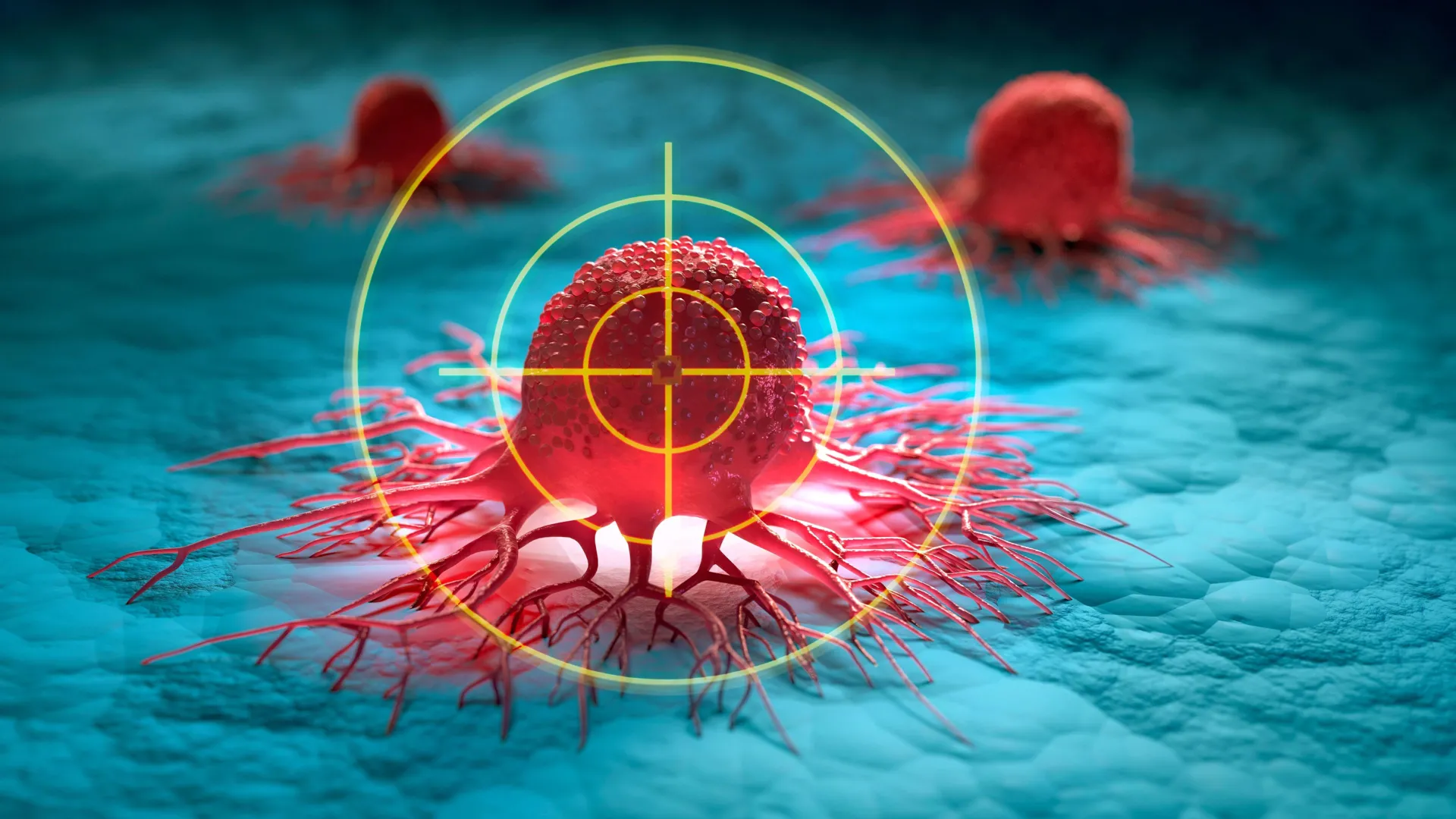
    How can doctors destroy cancer cells without damaging healthy tissue? This question remains one of the biggest challenges in modern oncology. Researchers at the University of Geneva (UNIGE) have developed a “smart” system built from synthetic DNA strands that can identify cancer cells with remarkable precision and release powerful drugs only where they are needed. This approach points to the future of programmable and responsive medicines in addition to cancer treatment. Here are the findings: nature biotechnology.

    Targeted therapies are already reshaping cancer treatment by delivering drugs directly to tumors, reducing damage to healthy cells and helping to alleviate the harsh side effects associated with chemotherapy. One of the most successful strategies is antibody-drug conjugates (ADCs), which use monoclonal antibodies to deliver therapy directly to cancer cells.

    However, ADCs still have drawbacks. Their relatively large size may limit their penetration into the tumor, allowing them to carry only a limited amount of drug. These challenges have led scientists to seek new ways to more effectively deliver treatments.

    DNA-based drug delivery offers new benefits

    To overcome these limitations, the UNIGE team designed a system based on short DNA strands. These molecules are much smaller than antibodies, so they can pass through tumor tissue more easily. They can also be designed to carry multiple components to increase their potential effectiveness.

    “Two-key” system for precise drug activation

    The new method relies on several separate DNA strands, each responsible for a specific function. Some chains contain binding agents that recognize cancer markers, while others contain toxic drugs.

    When two different cancer markers are present on a cell, DNA components attach to them and cluster in precise locations. This sets off a chain reaction that builds more DNA structures at that site, increasing the amount of drug delivered. This process is very similar to two-factor authentication on banking websites. Both markers must be detected before activation can occur. If any one is missing, the reaction will not be initiated and the drug will remain inactive.

    Laboratory results show high selectivity and power

    In laboratory experiments, the system was able to identify cancer cells with specific combinations of surface proteins and deliver potent drugs directly to the cells. Nearby healthy cells were unaffected.

    The researchers also showed that multiple drugs can be delivered together using this approach. This could be important for preventing or overcoming resistance, a common problem in cancer treatment.

    “This could represent an important step in the evolution of medicine with the introduction of self-manipulating drug systems. Until now, computers and AI have helped in the design of new drugs. What is new here is that the drugs themselves can ‘compute’ biological signals in a simple way and respond intelligently,” explains Nicholas Winsinger, full professor in the Department of Organic Chemistry, Faculty of Chemistry and Biochemistry, Faculty of Science, UNIGE, and final author of the paper. Study.

    Drugs that function like “computers”

    This system works using the same kind of basic logic as computing. Just as computers rely on operations such as “and,” “or,” and “not,” this technology applies similar rules at the molecular level. In this case, the “and” logic gate ensures that the drug is activated only when both cancer markers are present, increasing treatment selectivity.

    Aiming for programmable “smart” medicine

    In the future, the researchers hope to extend this concept by adding more complex logical functions. This could lead to the development of drugs that behave like programmable systems and can make more sophisticated decisions within the body.

    Such treatments have the potential to adapt to each patient’s unique biology and improve efficacy while reducing side effects. Rather than replace doctors, these systems are designed to increase precision and control of treatment, open new possibilities for personalized medicine, and reshape the way we treat diseases.

    The research was supported by the Swiss National Science Foundation and builds on earlier work from the NCCR Chemical Biology Program.


    Source link

    Visited 9 times, 1 visit(s) today
    Share. Facebook Twitter Pinterest LinkedIn Telegram Reddit Email
    Previous ArticleSaturn’s magnetic field is twisted, and scientists have figured out why
    Next Article Scientists say a meteorite impact may have been the origin of life on Earth
    healthadmin

    Related Posts

    Brain scan reveals two different types of autism

    June 3, 2026

    The secret underground system that keeps the Grand Canyon alive

    June 2, 2026

    Scientists discover gut bacteria that may help prevent autism and ADHD

    June 2, 2026

    Hidden pollutants are changing how the world’s forests breathe

    June 2, 2026

    A single protein may be hindering CAR T cancer treatment

    June 2, 2026

    Star’s ‘Rosetta Stone’ reveals source of mysterious cosmic signal

    June 2, 2026
    Add A Comment

    Comments are closed.

    Categories

    • Daily Health Tips
    • Discover
    • Environmental Health
    • Exercise & Fitness
    • Featured
    • Featured Videos
    • Financial Health & Stability
    • Fitness
    • Fitness Updates
    • Health
    • Health Technology
    • Healthy Aging
    • Healthy Living
    • Holistic Healing
    • Holistic Health & Wellness
    • Medical Research
    • Medical Research & Insights
    • Mental Health
    • Mental Wellness
    • Natural Remedies
    • New Workouts
    • Nutrition
    • Nutrition & Dietary Trends
    • Nutrition & Superfoods
    • Nutrition Science
    • Pharma
    • Preventive Healthcare
    • Professional & Personal Growth
    • Public Health
    • Public Health & Awareness
    • Selected
    • Sleep & Recovery
    • Top Programs
    • Weight Management
    • Workouts
    Popular Posts
    • 1773313737_bacteria_-_Sebastian_Kaulitzki_46826fb7971649bfaca04a9b4cef3309-620x480.jpgHow Sino Biological ProPure™ redefines ultra-low… March 12, 2026
    • pexels-david-bartus-442116The food industry needs to act now to cut greenhouse… January 2, 2022
    • the-pros-and-cons-of-paleo-dietsThe Pros and Cons of Paleo Diets: What Science Really Says April 16, 2025
    • 1773729862_TagImage-3347-458389964760995353448-620x480.jpgDespite safety concerns, parents underestimate the… March 17, 2026
    • 1773209206_futuristic_techno_design_on_background_of_supercomputer_data_center_-_Image_-_Timofeev_Vladimir_M1_4.jpegMulti-agent AI systems outperform single models… March 11, 2026
    • 1774403998_image_28620e4b6b0047f7ab9154b41d739db1-620x480.jpgGait pattern helps distinguish between Lewy body… March 24, 2026

    Demo
    Stay In Touch
    • Facebook
    • Twitter
    • Pinterest
    • Instagram
    • YouTube
    • Vimeo
    Don't Miss

    Brain scan reveals two different types of autism

    By healthadminJune 3, 2026

    An international team of scientists has found evidence that autism may include at least two…

    Triple-drug strategy permanently regresses pancreatic tumors

    June 3, 2026

    Study finds tire pollution may pose a threat to human health

    June 3, 2026

    Is any level of alcohol safe? Extensive study reveals where drinking risk increases

    June 3, 2026

    Subscribe to Updates

    Get the latest creative news from SmartMag about art & design.

    HealthxMagazine
    HealthxMagazine

    At HealthX Magazine, we are dedicated to empowering entrepreneurs, doctors, chiropractors, healthcare professionals, personal trainers, executives, thought leaders, and anyone striving for optimal health.

    Our Picks

    Is any level of alcohol safe? Extensive study reveals where drinking risk increases

    June 3, 2026

    AI turns everyday smartphone use into passive heart rate tracking

    June 3, 2026

    June 3, 2026
    New Comments
      Facebook X (Twitter) Instagram Pinterest
      • Home
      • Privacy Policy
      • Our Mission
      © 2026 ThemeSphere. Designed by ThemeSphere.

      Type above and press Enter to search. Press Esc to cancel.